DEADLETTER Are Refusing to Sleepwalk Through It
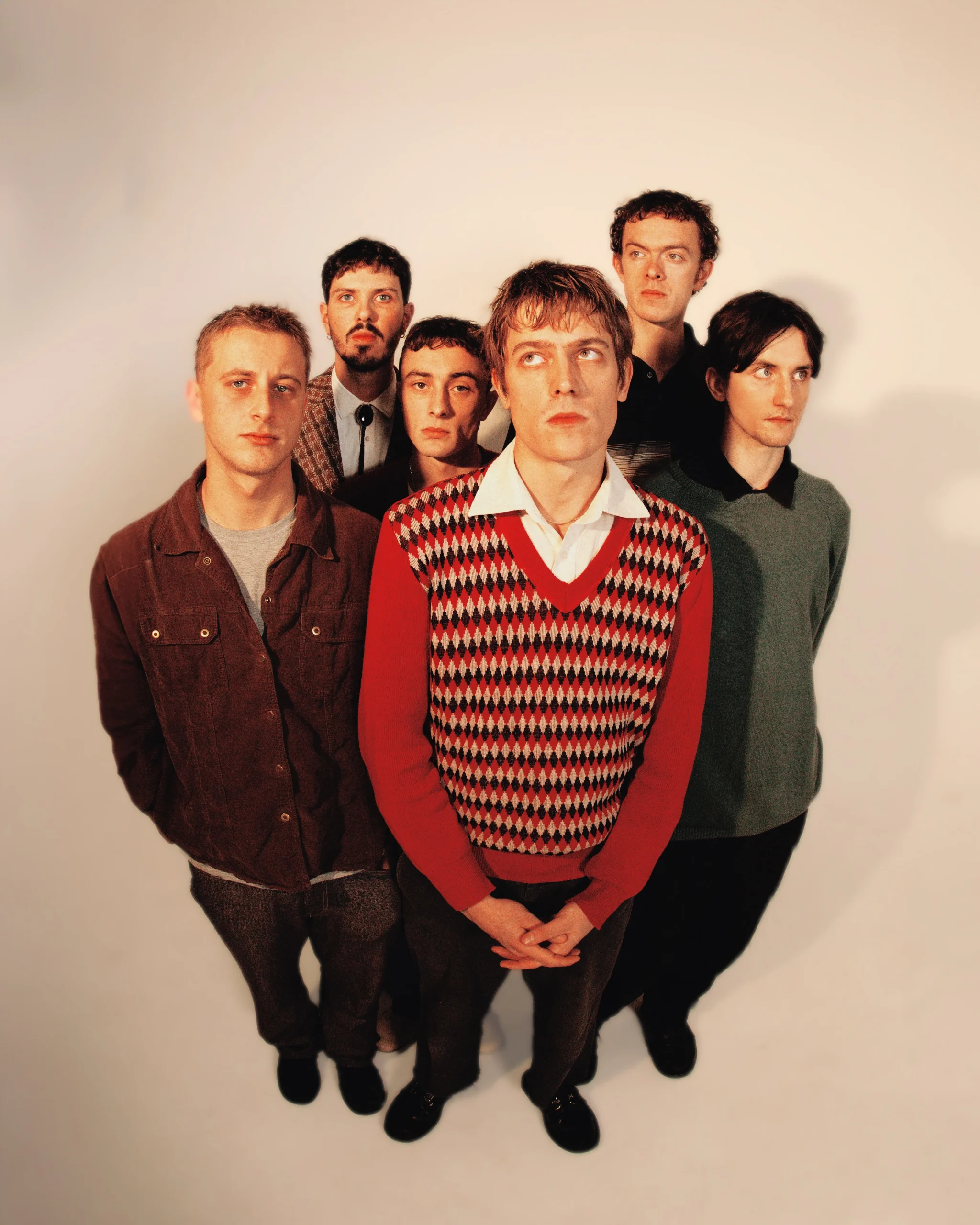
The Yorkshire-born, South London-rooted six-piece build songs from locked basslines, needling guitars, synthetic fog and saxophone that arrives like an interruption. Their second album, Existence Is Bliss, does not offer an escape from modern anxiety. It asks whether you are still awake enough to feel it.
– WORDS BY JAMBALOO EDITORIAL TEAM
Post-punk is crowded with bands that learned the posture before finding a reason for it. The bass is clipped, the vocal is half-spoken and everyone appears to have agreed on the same black jacket. DEADLETTER understand the vocabulary, but they are not satisfied with simply pronouncing it correctly.
Their songs sweat, mutate and occasionally appear ready to collapse beneath the amount they are trying to carry. That excess is the point.
The band began with childhood friends Zac Lawrence, Alfie Husband and George Ullyott before expanding into a six-piece and relocating its center of gravity from Yorkshire to South London. The additional guitars and Poppy Richler’s saxophone did more than make the group larger. They gave every song another possible escape route.
Their 2024 debut, Hysterical Strength, introduced a band capable of turning agitation into movement. Drums pushed forward, guitars scratched at the walls and Lawrence delivered observations with the intensity of someone presenting evidence. There was anger in it, but also wit, rhythm and the understanding that despair becomes much more persuasive when people can dance to it.
Existence Is Bliss pushes beyond that first record rather than attempting to repeat its impact. Synthesizers spread through the background, melodies become more deliberate and unfamiliar instruments appear without requesting permission. The arrangements remain dense, but the band now sounds less interested in proving its force than discovering how many different shapes that force can take.
“To the Brim” moves like pressure rising inside a sealed room. “It Comes Creeping” gives private dread a body and allows it to follow the listener home. “Songless Bird” brings Lawrence’s more reflective instincts forward, while “Frosted Glass” and “What the World Missed” let rattling percussion, clashing guitars and saxophone fight over the available oxygen.
The important shift is not that DEADLETTER have become more polished. It is that they have become less obedient to their own reputation.
The band could have made a leaner, safer version of Hysterical Strength and spent several years being praised for consistency. Instead, they have widened the frame. Songs drift toward synth-pop, shoegaze and jazz before being pulled back by the rhythm section. Lawrence sings more often, abandoning the safety of a single familiar delivery. Flute, glockenspiel and electronic textures enter a sound that already appeared full.
Not every idea arrives neatly. Some songs contain enough competing movement to make clarity feel temporarily unavailable. That is also what makes the record worth returning to. DEADLETTER do not tidy anxiety into a useful slogan. They reproduce its overcrowding, its momentum and its strange ability to make ordinary life feel both ridiculous and urgent.
Start with “To the Brim,” then let Existence Is Bliss continue without interruption. Listen for the moments when the groove appears settled and another instrument begins working against it.