INTERVIEWS
Rishi Dhir on Grief, Hope and the Future of Elephant Stone.
For more than twenty years, Elephant Stone have existed in a space that is easy to describe quickly and much harder to explain properly.
– WORDS BY CJ
Rishi Dhir’s sitar playing has always been the obvious entry point. His study of Hindustani classical music gave the Montreal band a distinction that immediately separated them from the endless churn of psychedelic rock bands around them, but reducing Elephant Stone to that instrument has never really told the full story. The band’s catalog has moved through psych-pop, heavier guitar music, production experiments and increasingly personal songwriting, all of it shaped by Dhir’s attempt to understand where the different parts of his musical and cultural identity meet.
With ASHA, that process has become more direct.
The songs were written before the death of Dhir’s mother, but the album was completed afterward. The circumstances inevitably changed the way he understood material that had originally been created in a different version of his life.
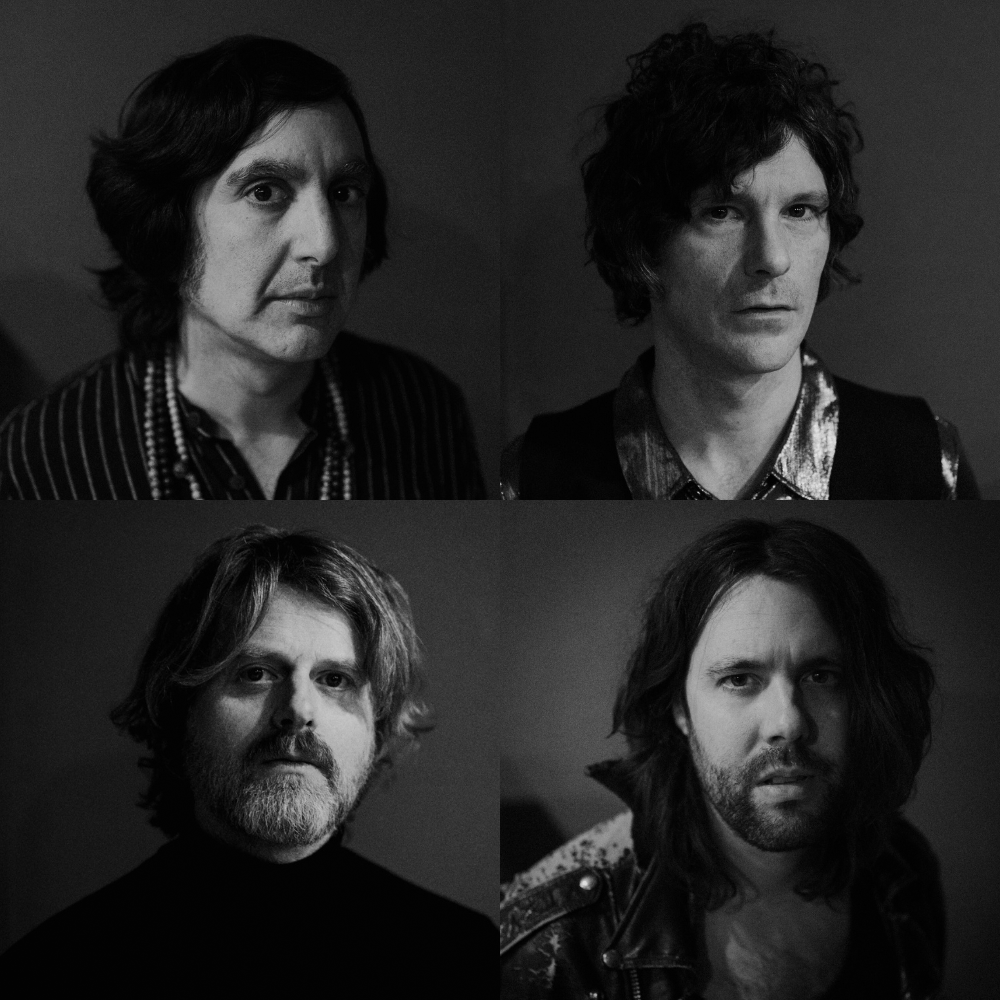
PHOTO BY BOWEN STEAD
“Finishing the album after my mother passed was cathartic, in a way,” Dhir says. “I don’t think I’ve fully gone through the grieving process yet.”
Even the artwork became part of that process. Working on the cover gave Dhir an opportunity to spend time with an image of his mother from before he had known her, a person he had previously understood mostly through family stories.
That loss sits alongside an album increasingly concerned with what is happening outside Dhir’s immediate life. ASHA translates as “hope,” but the record spends plenty of time looking at political manipulation, authoritarianism, social numbness and the feeling that the world is moving in directions that are becoming harder to ignore.
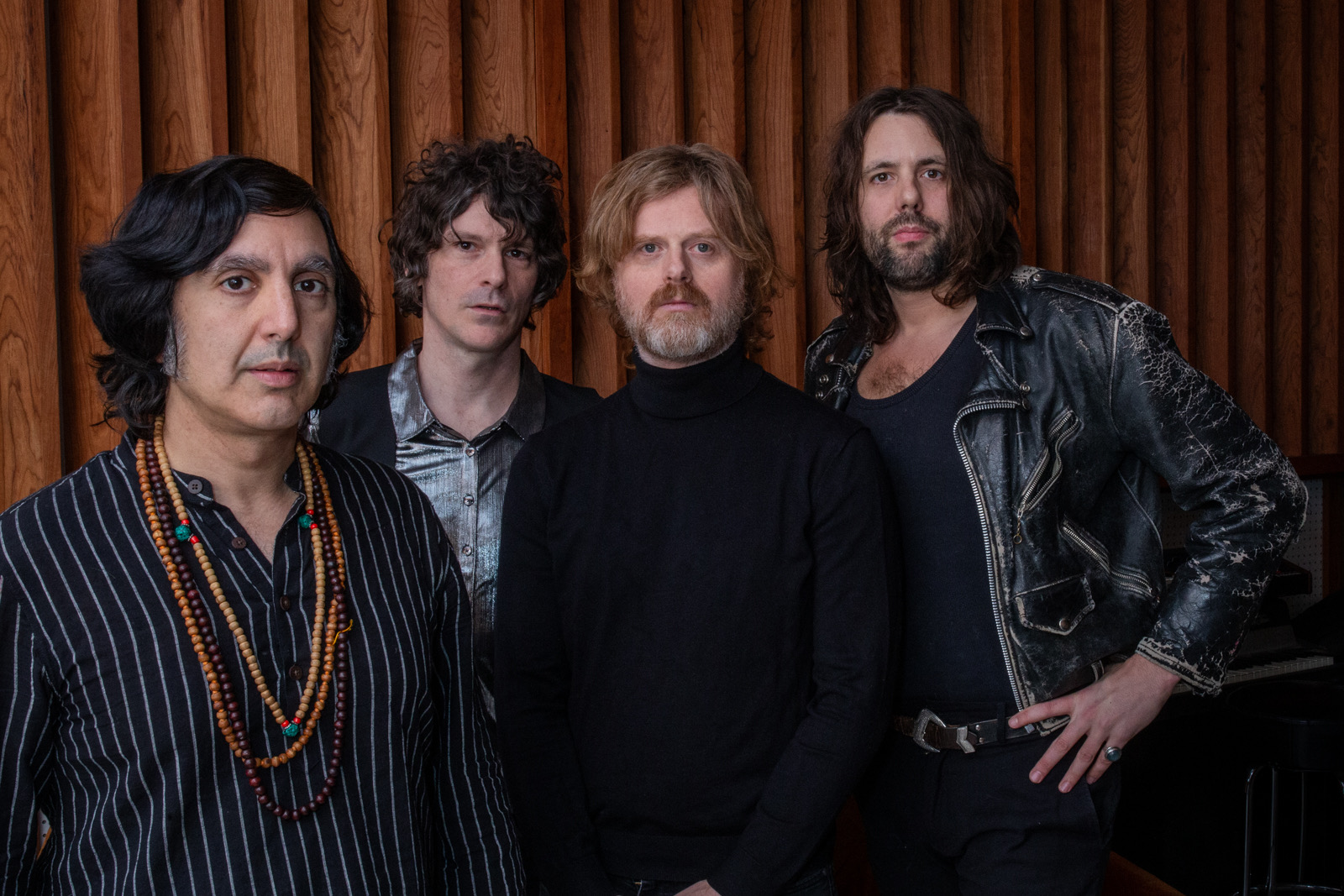
PHOTO BY BOWEN STEAD
For Dhir, calling the album ASHA is not an attempt to pretend those things are not happening.
“Hope is all we have when things get hard,” he says. “Even when we think we’ve lost it, it finds a way to lift us back up.”
The clearest political statement arrives with “Fascists Killed Yer Rock ’N’ Roll,” although the song itself is hardly a product of the current moment. Its origins go back to 2013, when a riff and a conversation on tour first planted the idea. It then spent more than a decade changing shape before finally becoming the song Dhir wanted it to be.
“Some songs write themselves in five minutes. Some take a lifetime,” he says. “This one went through a lot of iterations.”
The delay was both musical and ideological. Dhir was waiting for the arrangement to make sense, but he was also waiting until he understood exactly what he wanted the song to say. The intervening years unfortunately provided plenty of material.
That long development period says something about how Elephant Stone operate more generally. Dhir originally started the project during an existential crisis, searching for something that felt more meaningful than simply continuing the routine of being a working touring musician. Two decades later, Elephant Stone is itself a career, a catalog and a set of expectations.
The difference is that Dhir has never allowed commercial necessity to become the reason for keeping it alive.
“Elephant Stone was always meant to be an emotional and creative outlet,” he says. “Luckily, or unluckily, it’s never been a lucrative venture, so the only thing keeping it moving is my own belief that we have something to give.”
There is an end point built into that philosophy. “The day I’ve said everything I can say is the day it ends.” For now, Dhir still seems to be discovering new things about what Elephant Stone can be.
His relationship with the sitar remains central to that. Studying Hindustani classical music did not simply add another instrument to his records; it altered the way he understands melody and composition.
“Picking up the sitar and studying Hindustani classical music gave me a musical language of my own,” he says. “Not every song wears that influence outright, but it leaves its imprint somewhere.”
The distinction matters. Elephant Stone are not interested in attaching Indian instrumentation to otherwise conventional psychedelic songs as decoration. The influence is often embedded much deeper, even when the sitar itself is absent.
“There are still a lot of melodies left to sing.”

PHOTO BY TITOUAN MASSÉ

PHOTO BY TITOUAN MASSÉ
Dhir has previously described Elephant Stone as “me unfiltered,” but the project has never been entirely solitary. Miles, Jason and Robbie have become an important part of translating his initial ideas into finished Elephant Stone records.
“I plant the seed of something, and they push me to make it the best version of itself,” Dhir says. “That’s what I love about this band.”
That exchange becomes particularly important because Dhir now has more control over the earliest stages of the process than ever. Sacred Sound, his home studio, allows him to write, record, produce and mix without having to bring an outside producer into the room.
It gives him time to follow ideas further than he might have under more conventional studio conditions. “I can chase any idea without anyone else guiding the way,” he says. “Sometimes I get lost, but I manage to find a new way through.”
That solitude has become one of his favorite parts of making records. But Elephant Stone’s Back Into the Garage demos also offered a reminder of what happens once those private ideas leave his hands. Hearing the rough versions again after the finished recordings had been released allowed Dhir to compare the original spark of a song with what the full band eventually made from it.
PHOTO BY TITOUAN MASSÉ
“Everyone romanticizes their own demos,” he says. “The excitement of a first idea, a new melody, the fumbling toward a finished song.” The collection clarified something for him. “Hearing them again after the official release opened my ears to what this band is when it’s just me, and what it becomes once the other guys get their hands on it.” That distinction between individual identity and collective result has followed Dhir throughout his career.
He has often spoken about growing up caught between East and West, while Elephant Stone’s music has been praised for making those traditions appear comfortably compatible. His own experience has been less straightforward
“It’s taken a while to reconcile the East/West split in my music, much like in my life,” he says. Rather than removing that tension, Dhir now believes it may have been necessary. “That tension is probably what forced it to become its own thing.”
Closing in on 50 and roughly thirty years into making music, Dhir says he finally has a clearer idea of what his own musical language actually sounds like. ASHA feels like part of that clarity: a record capable of holding grief, politics, identity, psychedelic experimentation and hope without forcing any of them into a clean resolution.
The album ends with “Spirit, Take Me Away,” featuring Amy Millan. After everything that comes before it, the song could be read as escape, surrender or simply the need to temporarily withdraw from a world that has become exhausting.
Dhir is not interested in deciding which interpretation is correct. “Ultimately, we all have to let go,” he says. “How you read that — surrender, transcendence, or just shelter before you go back and keep fighting — I’ll leave to the listener.”