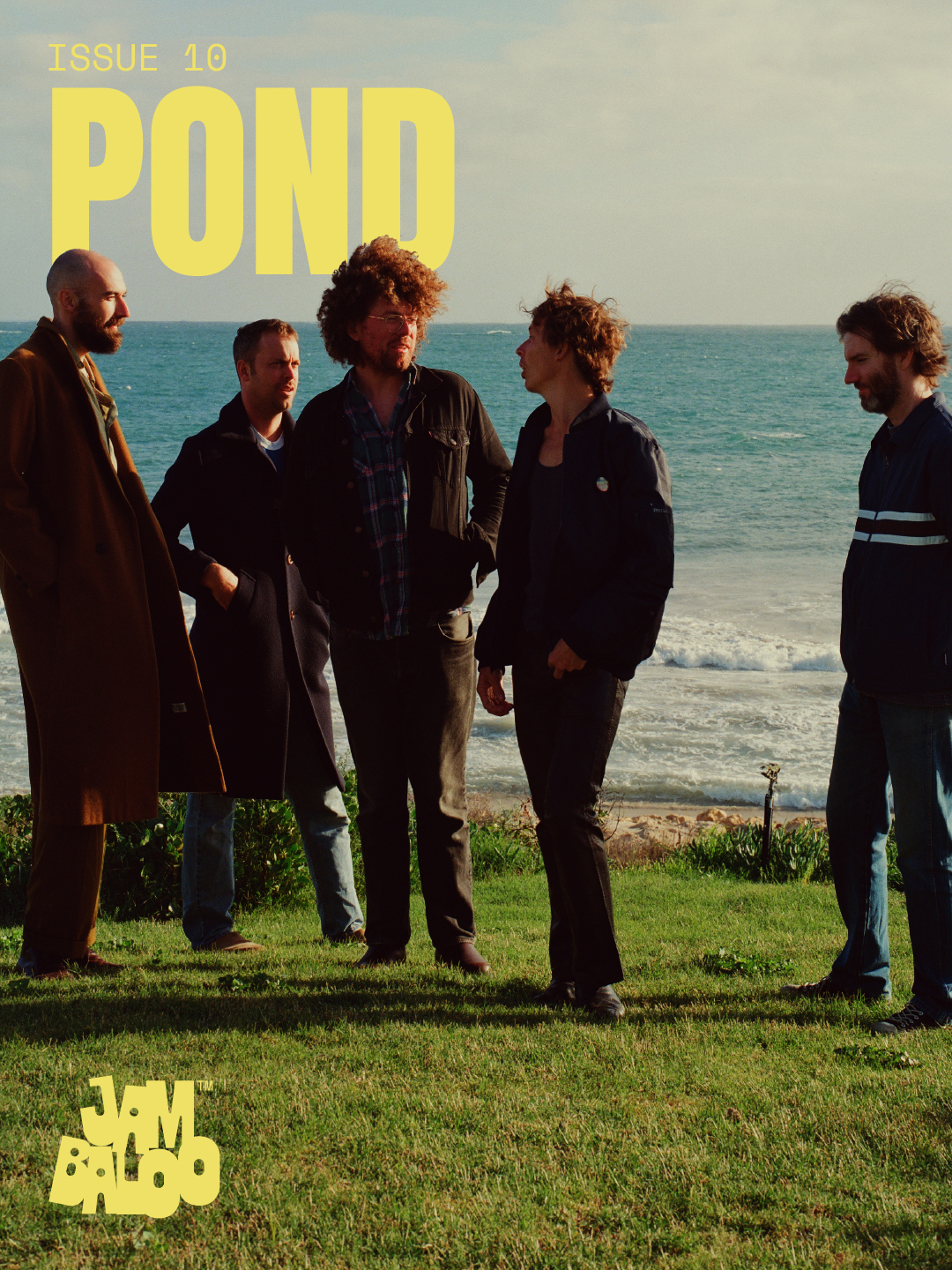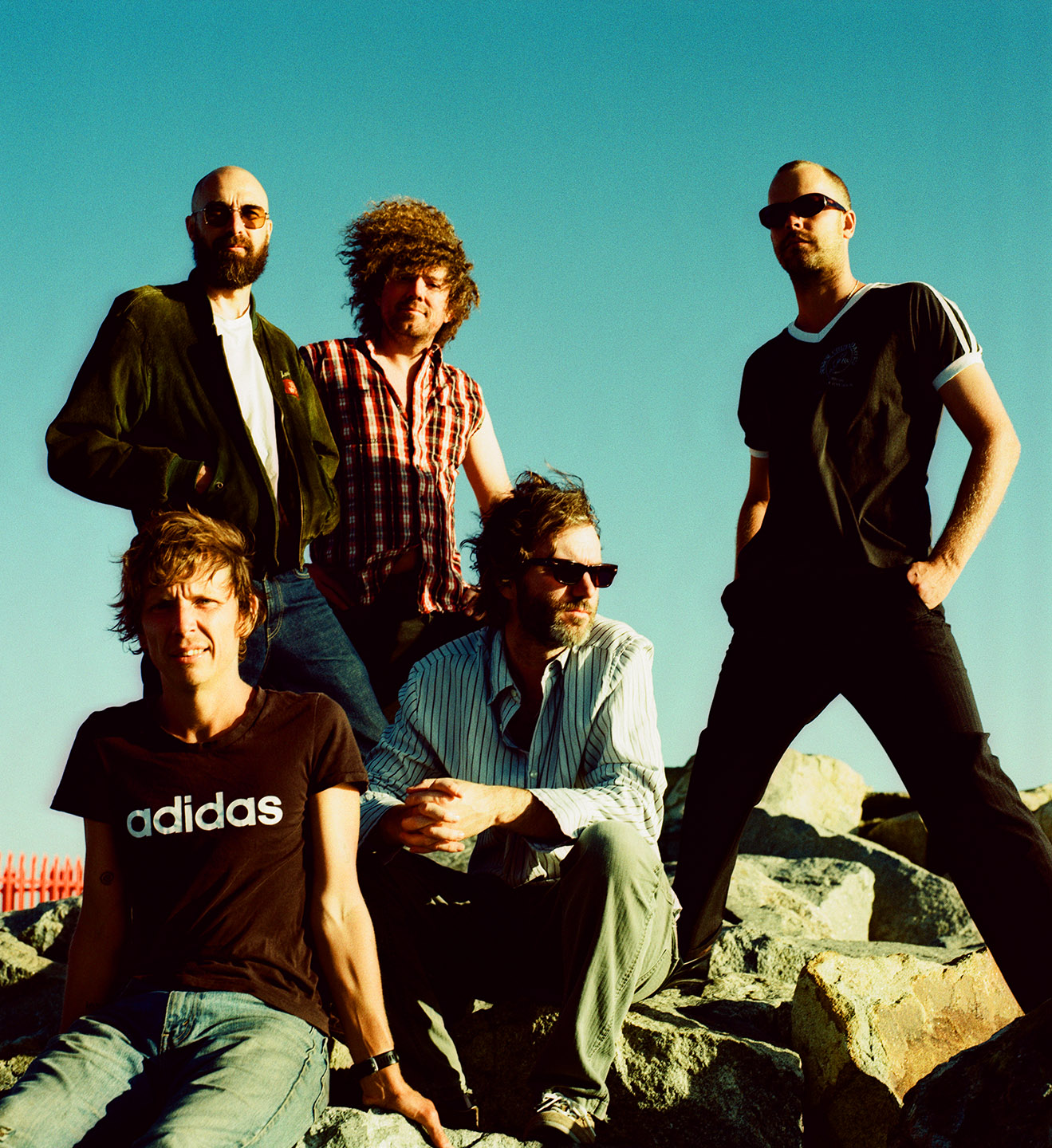
Pond on ‘Terrestrials’, Australia and Reinvention.
Pond have always seemed happiest when they can reduce whatever serious artistic idea they are chasing to something faintly ridiculous. For Terrestrials, that idea was “goths in the pub.”
– WORDS BY CJ
“We probably mask a lot of our greatest intentions with stupidity,” Nick Allbrook says. “It was just a dumb catchphrase for making very energetic, more immediate pub rock that has sensitivity or some shit. Lots of chorus on the guitars.”
It is funny, but it also makes complete sense once you hear the record. Terrestrials moves with a directness that Pond have not always been particularly interested in. The guitars are sharp and chorus-heavy, the songs arrive quickly and get where they are going without hanging around too long, and beneath all of it is that slightly gloomy, romantic streak suggested by the phrase itself. The goths have made it to the pub, apparently, but nobody has told them they are supposed to stop dancing.
The band went into the album with rules. No fuzz. No ballads. No sprawling “Pink Floyd shit.” Allbrook says that was partly about knowing exactly what Pond wanted this time and partly about knowing what they absolutely did not want. “We’d already decided we wanted it to be sharp, angular and fast and direct. We played one or two of the songs live and it was fucking fun, and we were just like, ‘Man, let’s do an album that’s going to be real fun to play live.’” That sounds almost too simple, but simplicity seems to have been important to Terrestrials. Pond had access to a rehearsal space where they could leave everything set up, which meant they could walk in and start playing instead of spending half the day assembling the circumstances required to play.
Allbrook talks about it as though somebody had suddenly removed an obstacle they had forgotten was there. “It can’t be understated. It’s so transformative being able to just go in whenever and have it all set up. You can actually play together and work on things and be a bit more ambitious with collaboration.” The songs were worked out there, passed around, pulled apart and put back together until the band knew them. When it came time to record, the idea was not to spend months slowly constructing the record afterward. “We didn’t want to labor over it, building, sort of baking this cake over months and months, layer by layer. We wanted to do the work and then take a snapshot of it.”
He stops for a second. “More like taking a photo than baking a cake.”
There is something fitting about Pond making a record this way. They have spent much of their career changing shape, occasionally so dramatically that the version of the band making one record can seem only loosely related to the version that made the one before it. Terrestrials does it again, but instead of sounding like another deliberate reinvention, it was given shape by five people being in a room together. It is also one of the most distinctly Australian Pond records.
Not in the easy sense of place names or scenery. Australia appears here as something considerably less comfortable: a country whose identity is difficult to separate from the history it has spent a long time trying not to examine too closely. Allbrook cannot really identify the moment when those ideas began pushing themselves into the songs. “I can’t really follow the thread that far back as to why I was fixated on those kinds of themes. But it’s something that keeps going.”
Then he reaches for the larger thing.
“For everybody, trying to understand who you are and where you come from is very, very difficult. Especially something so fractious and dark as the history and culture of white Australia.” He speaks carefully when he gets onto this subject, not because he seems uncertain about what he thinks, but because he is suspicious of making himself sound more important to the conversation than he is. “There are a lot of lies and mystery shrouding a lot of really awful stuff in Australian history, and I think it just takes a lot of, for me anyway, it demands a lot of searching or something.”
That searching runs through Terrestrials. On “Skyworks,” music that can initially feel almost celebratory rubs against writing concerned with a much uglier version of the country underneath it. In previous Pond records, Allbrook says, he might have approached those subjects through sadness. This time something has hardened. “Maybe it was just the mood. I think in the past I’ve tried to deal with those sorts of things – and when I say deal with, I don’t mean in a broad sense dealing with it. I’m not that up my own ass to think that.”
“Maybe it was just a bit more anger. Seeing mining oligarchs owning government and seeing the colonization and dispossession and deaths in custody of Indigenous people, and how that’s our ancestry. It’s a collective history.” “I think I’ve dealt with that with real sadness and defeat before. Maybe it was just a bit more angry now.” That anger is probably clearest on “Two Hands,” but what makes the song interesting is that it never feels entirely hopeless. There is something communal in it, almost an invitation to refuse the quieter version of history.
Allbrook talks about how quickly those stories can disappear. “It’s something that so easily sinks to the bottom and gets quiet. There’s so much fucking noise in the media landscape and stuff that you almost feel like you just need to yell it sometimes.” Then comes perhaps the simplest explanation for why he keeps writing about it. “It’s a great opportunity that I’ve got to provide a little space for people to yell it if they want. And they should.”
He mentions Amy Taylor from Amyl and the Sniffers as somebody who has been especially inspiring to him in that regard, not simply because she can articulate anger but because she can make it useful. “She manages to create a space for people to be reminded and feel strong and feel hopeful and fucking angry. Because it’s not all lost.”
For Allbrook, the danger is not simply that Australia forgets parts of its history. It is that in refusing to look at them, the country fills the empty space with something much easier. “It’s very hard for Australia to overcome the sort of racism and apathy that grips the white majority a lot of the time. But if we don’t do the therapeutic work of saying out loud what has been done, without looking at this whole identity and all the real things that have actually happened in real life in our past, then we’ve got this fucking stupid — we just come up with something else as our identity.”
“Shrimps on the barbie and going to the beach at Christmas. That’s not a fucking national identit. That’s just some shit to distract from doing the actual work and coming together.” It is one of those moments where the joke disappears without the conversation becoming solemn. That is an important distinction with Allbrook. He can move from national trauma to “Scottish Jazz” without either feeling like a performance.
“Scottish Jazz” was the working title for “True the Header,” one of Terrestrials’ stranger, more melancholy moments. The song began while Pond were traveling through Europe, with Jin developing the idea in the back of the van. “I don’t know if you’ve heard Scottish jazz,” Allbrook says. I tell him I have not. “Exactly. Now you have.”
He thinks some of the song’s atmosphere may have come from the places moving past the van windows. Jin’s father is from Glasgow, the band had probably recently been through Scotland, and Allbrook describes him as somebody capable of translating those kinds of impressions directly into music. “He’s got a lot more of a synesthetic kind of way of making music. I wouldn’t be surprised if some sort of visual input came out in the music. He’s one of those proper talented musicians who can pretty easily translate an intention into sound.”
Allbrook pauses before considering his own method. “With me, I can do that with words and music to a degree, but it’s a lot more of a blunt instrument.” That blunt instrument has become one of Pond’s most recognizable characteristics.
Allbrook writes the lyrics, but Terrestrials was built inside a band that seems increasingly comfortable interfering with everything around those words. “I just write all the lyrics. When we’re recording, I’m always saying, ‘Does that sound fucking lame when I say that one?’ Usually the other guys are like, ‘Hmm, no, it’s fine.’” The rest of the band tends to work around the edges of the language instead.
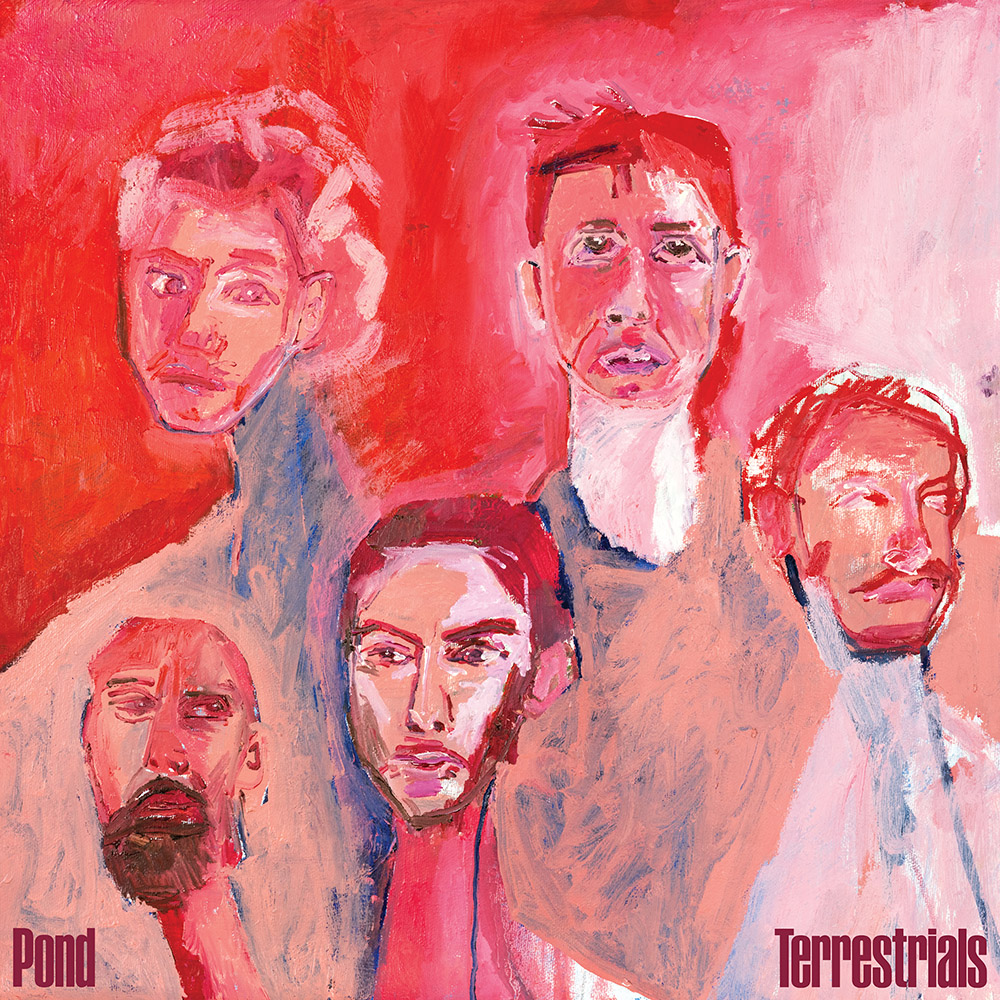
Terrestrials album cover by Artist Jessie Nash
“They’re really good, especially Gum and Jin and Kevin actually, with melody and phrasing. More producer shit. Like, ‘It sounded good when you go up on that word,’ or whatever. They’re talking about the part rather than the actual lyric itself.”
That collaborative process sounds almost deliberately unceremonious. Whoever was available would go into the room. Sometimes there were two people, sometimes everybody. They would play, record an idea on a phone, send it around, and somebody else would pick it up. “The collaboration is just so fun. We’d go in every day, whether it was just two people or whether it was the whole lot of us, whoever could make it, and just work on something and record it on our phones, send it to everyone else.” “We just sort of kept doing that until everyone had had a go and we knew how it went.”
That willingness to keep passing an idea around may be the reason Pond have never become particularly precious about what Pond are supposed to sound like. The band have spent their career moving through psych rock, pop, electronics, glam, funk, noise and whatever other obsession happens to wander into the room, without ever appearing overly concerned about whether the previous record’s audience is going to follow. Allbrook thinks changing is probably the thing that keeps them interested.
“If we just sort of dragged our feet to the studio once every two years to make another Pond album, it would be pretty fucking boring for everyone involved. I’d lose interest, you’d lose interest. What’s the point?” The strange part is that after all this time, they still begin records the way teenagers begin imaginary bands. “Thankfully we’re still like teenagers about it.” He starts describing that specific teenage excitement of discovering a kind of music and immediately building an entire band around it in your head. “You’re super into doom metal. Your mates are. You’re like, ‘Oh my God, I’m gonna get this three-piece together. We’re gonna wear black cloaks.’”
Pond essentially do the same thing every time they make a record. “You can spitball and imagine and fantasize and joke, and we just do that every album.” One album might begin with the idea of becoming something industrial and severe. “We’re like, ‘Okay, this is gonna be full Reznor. We should wear tiny little spectacles and big platform boots and shit, and have chains.’” He laughs. “None of it ends up happening.”
That does not really matter. The imaginary band only has to exist long enough to get the real one excited. For Terrestrials, the imaginary band was standing at the bar in eyeliner. “We were like, ‘Yeah, goths in the pub.’ We want the goths to like it. We want it to be full Graveyard-worthy, eyeliner worthy, but you can sink some piss at the Barwon Heads Tavern or whatever.” “And then whatever comes from that, comes from that.”
Usually what comes from it is a long way from the original joke. A few lyrics and four chords get pushed through chorus-heavy guitars, a drum machine appears, somebody changes the melody, somebody else sends a phone recording back to the group and eventually a Pond song begins emerging from all the interference. “It’s about initiating all of us chatting and getting excited,” Allbrook says, “and having a way to funnel a four chord bunch of Nick words into something more focused.”
There are probably more sophisticated ways to explain how a band keeps itself alive this long, but Pond have never seemed particularly interested in sophistication for its own sake. Sometimes you need a manifesto. Sometimes you need five people in a room. And sometimes you just need to decide you are goths in a pub and see what happens.