Elliott Skinner Is Done Pretending Songs Have Answers.
Elliott Skinner has been doing this long enough that people sometimes mistake experience for ease. They watch him onstage and tell him how natural it looks, how comfortable he seems, how easily he occupies a room.
– WORDS BY CJ
Skinner hears all the years hidden inside the compliment: singing in church, playing other people’s songs, learning how musicians talk to audiences, figuring out when to step forward and when to disappear inside somebody else’s arrangement. By the time How Far We’ve Come arrived under his own name, very little about making music was new to him. Presenting all of it together was.
“For a long time, the people who I’d play bass for or be in that world, they’d be like, ‘Oh, you sing as well?’” Skinner says. “And people who I’ve been singing or playing guitar with are like, ‘Oh, wait, you play bass? You produce?’ I’m like, ‘Yeah, yeah.’”
The EP answers that question without sounding interested in proving anything. Skinner sings, writes, plays and produces, but How Far We’ve Come never feels arranged around the fact that he can do all four. It sounds more like somebody finally allowing all the parts of his musical life to occupy the same record. He has spent years inside other people’s work, alongside other artists, in bands and sessions, and still finds himself entering his own solo career with some sense of newness.
“I’m always trying to figure things out,” he says. “As a songwriter, I think I try to, or in recent years, I’ve tried to relieve myself of the responsibility that I should provide answers.”
Skinner’s songs are full of questions, but rarely questions designed to lead somewhere neat. They circle friendship, avoidance, responsibility and the habits people recognize in themselves without necessarily knowing how to stop repeating them. He is wary of the idea that writing well about something gives the writer authority over it.
“I think people conflate being able to write a song or being able to think about these issues or these ideas deeply enough to form it into some sort of narrative with knowing the answers,” he says. “It’s more like, okay, I’m in this process, and I know that you’re in this process too. Maybe my reflection of this process will help you. Maybe it will help me.”
How Far We’ve Come did not begin as an EP. Skinner had already been working on an album for seven or eight years, while a handful of other songs sat closer to finished. His team heard those songs together and suggested there might already be a project there. Skinner was less convinced until he started hearing his own repetitions. Words moved from one song into another. Ideas resurfaced without him consciously carrying them over. Running became one of those ideas. There is “Don’t Be a Runner,” and elsewhere, in “Cares on My Mind,” another question appears: what are you running from?
“Don’t Be a Runner” could easily be heard as advice. The title gives it the shape of an instruction. Skinner does not sing it with the certainty of somebody handing down a rule, though.
“I’ve thought about, is this me telling people from a pulpit, ‘Don’t be a runner’?” he says. “Or does this feel like I need to tell this to myself?”
PHOTO BY Stefan Kohli
He likes the looseness of pronouns for that reason. “You” does not always mean somebody across the room. “I” does not necessarily lock the song into autobiography. Sometimes he is speaking to himself, sometimes to another person, sometimes toward something larger and less easily named. Writing gives him somewhere to leave those questions without having to settle them immediately.
“What music has given me, I try to give that in my music,” he says. “Space for people to have these thoughts or have these questions, and not be pressured to come up with any answer right in that moment, or have clarity.”
Some of the songs on How Far We’ve Come are four or five years old. Skinner has lived with the recordings long enough to hear every possible addition and every possible reason not to make one.
“I try to think a lot about what the song needs and what the moment needs,” he says.
On the record, that can mean detail, layers and small pieces of production that reveal themselves slowly. Live, the same songs often lose most of that structure. Skinner frequently plays alone, with guitar or piano, and the result is not a stripped-down imitation of the studio version. The song changes because the conditions change.
“I always think about, okay, if I were to sit in a room and sing this song, where are the moments that feel like it needs something more?” he says. “I try to think about production as an extension of the song. I don’t wanna add anything that takes away from what this is with guitar and voice, or with just piano and voice.”
“Don’t Be a Runner” came together the other way around. Skinner and drummer Luke Titus started from a jam, with rhythm already at the center, leaving Skinner to work backward later and find out what survived without it. Touring solo has made that exercise very real.
“I’m on tour now, so trying to perform that song with no drums, I realize this is a lot harder than I thought it was gonna be.”
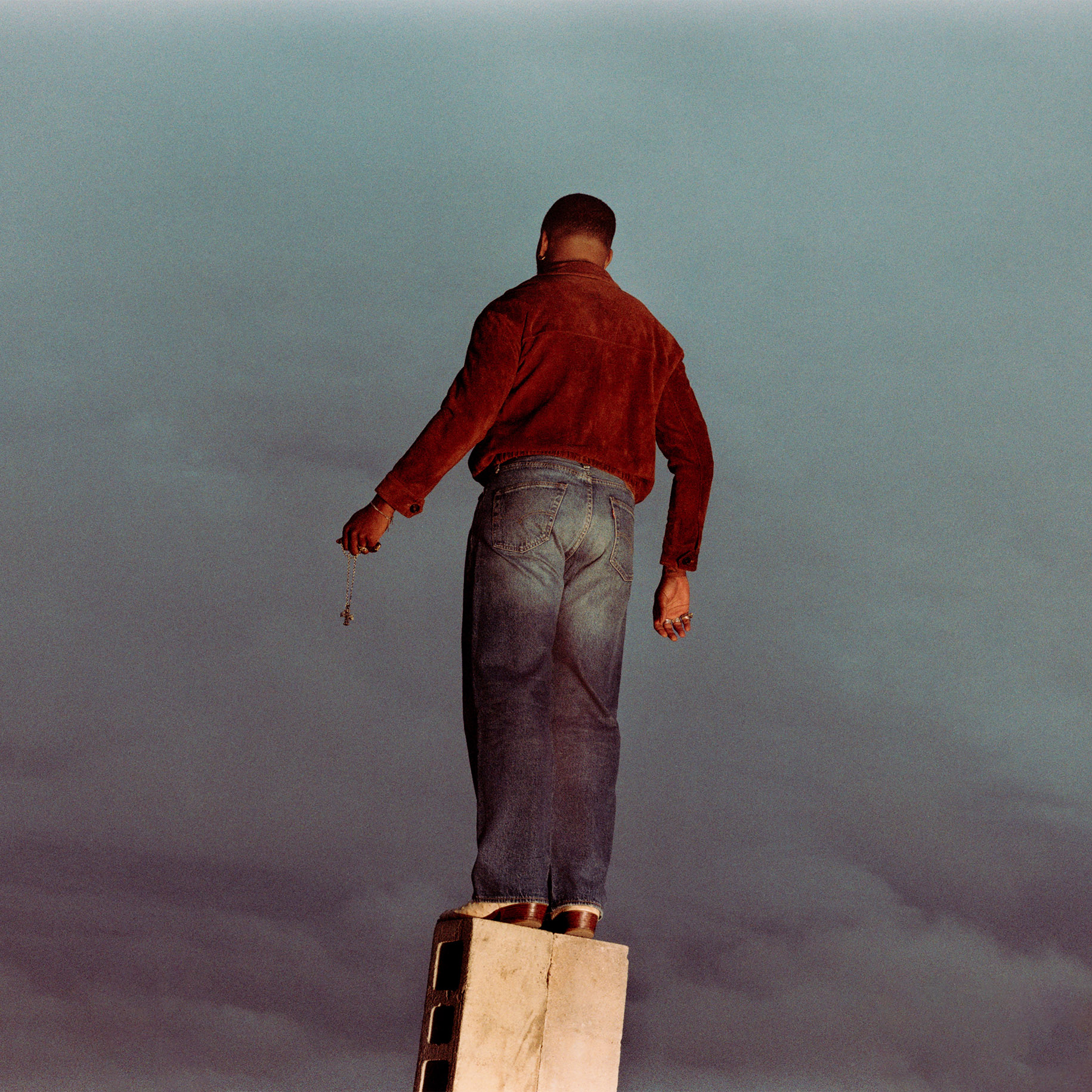
How Far We’ve Come EP
His relationship with live music began in church. Skinner grew up singing and playing there, around call and response, around music that depended on people answering one another. “The live space is sacred space,” he says. “I grew up playing and singing in church, and that sort of playing in community with people for the reason of something larger than you is something that I try to bring into my musical practice in general, but specifically in the live space.”
A record can spend most of its life somewhere much more private now. Inside headphones. In a bedroom. On a walk. In a car. A song can become important to somebody without the person who made it ever seeing their face. “The song is a vessel for that,” he says of performing. “Whereas recording, the song is a vessel for maybe a more internal [experience].”
Skinner has spent enough time around other artists to distrust the mythology that can gather around a solo career. One name appears at the top. One person becomes the center of every photograph. The work starts to look as though it emerged from one mind untouched by everyone around it.
“I don’t like the culture around it,” he says. “I don’t even like artistic celebrity or the sort of heightened individualism of, like, ‘This person’s a genius. These ideas could only come from this person.’ I think we’re all regular people.”
He can hear too many other people inside his own work to pretend otherwise. “Everything that I am is an amalgamation of all the things that I’ve experienced and all the people that I’ve been with, all the people and artists that I’m inspired by, the ancestry that has lived and made music and created.”
What he thinks about more seriously is what he is doing with the attention once it arrives.
“What is it that I have to say?” he asks. “What is the reason that I’m sort of stepping into this space? What is my responsibility as an artist?”
Nina Simone comes up. James Baldwin. Marvin Gaye. Skinner speaks about artists who treated making work as something connected to the world around them, not sealed off from it. “Carry the Devil Side,” the final track on How Far We’ve Come, reaches furthest in that direction. Skinner calls it the record’s most socially active song, moving outward from the private questions running through the rest of the EP.
“There is more to come,” he says.
Part of that “more” has already occupied nearly a decade. The album Skinner has been working on is still there, still unfinished enough in his mind that he has refused to rush it into the world.
The patience in his work has roots in North Texas. Skinner grew up in Plano before attending Booker T. Washington High School for the Performing and Visual Arts in Dallas. When he talks about genre now, he rarely starts with sound. He talks about culture.
“I think about my grandma’s pecan tree and her blackberry bushes,” he says. “The paintings that my mom had on the wall and the little statues that she had.”
Church comes up again. Family. The places where art first appeared before anybody called it a career. “I don’t think I would be the artist that I am today if it weren’t for that upbringing, and Booker T. specifically,” he says. “I grew up in a suburb of Dallas, Plano, and I think if I didn’t go to Booker T., I’d be a different person.”
At Booker T., Skinner found young people willing to be visibly unfinished. They painted, danced, played music, tried things and changed their minds.
“It was one of the first times where I was surrounded by people my age who weren’t afraid to be who they were, weren’t afraid to be in discovery of who they were, and to express themselves.”
Years later, Skinner is still comfortable leaving part of the answer unresolved. A recording can take years and still change completely onstage. A project can carry his name while containing dozens of other people. A song can sound like advice and still be directed back at the person singing it.
For somebody who has spent this long learning how to make records, Skinner seems perfectly happy to let a song leave before he knows exactly where it is going.