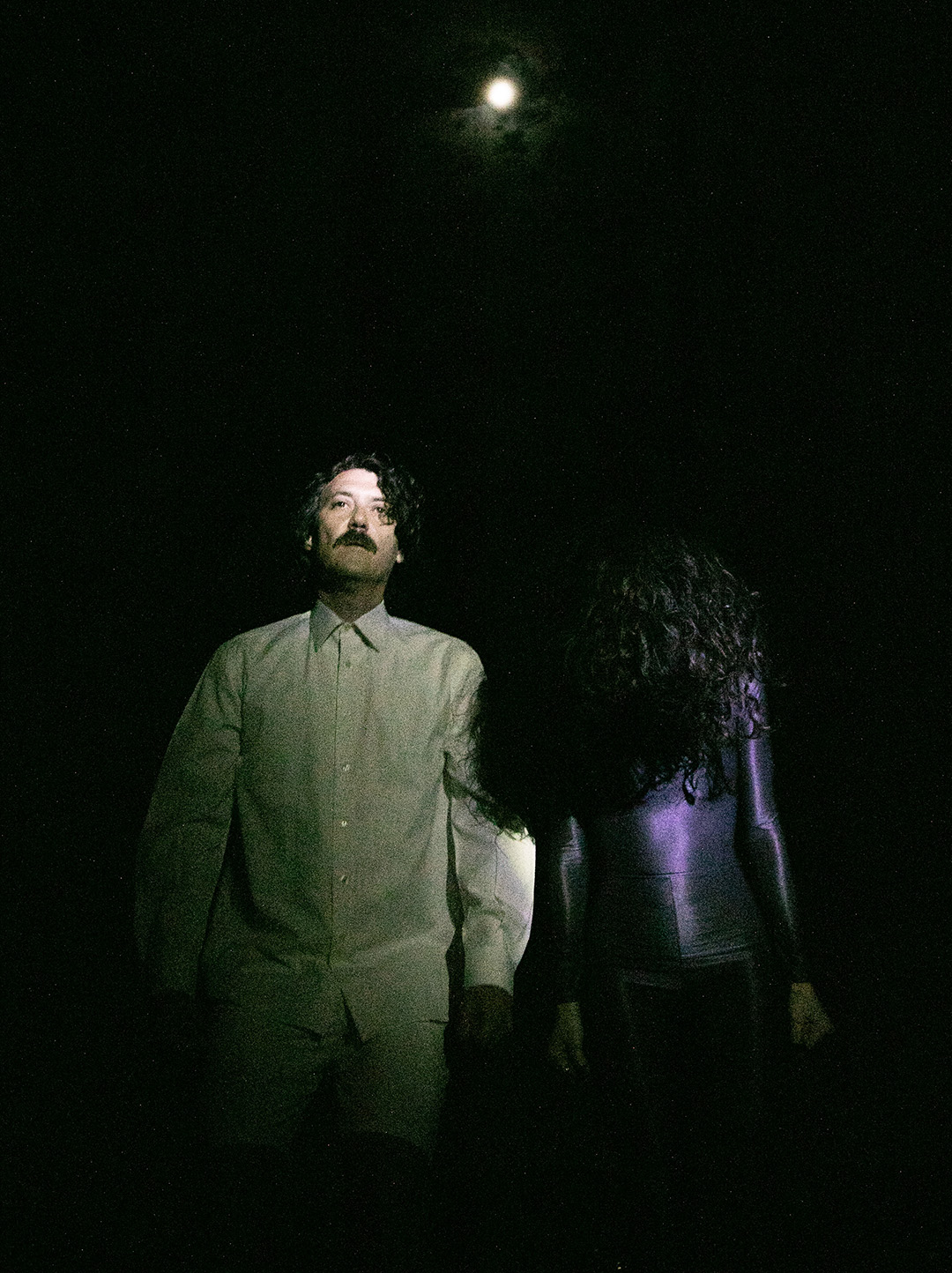
Los Sara Fontán Rage Against the Finished Version.
Los Sara Fontán have never seemed particularly interested in making music behave properly. Songs arrive before they are finished, mutate in public, disappear for a while, then return changed. Records are made only after the material has already lived in rooms with other people.
– WORDS BY CJ • PHOTOS COURTESY OF LOS SARA FONTÁN
Even the physical edition of Consuelo refuses to sit still, with stickers carrying phrases the duo collected over the previous two years and artwork that allows the listener to alter the title itself. “We like to play around with forms to make it fun,” they explain. “If the songs may change when we play them live, the album artwork and title can change too, depending on the listener’s mood.”
That instinct goes back to the beginning of the project. Los Sara Fontán initially resisted recording because they wanted to push against the standard album-promo-tour cycle and restore some importance to the physical act of sharing music in real time. “We didn’t record albums to break the industry’s established norms,” they say, “and to re-emphasise the physical aspect of sharing a moment in time with other people without needing to know each other virtually beforehand.” Eventually, though, the fear of disappearing entirely complicated that idea. They recorded partly because they wanted the music to last, and partly because listeners should be able to return to it whenever they choose.
That contradiction sits comfortably inside Consuelo. The record is concerned with relief, but not the kind that asks you to look away. Asked whether music can really change how people live, or whether giving someone somewhere to escape for forty minutes is enough, they keep both possibilities alive. “A place to escape to and spend some time without thinking, a place to immerse yourself in and just be,” they say. “But also the music allows us to imagine other realities, it gives us space to think.”
For Los Sara Fontán, that second possibility becomes most meaningful in the kind of musical ecosystem they have chosen to inhabit. DIY collectives, small spaces, active listening and communities built outside the most obvious commercial routes are not decorative context.
“Making music, collaborating with a DIY collective, engaging in active listening… these are musical acts that remind us we still possess agency to do things and, consequently, to change things.”
Agency is useful for understanding almost everything they do. They think about where they play, who is paying, what a ticket should cost in a particular country or community, and whether there is a human relationship behind the show rather than a simple producer-distributor-consumer exchange. They continue to play DIY spaces and involve themselves in those communities even as the audience grows.
What is interesting is that they do not turn any of this into a fantasy of perfect purity. “It’s almost impossible to not have contradictions,” they admit. Sometimes a situation becomes something other than what you expected. Sometimes you get sidetracked by “a handful of bills” that solve your financial problems for the next few months. Their version of independence is less about pretending they have escaped the system than about continually looking at what they are participating in.
That attentiveness becomes much darker on “Zapatos, Selfie, Genocidio, Makeup,” a title that initially sounds almost absurd until you realize it describes the normal experience of looking at a phone. Shoes. A selfie. Images of mass death. A makeup tutorial. Another advert. Another atrocity.
That is also how they know when a piece has become too finished. “When you lose the freshness of it, when the risk of making mistakes gets too minimal, when every passage feels too well-controlled, and you can relax: right before that moment, that’s when we tend to stop.”
It is almost the inverse of the way most bands are taught to work. Total control is not the goal. Once the danger disappears, some essential quality has gone with it.
Their recording process preserves that instability. Songs often exist onstage for a long time before they are documented, and audiences hear versions that are still changing. “It also means not being afraid to share a non-final version of the music with the public,” they say. “Trying out different versions with different listeners helps us find the best one.” Sometimes that version gets recorded. Sometimes it does not. Often the recording arrives just as the duo are becoming ready to leave the material behind and begin exploring something else.
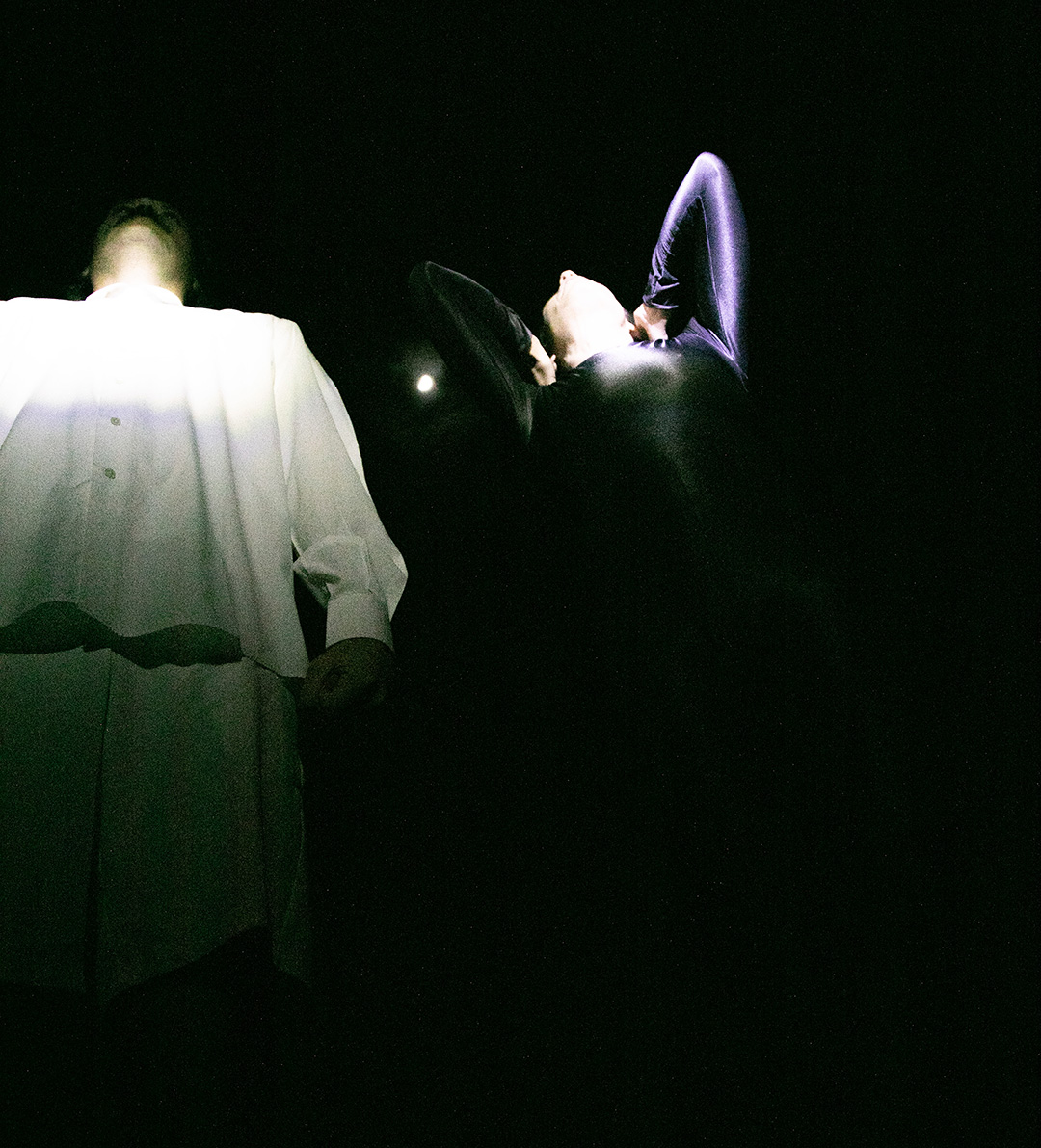
At the center of Consuelo sits “Creer Fuerte,” a piece they associate with hope, though hope is not something either musician romanticizes. “We definitely need to practice it,” they say. Their response to the present is not denial but cultivation: learning about inspiring initiatives, learning from the past, gathering with people, thinking collectively about “how to live, how to celebrate, what to play, what to listen, what to cook.”
There is something deliberately small-scale about that answer, and perhaps that is the point. Consuelo never pretends music is going to fix everything. What Los Sara Fontán do believe is that making things together can remind people they are not entirely powerless.
For now, there is still plenty of room left inside the project. “Our approach to composing and creating is gradually taking shape and we’re slowly finding our identity,” they say, “but as we haven’t settled on any particular style, we don’t know what we might become or how we might sound in the next phase.”
That uncertainty is not a problem to solve. It is the reason they are still here.