Justin Strauss and the Art of Staying Curious.
There is something immediately infectious about Justin Strauss’s enthusiasm for music. Here is somebody who has spent a lifetime in and around New York’s most influential musical movements, helped soundtrack the city’s extraordinary nightlife, and remixed records for generations of artists, yet talks about music with all the excitement of somebody who is still discovering what it can do.
– WORDS BY CJ • PHOTOS COURTESY OF JUSTIN STRAUSS
He has more than enough history to occupy an entire conversation, yet he seems far more interested in talking about a record he heard recently, an artist whose music caught his attention or the album he has been making with his friends.
Strauss has reached a point in his career where looking backward would be understandable, perhaps even expected. Instead, he continues to approach music with the curiosity of somebody who has only recently discovered what it can offer. He still goes out to hear other DJs, still tracks down unfamiliar records and still gets excited about being in a studio without knowing exactly where a piece of music might lead.
“That’s why I’m still doing it is I’m still excited about music,” he says. “And the day that I’m not is the day that, you know, I’ll hang it up, I guess. But I don’t see that day coming, honestly.”
That enthusiasm is particularly apparent when the conversation turns to All of the Above, his forthcoming first solo album. What began as an idea for an EP gradually became ten songs, bringing together different periods of his musical life without attempting to organize them into a tidy retrospective. For Strauss, whose career has moved through punk, disco, electronic music, production and performance, the title feels like a natural description of everything he brings into the studio.
“It does not have a… It has me, you know? And all that comes with me, for better or worse,” he says. “The album’s called All of the Above, and that kind of says it all, I think.”
His recording career began with Milk ‘N’ Cookies, the New York power-pop band he joined while still in school. Signed to Island Records, the group emerged during an extraordinary period in the city’s musical history, playing CBGB and Max’s Kansas City while punk, glam and new wave were beginning to reshape popular music. The band eventually dissolved, although its recordings would develop a substantial cult following and lead to reunion performances decades later.
For Strauss, the end of Milk ‘N’ Cookies also opened an unexpected door. DJing wasn’t something he had planned to pursue, and he readily admits that his first professional DJ engagement was also his first actual attempt at doing it. What he discovered was a freedom that had been harder to find within the complicated relationships of a band.
“When you’re the one who’s making decisions, and you don’t have to involve a million people, it was kind of freeing in a way.”
That accidental beginning became another musical education. Strauss moved through New York nightlife as clubs such as the Mudd Club, Area and the Ritz brought together people, sounds and communities that didn’t necessarily fit into established musical categories. Punk records could sit alongside disco, dub, reggae and emerging electronic music, and Strauss absorbed those connections without feeling the need to explain them.
“In my head it’s all connected,” he says. “You could play, you know, a punk record or a punky record with a deep, you know, whatever groove. It all works.”
That approach remains central to his DJing. Strauss doesn’t plan his sets in advance, preferring to respond instinctively to the records and the room. He remembers becoming disillusioned with dance music during the late nineties, when the culture seemed to have become overly concerned with maintaining clearly defined musical boundaries. Hearing DJs such as Optimo, Trevor Jackson and the Glimmers, alongside the emerging influence of DFA and LCD Soundsystem, helped restore his excitement.
Their willingness to move freely between styles reminded him of the musical environment in which he had grown up. More importantly, those artists were finding fresh possibilities within ideas that had existed for decades. The pleasure came from hearing familiar influences rearranged into something unexpected.
That same openness explains his enthusiasm for New York duo Fcukers, whose contemporary interpretation of dance music immediately appealed to Strauss. After meeting Jackson Walker Lewis and Shanny Wise, he agreed to remix their music shortly before the duo’s profile began rising rapidly.
“I obviously get all the references,” he says, “but presented in a new and exciting way.”
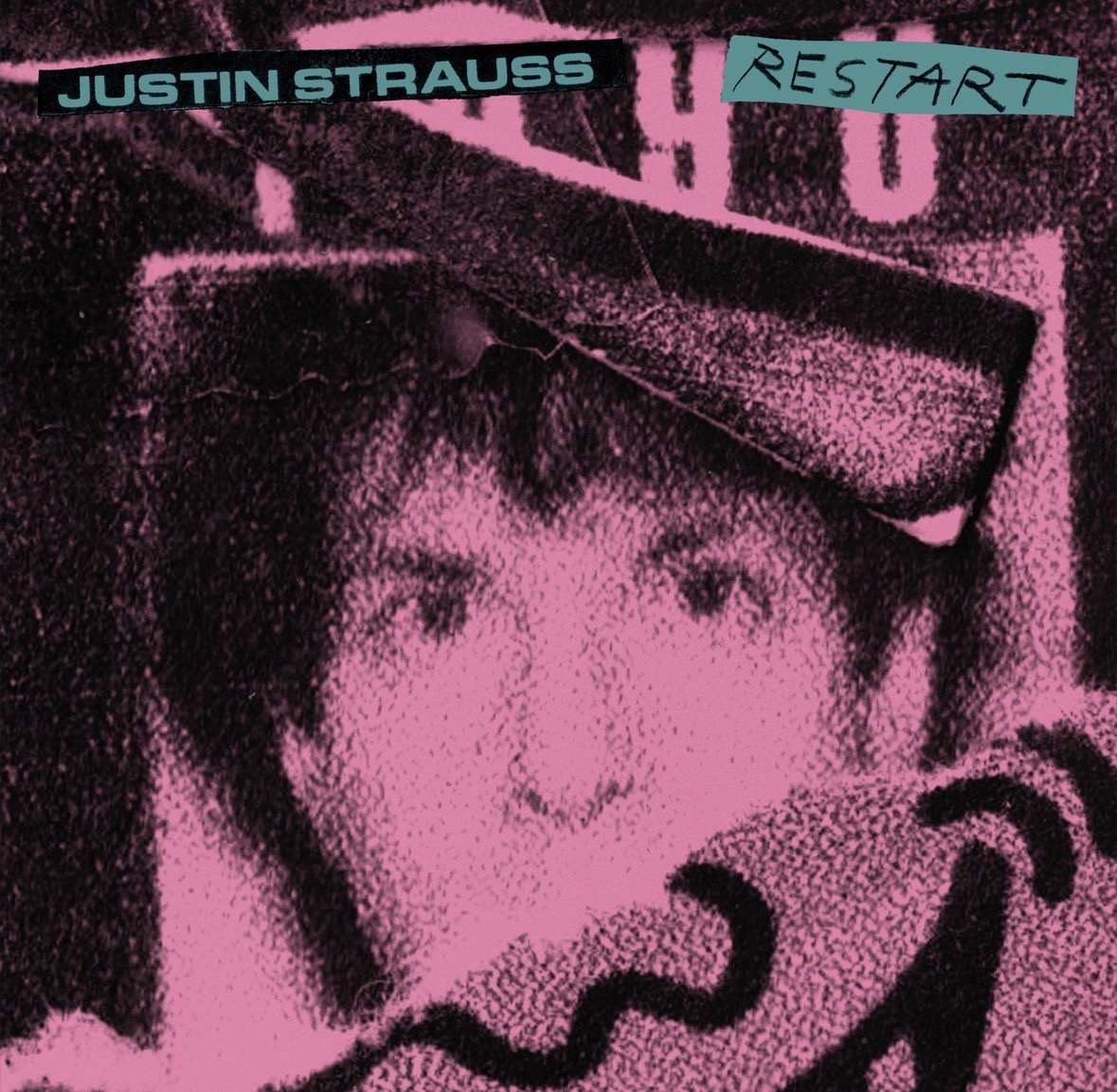
Justin Strauss’ New Single Restart
He speaks warmly about their success, emphasizing that both musicians had spent years developing their craft before attracting wider attention. Strauss recognizes where their influences originate, but he appreciates the imagination involved in doing something different with them. His interest in younger artists has never depended on whether they sound entirely unfamiliar. He is listening for somebody with an individual way of putting things together.
The remix also reflects the working relationships that have become important to his current creative life. Strauss has been collaborating with Andrew Raposo, formerly of Midnight Magic and Hercules and Love Affair, developing music through an instinctive process of rhythms, basslines and experimentation. Their sessions frequently begin without a rigid destination, allowing an idea to grow through the pleasure of making it.
Strauss remembers when substantial remix budgets made it possible to produce several different versions of a single track. Those opportunities have diminished, but he has adapted without becoming preoccupied with what has disappeared. Working on one definitive version can bring its own creative focus.
“I love doing remixes,” he says. “I find it very inspiring and I really love getting in there and playing around with someone else’s stuff and taking it to some other place.”
That instinct now extends into All of the Above, where Strauss is no longer responding to another artist’s original recording. The album gives him room to pursue ideas entirely on his own terms, bringing his voice back into the foreground. He sings on every song, reconnecting with the experience of being a frontman while carrying everything he has learned through decades behind the decks and inside recording studios.
His collaborations with Max Pask as Each Other and with Joe Goddard and Marcus Marr as Extra Credit have already helped return him to songwriting and performing. Both projects have released music through Soulwax’s DEEWEE label, with further recordings in development. The solo album emerged partly from that renewed creative energy, as ideas continued accumulating beyond the projects he already had underway.
“I have all these ideas, and I need to do something with them,” he remembers thinking.
Much of the album was recorded in Brooklyn with Raposo, while its first single, “Restart,” came together with Hot Chip’s Joe Goddard at his London studio. Strauss describes making the record alongside musicians whose work he genuinely admires, drawing on friendships and creative relationships rather than assembling a collection of collaborators for their reputations.
The title All of the Above suggests a refusal to narrow those influences into one particular identity. Across a career that began in a guitar band before moving into dance music, Strauss has accumulated an understanding of how different musical approaches can coexist. Making an album under his own name offers a chance to bring those experiences together without having to choose which version of himself should take precedence.
“I’m super proud of it,” he says. “I’m excited, you know, in a whole new way again.”
He admits that preparing an entire album for release has involved considerably more work than he anticipated, even after spending most of his adult life making records. But the practical demands haven’t diminished his enthusiasm. Working with German label hfn music, he is looking forward to sharing something that feels distinctly personal, with additional remixes also in development.
What makes Strauss particularly compelling is that this excitement extends well beyond his own recordings. He still plays in New York almost every weekend when he isn’t traveling, and he continues to spend time listening to other DJs. Discovering an unfamiliar record remains one of the most satisfying experiences he knows.
“If I go out and hear one track that I never heard before, that’s the reason I went out.”
He will happily pursue a record through friends, record shops or Discogs, although he has little interest in romanticizing the inconvenience of searching before everything became readily accessible online. The methods have changed; the desire to hear something wonderful hasn’t.

His attitude toward nightlife follows a similar philosophy. Strauss remembers when friends would arrive at New York clubs without making arrangements, knowing they would probably find one another inside. He understands why people miss that spontaneity, and he recognizes how phones have altered the experience of a dance floor. Still, he resists the temptation to treat everything about contemporary club culture as inferior.
“You can either bitch about it or you can just accept it and find ways to still make it fresh and exciting and interesting,” he says.
There are limits, of course. He has little patience for somebody thrusting a phone into his face to request a song, and he worries about the loss of communal attention when a night becomes more concerned with documenting an experience than participating in it. But neither does he particularly enjoy the growing impulse to regulate every aspect of how people behave.
For Strauss, the essential reason people go out remains remarkably consistent. They want to hear music, spend time together and enjoy an experience that cannot be entirely predicted beforehand.
His recent visit to Dallas reinforced that belief. Appearing at Shy Boy alongside DJ Sober, Strauss hosted a listening session and conversation about his remixes before playing a club set. He admits that performing in American cities outside New York can still feel uncertain, particularly when he doesn’t know how familiar an audience might be with his music.
The response was everything he could have hoped for.
“Everybody was just into it,” he says. “A lot of these people never heard of me or whatever, but they’ve come out to have a good time, and they did.”
There is something wonderfully uncomplicated about that satisfaction. Strauss has played some of the world’s most celebrated rooms and contributed to a remarkable amount of recorded music, yet the experience of reaching a new audience can still delight him. He remains willing to take on smaller engagements simply because the party sounds interesting, understanding that the pleasure of participating in music cannot be measured entirely by a fee.
“It’s my job, and it’s been my job, but it’s more than a job. It’s my life, really,” he says.
That distinction helps explain why All of the Above feels like a beginning rather than a conclusion. Strauss isn’t making the album to commemorate everything he has achieved. He is making it because there are still ideas he wants to explore and people he wants to create with.
More than fifty years after Milk ‘N’ Cookies, he remains an active participant in the musical culture he helped shape, as interested in its emerging possibilities as its remarkable history. There will always be another record to discover, another artist to meet and another unexpected direction a studio session might take.
For Justin Strauss, that has always been the exciting part.
Justin Strauss’s new single “Restart” is out now. His forthcoming solo album, All of the Above, will be released through hfn music.