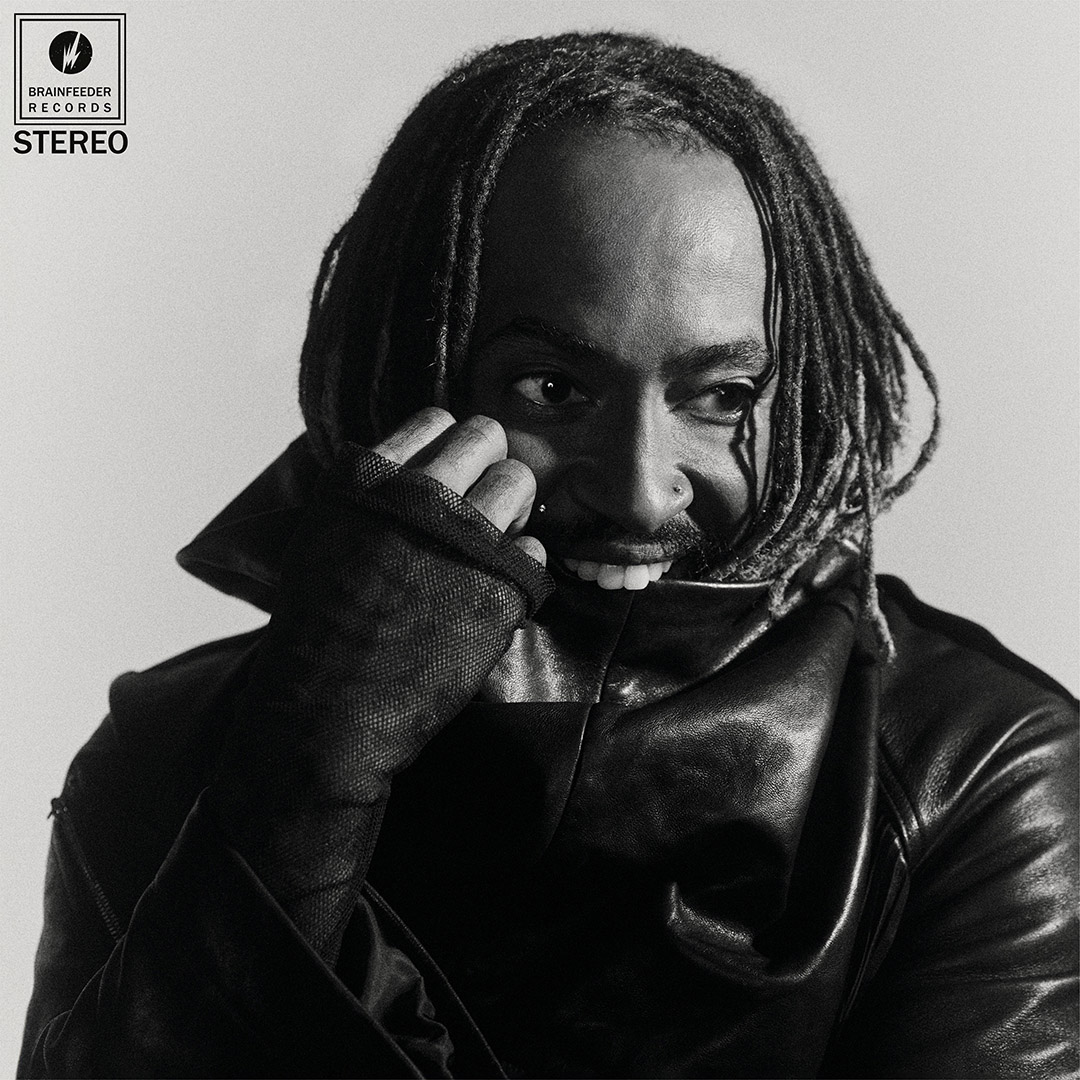
Thundercat on Everyday Dysfunction and Breaking the Matrix.
Ahead of his November 8 Dallas show, Thundercat talks about why he needs distraction to concentrate, what happens when he lets other musicians into his songs and the strange expectations audiences bring to live music.
– WORDS BY CJ • PHOTOS COURTESY OF THUNDERCAT
Thundercat has a theory about what happens when a musician plays something an audience isn’t expecting. You can spend years learning an instrument and still find that somebody in the room would rather hear the record exactly as it sounded at home. The moment you depart from it, he reckons, you’ve done something almost supernatural. “The moment it doesn’t sound like the album,” he tells JAMBALOO, “you’ve broke the matrix, you’ve become Neo, and all of a sudden, ‘I don’t know what this is. I’m scared.’” The point is serious enough. We’ve developed some peculiar ideas about what we should expect from live musicians.
His bass playing has been an unmistakable presence in the music of Kendrick Lamar, Flying Lotus and Mac Miller, while his own records draw on jazz fusion, funk, R&B, progressive rock and whatever else happens to catch his attention. The musical ideas can be fiendishly complicated, but he’s never seemed especially interested in making complexity the point. A Thundercat song can be funny, tender, absurd and technically bewildering in the space of a few minutes, sometimes all at once.
His fifth album, Distracted, arrived six years after It Is What It Is, with a title that seems a concise description of contemporary life. We live surrounded by people, notifications, obligations and an effectively limitless supply of things to pay attention to, while trying to concentrate on something else. I ask whether these interruptions became part of the creative process, mentioning John Lennon’s reported habit of keeping televisions and radios going while he worked, or whether making the record offered a way of escaping them.
“I think that a lot of my space and time is filled with a lot of different people, different things,” he says. “Somewhere between the people in my life versus the natural functionality of social media and things like this, I think that they all play a factor in said distractions.”
PHOTO BY NEIL KRUG
Then he offers an explanation that makes more sense of the album than any tidy theory about the modern attention economy. “There’s kind of a bit of a cheekiness to a degree where it’s kind of like, actually, I’m very much a person that has to be distracted to focus.”
That line is the way into Distracted.
The arrangements continually offer something new to follow: a sound appearing off to one side, a brief flourish, another idea arriving before the previous one has quite finished. Yet the songs don’t collapse under the weight of everything happening around them. He’s comfortable with several things competing for his attention. Instead of treating distraction as the enemy of creativity, he has found a way to work with it.
The wonderfully funny “Great Americans” takes that sensibility into everyday life, turning procrastination, overthinking and conversations with his cats into a miniature catalogue of the things that can occupy a day without anything much getting done. I ask how he recognizes that one of those seemingly trivial observations might become a song. He sounds almost surprised that I’m looking for a particular moment of inspiration. “I feel like that’s everyday level dysfunction right there,” he says. “It’s not one specific thing. That is the general consensus of dysfunction.” It’s ordinary life, with the world’s problems waiting every morning.
There’s more of that self-awareness in titles like “I Wish I Didn’t Waste Your Time” and “I Did This to Myself,” which manage to sound like admissions of defeat before you’ve even pressed play. Thundercat has always understood that the distance between tragedy and comedy can be remarkably small, but I wonder whether placing these songs together revealed a larger story he hadn’t necessarily intended to tell. He doesn’t try to manufacture one for me. “This was the process for this album,” he explains. “Again, this is my first album in a few years after such drastic life changes, so it’s like getting to know what this is for me. It’s been a new experience.”
He doesn’t try to explain those changes neatly, and the record doesn’t demand it. What is striking is the freedom he gives himself to discover the shape of a song in the company of other musicians. The opening track, “Candlelight,” pays tribute to Reggie Andrews, the Los Angeles music educator who taught Bruner, and Meghan Stabile, whose work connecting jazz and hip-hop musicians through Revive Music Group helped create space for a new generation of artists. Thundercat invited DOMi and JD Beck to play on it, an interesting decision for such a personal dedication. I ask whether bringing other people into something personal says something about the way he understands collaboration.
“I don’t really fuss with the flow of things,” he says. “I’m kind of like a person that believes that things are as they should be sometimes.” What interests him isn’t holding tight to a particular arrangement or protecting a song from somebody else’s instincts. He values “the practice of letting go and being open to the process” over getting stuck on a predetermined intention. “I just allow it to happen,” he says.
It’s a generous philosophy for a musician capable of so much himself. Collaborators are not simply there to execute instructions or decorate an already complete idea. They can change what the idea becomes, which makes it all the more interesting that Greg Kurstin played such an important role in Distracted. Kurstin is a songwriter and producer with an extraordinary ability to bring a melody into focus, and I wonder whether his presence helped keep Thundercat’s songs from being swallowed by their elaborate arrangements. Did he know when a song was finished?
Thundercat doesn’t describe the relationship as a contest between experimentation and discipline. “I really love and appreciate Greg as a musician and an artist,” he says. “We just spoke the same language a lot, and he understood the things that I was trying to create or shape.” He pauses, looking for a way to explain something that apparently came quite naturally. “I feel like Greg knew how to bring these things out of me a bit.” He’s equally enthusiastic about Kurstin’s contribution: “His contribution was just absolutely awesome to everything that was created with this album.” Rather than somebody telling him to stop exploring, he seems to have found someone who knew how to explore alongside him.
Of course, the studio is only one part of Thundercat’s musical life. He’s now a couple of weeks into the Distracted AF Tour, and I ask whether any of the new songs have behaved in an unexpected way once he and his band began playing them live. He can’t think of one, largely because he never expected the arrangements to remain fixed.
PHOTO BY NEIL KRUG
“I think I make music with the intention of just playing it,” he says. “I’ve never really separated something like that. I’ve always believed in the ability of the musicians on stage and what it presents.” After another moment he finds a better way of putting it: “I’ve always expected it to be different.”
Here he becomes animated. We start talking about the peculiar pleasure of watching a group of musicians respond to one another rather than reproduce a recording note for note, and he points out that the freedom to do that isn’t distributed equally across popular music. Rock audiences understand the appeal of live musicianship, and jazz audiences positively expect it. But for artists whose records sit somewhere between those traditions and contemporary pop production, the conversation can become considerably more complicated.
“People forget live instrumentation, I think, sometimes,” he says. “A lot of the time it has to do with what has made it to the top in the music culture.” Whether an audience accepts a band changing the shape of a song, he suggests, depends partly on where they’ve been taught that kind of freedom belongs. “With rock music, these things are very encouraged. Even when it comes to real hardcore jazz music, it’s really encouraged. But there’s kind of like a no man’s land in between, where guys like me, Steve Lacy and Anderson .Paak exist.”
He doesn’t mean that these artists lack musicianship. Quite the opposite. “It’s kind of somewhere in between where it’s the sound of the record, but then it’s also we’re actual live instrumentalists.” The music can sound as modern and intricately produced as anything on the radio, yet its creators are perfectly capable of pulling the arrangements apart and rebuilding them onstage. And because the record is definitive in so many listeners’ minds, that freedom can be mistaken for a failure to deliver what they came to hear.
Thundercat sees a history being forgotten in the process. “Nobody complained about … the Soft Machine or Jimi Hendrix or Tony Williams or Stanley Clarke,” he says, reaching for artists whose performances were never intended as museum-quality reproductions of studio recordings. “It’s all part of the live experience.”
Thundercat thinks the territory between these musical worlds is opening up again, in part because the range of sounds that can exist within popular culture has grown so much. But it isn’t really about genre. It’s about remembering that musicians are people making decisions in real time, and that some of the most rewarding moments in a performance happen when they have the confidence to follow an idea without knowing exactly where it will lead. His own records have always made room for that curiosity. Hearing him speak, you get the impression that taking it away onstage would defeat much of the purpose of playing them.
He’ll bring the Distracted AF Tour to Dallas on November 8, with five albums to choose from and plenty of expectations about the setlist. I ask how he balances those requests with his enthusiasm for the new material. The answer is entirely consistent with everything else he’s said. “I just feel it out,” he explains. “I genuinely just try to feel it out. It’s so much more than just the playing, the live experience, so I genuinely just try to feel it out and interact and have fun with the crowd, and it’ll kind of inform what decisions get made.”
Thundercat doesn’t see much reason to complicate that part of the job. He can spend years constructing a record full of microscopic musical details, then walk onstage and trust the people around him, including the audience, to help determine where the evening goes. If a song sounds different from the album, there’s a good chance that’s because something worth hearing is happening in front of you. And if, for a moment, it feels as though somebody has broken the matrix, Thundercat would probably suggest enjoying the view.
Thundercat plays The Bomb Factory in Dallas on Sunday, November 8, as part of the Distracted AF Tour. Distracted is out now on Brainfeeder.