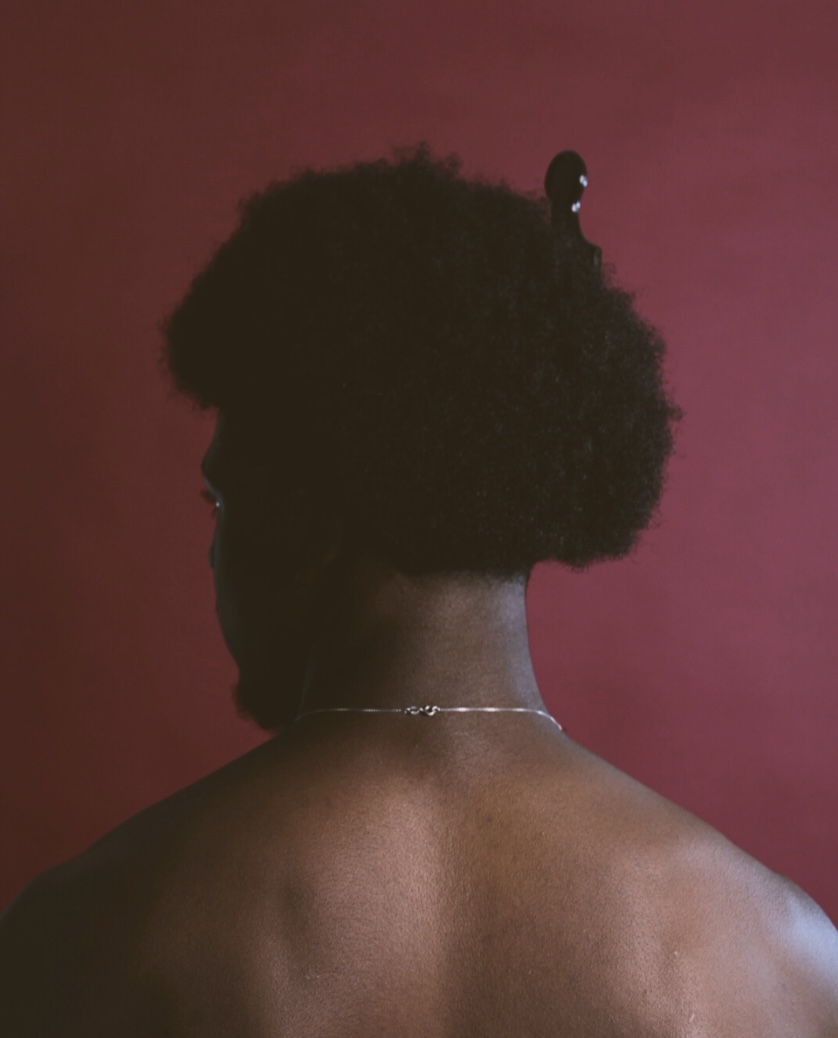
KOLE ON MAKING THE MUSIC HE WANTS TO HEAR, AND LEAVING NO ROOM FOR COMPROMISE.
Kole is trying to find something on his phone. It’s a note he’s had pinned for years, a reminder about making music that he returns to whenever he finds himself questioning a decision.
– WORDS BY CJ • PHOTOS COURTESY OF KOLE
Unfortunately, like most things stored somewhere in the increasingly ridiculous depths of our phones, it has disappeared precisely when he needs it.
He laughs about how this always happens, before explaining that the message is simple enough anyway. Don’t compromise. Don’t abandon something you love the sound of because somebody else thinks there’s a more technically correct way of doing it. Trust your ears.
It’s a surprisingly confident philosophy for a twenty-year-old musician, although having listened to his new album, i ran away from dallas., it makes perfect sense.
We’re speaking on a Friday morning, and Kole is in San Francisco, where he’s studying jazz and bass at the San Francisco Conservatory of Music. I’ve seen him perform twice in North Texas, including a remarkable appearance at Granada Theater where his confidence and ability to command an audience immediately caught my attention. There’s something instinctive about the way he performs, a quality that carries over into his recordings, where an increasingly adventurous approach to production is beginning to distinguish him from many of his contemporaries.
The album’s title is the first thing I want to understand. There’s a considerable difference between leaving somewhere and running away from it, particularly when that somewhere is the city in which you grew up.
“I felt such a weight when I was in my city, just from the way I grew up, the people I knew there,” he explains. “There was so much pressure.”
At eighteen, Kole wanted to experience life beyond Dallas. He’d been making music since he was fifteen, developing his abilities as a rapper and producer, and increasingly felt that remaining in familiar surroundings was restricting what he might accomplish. There were relationships and expectations attached to home that he wanted some distance from, alongside the excitement of discovering somewhere entirely new.
That history runs throughout i ran away from dallas., sometimes appearing quite literally in the song titles. “pressure” examines the expectations he felt growing up and his determination not to compromise his ambitions. “demo 8 / heavier” reaches further into his personal life, particularly the difficult relationship he’d experienced with his mother.
He remembers periods when simply walking into the family home seemed to change his entire physical and emotional state. There was an almost tangible heaviness attached to the building, created by everything unresolved between them. Following therapy, difficult conversations and time spent away, he returned from his first semester in San Francisco and noticed something extraordinary. He could walk into the same house without experiencing that familiar feeling.
The change was significant, although another event would completely transform his understanding of what he’d left behind. His grandmother died around the time he returned home, bringing with it the realization that his pursuit of progress had also meant missing things he could never recover.
“In my mind, this whole thing of progress was being out of my city, but when I came back home, I realized that there was so much that I missed.”
It’s a difficult thing to reconcile when you’re young and ambitious. Everything tells you to keep moving, expanding your horizons and taking whatever opportunities become available. Kole had interpreted leaving Dallas as a necessary part of his development, only to discover that distance had changed his relationship with the city itself. The circumstances that once made him desperate to leave were no longer quite the same, and the place he’d wanted to escape had become somewhere he could appreciate differently.
His move to San Francisco has certainly accelerated his musical education. At the Conservatory, he’s immersing himself in jazz, studying bass and absorbing as much information as possible about harmony, composition and performance. He’s also sharing that experience with guitarist Beck Holland, a longtime friend he’s known since seventh grade. Somehow, the pair attended the same middle school, high school and now college without deliberately arranging any of it.
Kole describes his current circumstances as something of a cocoon, a period of intensive learning before taking everything he’s discovered into the wider world. But what’s particularly interesting is how carefully he separates musical knowledge from musical instinct.
“I don’t particularly mix by a specific standard,” he explains. “I feel like I use these as tools to kind of clean up these ideas that I have going on.”
We get into a conversation about Illmatic, a record we both love, and the way jazz can inform hip-hop without becoming its most conspicuous characteristic. There’s plenty of jazz running through Kole’s music, although it generally operates beneath the surface, influencing the rhythms and arrangements without competing with his voice.
I mention J Dilla and the extraordinary results that can emerge when a producer ignores conventional ideas about timing and precision. We talk about Q-Tip, early sampling techniques and Kevin Shields of My Bloody Valentine, whose obsession with finding precisely the right guitar sound interests Kole enormously. He’s fascinated by musicians who develop a personal language rather than accepting the established methods of making records.
That instinct has become especially important as he’s taken greater control of his own production.
Earlier releases, including THE LOUDEST INTROVERT and Red, documented his development as a performer, but i ran away from dallas. represents a considerable shift in how he works. Producing the album himself allowed him to pursue ideas without translating them through another person’s creative preferences.
“I’m spending every waking hour tweaking the hi-hats and making the snare smack as hard as I possibly can, and having everything in the certain pockets that I want.”
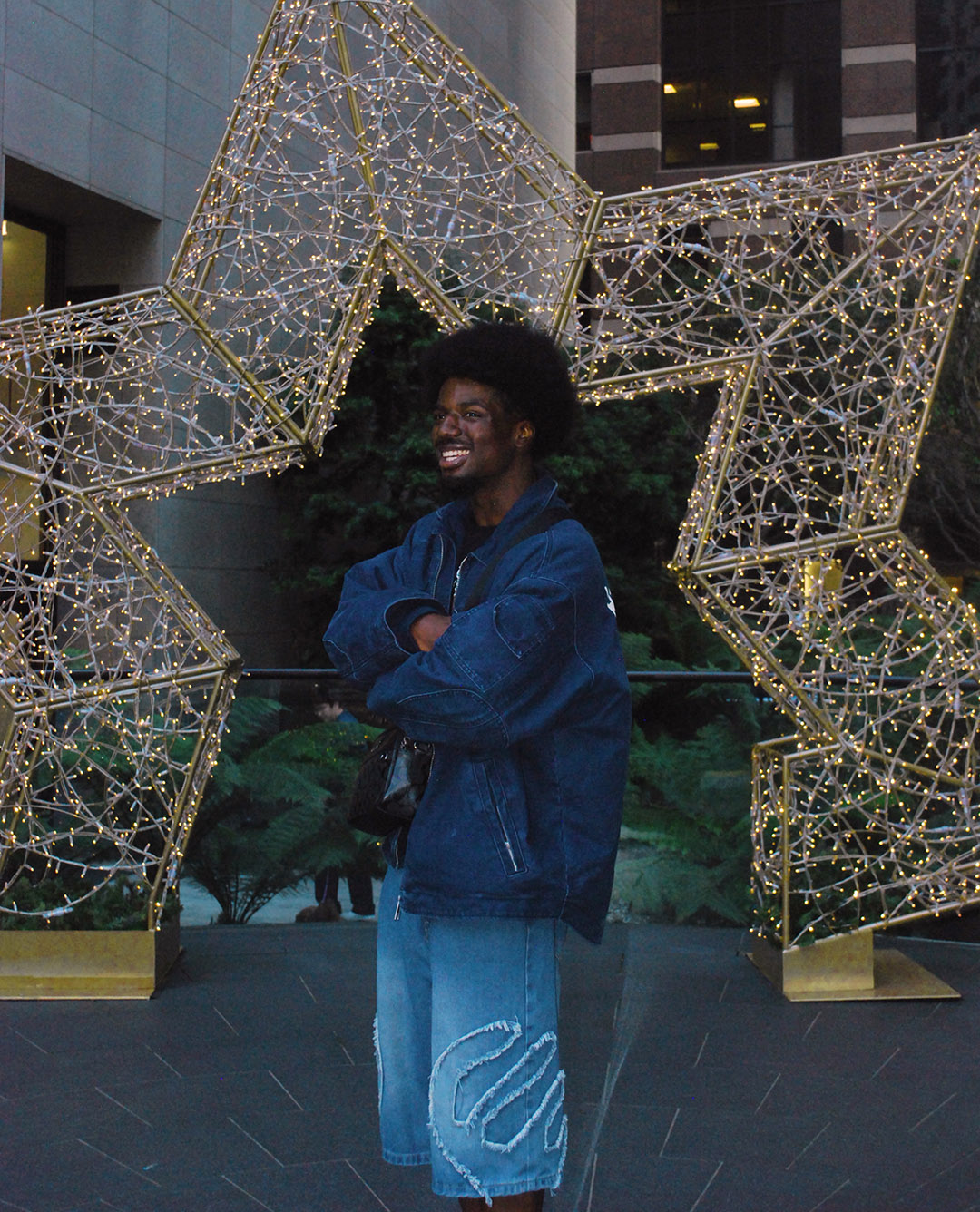
He speaks about these details with infectious enthusiasm. On “whatyouwakeupfor,” featuring Niontay, unusual 808 patterns and percussion arrangements push against the conventions of contemporary hip-hop. Kole describes the recording as a risk, although he believes the willingness to commit fully to those decisions is precisely what makes it successful.
“I want music that people can’t replicate,” he tells me. “If it sounds like I’ve heard it before, I’m probably gonna change it.”
His approach to collaboration follows a similar philosophy. Working with artists such as Trevor Spitta, Niontay and Cure for Paranoia, Kole enjoys imagining the kind of musical setting that might bring out something unexpected in another performer. Being both rapper and producer allows him to approach a feature from two perspectives, creating an arrangement specifically designed for somebody else’s abilities before contributing his own performance.
The album also maintains his longstanding fascination with demos. Kole has released collections of unfinished ideas throughout his career, preserving recordings that capture particular moments without requiring every rough edge to be corrected. With “demo 8 / heavier,” that philosophy becomes especially important because the song documents feelings he was still trying to understand.
“Demo, just as a concept, kind of gives me the space to be as honest as possible.”
There’s something appealing about a producer who can spend hours perfecting the placement of a snare drum while deliberately leaving other aspects of a recording unresolved. Kole understands that certain emotions become less convincing when they’re polished beyond recognition, and the directness of his writing is an important part of the record’s appeal.
Near the beginning of the album, there’s a track called “hi my name is kole.” Considering how much music he’s already released, I wonder why he felt the need to introduce himself again.
He points toward the childhood photograph on the cover, explaining that the record represents a different level of commitment to his ambitions. The person making this music has developed considerably since those earliest releases, and he wanted the introduction to acknowledge that change.
“This is the most direct I’ve ever been,” he says. “I’m really going for this. I really want this for my life and for myself.”
Before we finish, we disappear into a conversation about The Jet Age of Tomorrow, the Odd Future-associated project whose wonderfully unusual production seems like something Kole might enjoy investigating. He immediately starts looking it up, excited at the prospect of discovering another record that might send him somewhere unexpected.
It’s a small moment, but it tells me quite a lot about him. Despite the formal education, the increasingly sophisticated production and his certainty about what he wants to accomplish, he’s still approaching music with enormous curiosity.
At twenty, Kole has already developed a clearer understanding of his musical identity than many artists manage after considerably longer careers. i ran away from dallas. documents the experiences that have brought him to this point, including the complicated relationship with a hometown he once believed he needed to escape.
And somewhere on his phone, there’s still that little reminder about trusting his instincts. Judging by the music he’s making, he seems to have taken the advice rather seriously.