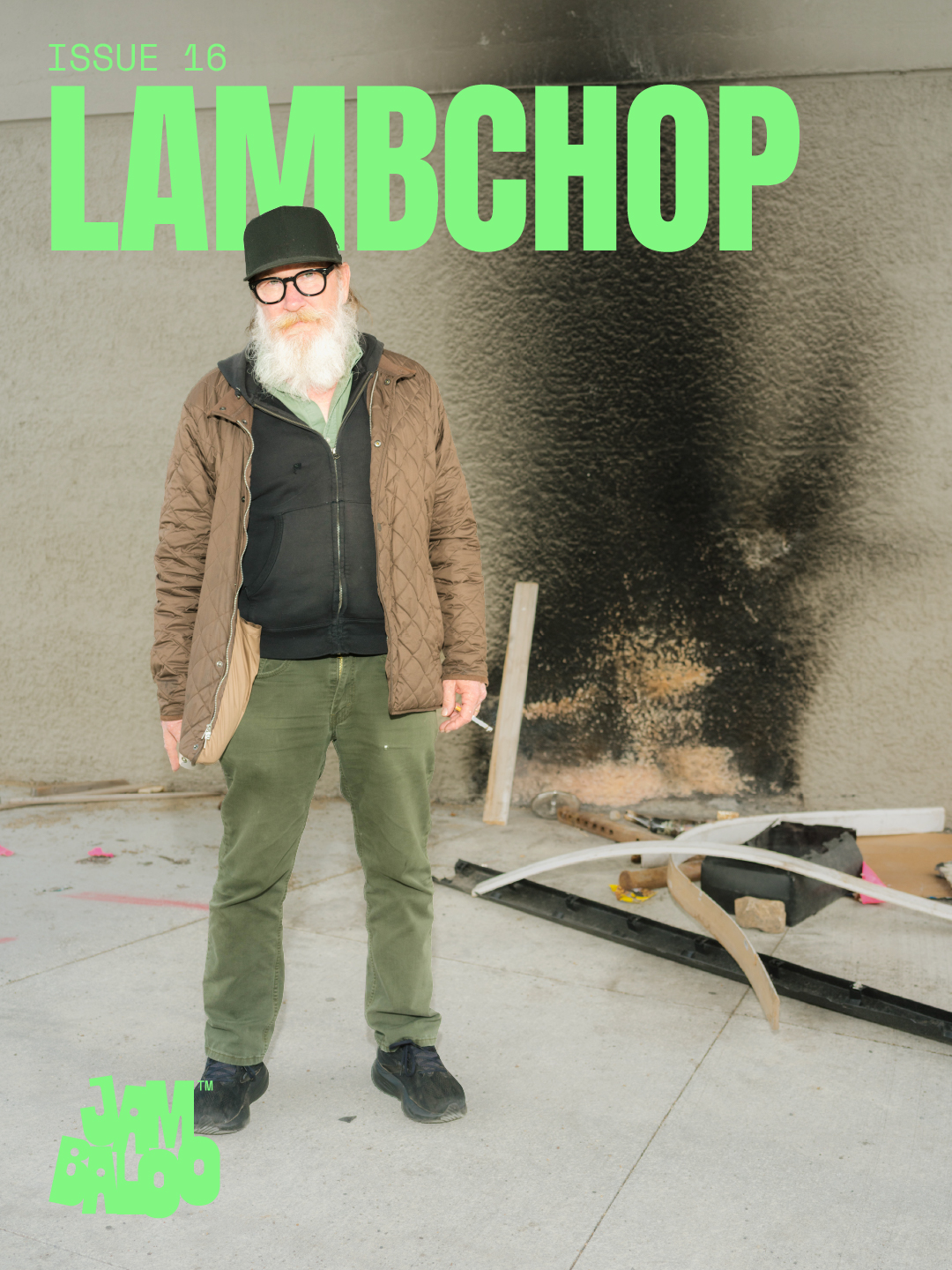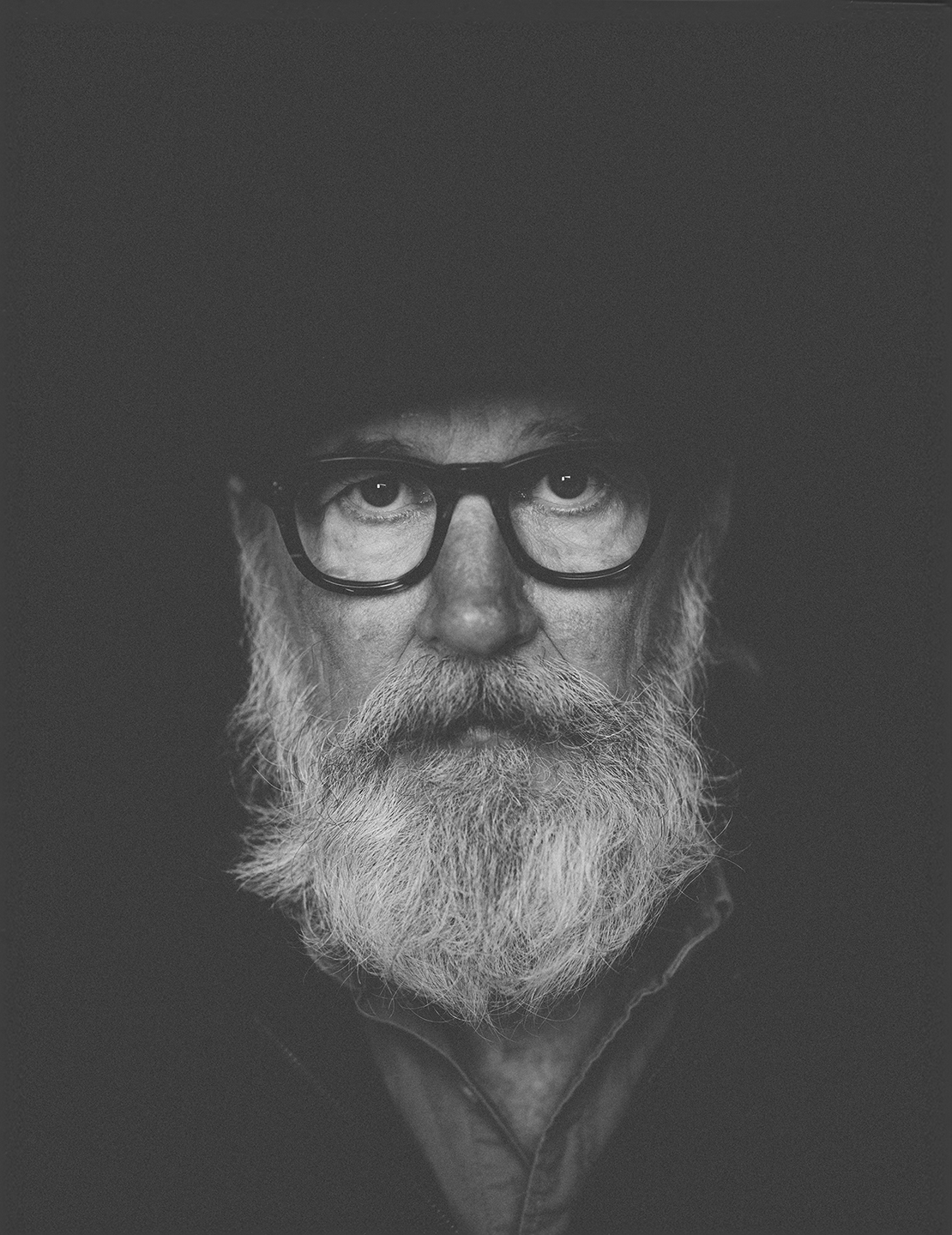
The Art of Stepping Aside: Kurt Wagner on Lambchop, Demoed, and Who Gets to Sing the Songs.
In the early days of Lambchop, the musicians would gather once a week for something closer to a poker night than an organized rehearsal. They would spend a while working through Kurt Wagner’s songs until somebody decided they had done enough of that.
– WORDS BY CJ • PHOTOS BY Graham Tolbert
The instruments would turn toward familiar territory, perhaps Booker T. & the M.G.’s’ “Green Onions,” and Wagner would find himself following the lead of musicians who were happy to spend the rest of the evening playing whatever they fancied.
“I was terrible at playing covers,” he remembers. “I could only play music that I wrote.” The others humored him, to a point. He laughs about it now, with affection. Those excursions taught him things about music he couldn’t have learned while directing the room. Lambchop was always made up of people with their own musical lives and interests, and those weekly gatherings gave everyone an opportunity to bring something different to the music.
More than three decades later, Wagner has made a record that draws on that same openness to other musicians’ instincts. On Demoed, a companion to Lambchop’s 2026 album Punching the Clown, seven songs are handed to other singers, with Wagner stepping away from the microphone. MJ Lenderman sings “Weakened”; Circuit des Yeux’s Haley Fohr and Alan Sparhawk share “A Doctor in the House”; Poliça’s Channy Leaneagh takes “Stella.” Dan Wriggins of Friendship, Lauren Auder, Jenn Wasner of Flock of Dimes, and Mari Rubio of More Eaze complete a group of collaborators whose musical backgrounds and individual approaches are as varied as the musicians who once gathered for the coup.
Wagner is particular about what that means. These are not covers, and Demoed is not a tribute album. They are Lambchop recordings, built from the initial guitar demos, with other people singing in his place.
That becomes particularly relevant when he starts talking about the band’s future. “I’d certainly wanna be part of it,” he says, “but I don’t necessarily wanna be this face, this voice, this thing that’s, like, necessarily part of it.” The music need not always be identified with the man singing it.
Punching the Clown had already begun dismantling some familiar habits. It grew out of Wagner hearing an unidentified recording on the radio: a spare banjo figure and a handful of voices he couldn’t shake from his head. His unsuccessful attempts to find it led toward lined-out singing, a tradition carried from Scotland into Appalachian worship, where a leader gives out the words and a congregation answers. Wagner was drawn to people finding a song together, and how much feeling survived when the arrangements were stripped of nearly everything.
For an artist who has spent decades moving between country, soul, electronics and orchestral detail, the task became an exercise in simplicity. Wagner studied other songwriters, worked at the fundamentals, and pared his writing down to twelve songs. Recorded over three days at Justin Vernon’s April Base studio, with Andrew Broder on guitar, Vernon on banjo, a six-part choir and Ryan Olson producing, Punching the Clown leaves enormous space around the words. Its restraint makes it harder to hide from the feeling underneath.
Wagner has reached a point where he feels more confident in what he can leave out. He sees the connection between the album and the guests who took hold of its songs. “I think somehow it’s just knowing them as artists and appreciating what they do, really is all you really need to know,” he says. Having invited somebody, he sees little value in directing the result. “Once you’ve decided on working with somebody, I think that’s it. Then after that you really don’t have anything else to say to them.”
Andrew Broder suggested the companion project as a kind of reverse remix: instead of handing over completed songs for rearrangement, they would return to the beginning, replacing the lead voice while keeping the early shape of the composition. The singers received demos alongside the finished album and were asked to work in the spirit of sketches rather than finished portraits. They could add things, or not, but weren’t expected to make the recordings grander than necessary.
Lenderman was the first to return his contribution. He added guitar and bass to Broder’s part, mixed “Weakened” himself, and sent it back without laboring over it. “He just sort of banged it out,” Wagner says. “It was perfect.” It set a precedent: the songs could withstand being approached almost casually. When asked whether any singer revealed something unexpected, Wagner’s answer is immediate: “I think all of them.” The value lay in not knowing what each person would hear.
Fohr and Sparhawk bring two recognizable voices together on “A Doctor in the House,” an unlikely pairing until one considers their existing closeness. Broder had worked with Fohr; Wagner had known Sparhawk for years. “It was just sweet that they both decided to do it together,” Wagner says. “I was floored.” Leaneagh takes “Stella”; Wriggins inhabits “White People”; Auder sings “The New World Wave.” Wasner’s “Afterburner” includes guitar from Wagner, while Rubio adds pedal steel and violin to “Andrew Jackson Asshat.” Nothing about those performances suggests a single prescribed way to sing a Lambchop song.
“It’s an interesting exercise to sort of let go of your own ass about shit,” Wagner says, “and just let somebody else fucking do it.” He is learning when to get out of the way, and speaks like a man still practicing it. His job becomes less about controlling the performance than recognizing the person who could make it worth hearing.
In the accompanying notes, he reaches for an image from another trade. Fred Dibnah, the British steeplejack, brought industrial chimneys down by removing part of their support. The chimney stood on wooden props until they were burned away and gravity completed the work. Wagner found the account while looking into the word “demo.” “I did shore it up with something else,” he says of the musical parallel, “so maybe it wasn’t a full-on destruction kind of thing.” But the image of removing a crucial part of a structure stayed with him.
Wagner has not disappeared from these recordings. He wrote the songs, often with Broder, and plays guitar on two tracks; his taste and relationships brought the guests together. Broder supplies much of the guitar and mixes all but Lenderman’s track. The supposedly missing figure is everywhere in the architecture, even when another voice comes through the speakers.
“It was really only meant as some sort of compendium to the record,” Wagner says. A separate release wasn’t the original ambition. He wanted to reach people he admired and offer another way of hearing the songs.
“I honestly didn’t think that it would be so fucking good,” he admits. There was a wonderfully unromantic limit to the experiment: “It could’ve gone on and on. I just ran out of money.”
Underneath the pleasure is a reckoning with what a musician’s working life can look like. Approaching seventy, Wagner thinks about the demands that will surround another Lambchop album. Making records still excites him. Remaining the face, the singer, the person expected to carry the enterprise is another matter. “I’ve never been comfortable with that role,” he says. He accepted it because it allowed him to make things, but “it does wear on a fella.”
He calls Demoed a beta version of a different arrangement. There is another record he wants to make, with collaborators already in mind, that will take the idea further over the next couple of years. “In removing myself, I’m sort of creating my own retirement plan,” he says, although retirement isn’t quite the word. He envisages gradually withdrawing from that particular role without the spectacle of “farewell tour shit.” Is he stepping down or inventing a new way to work? “It’s both,” he says. “They’re both.”
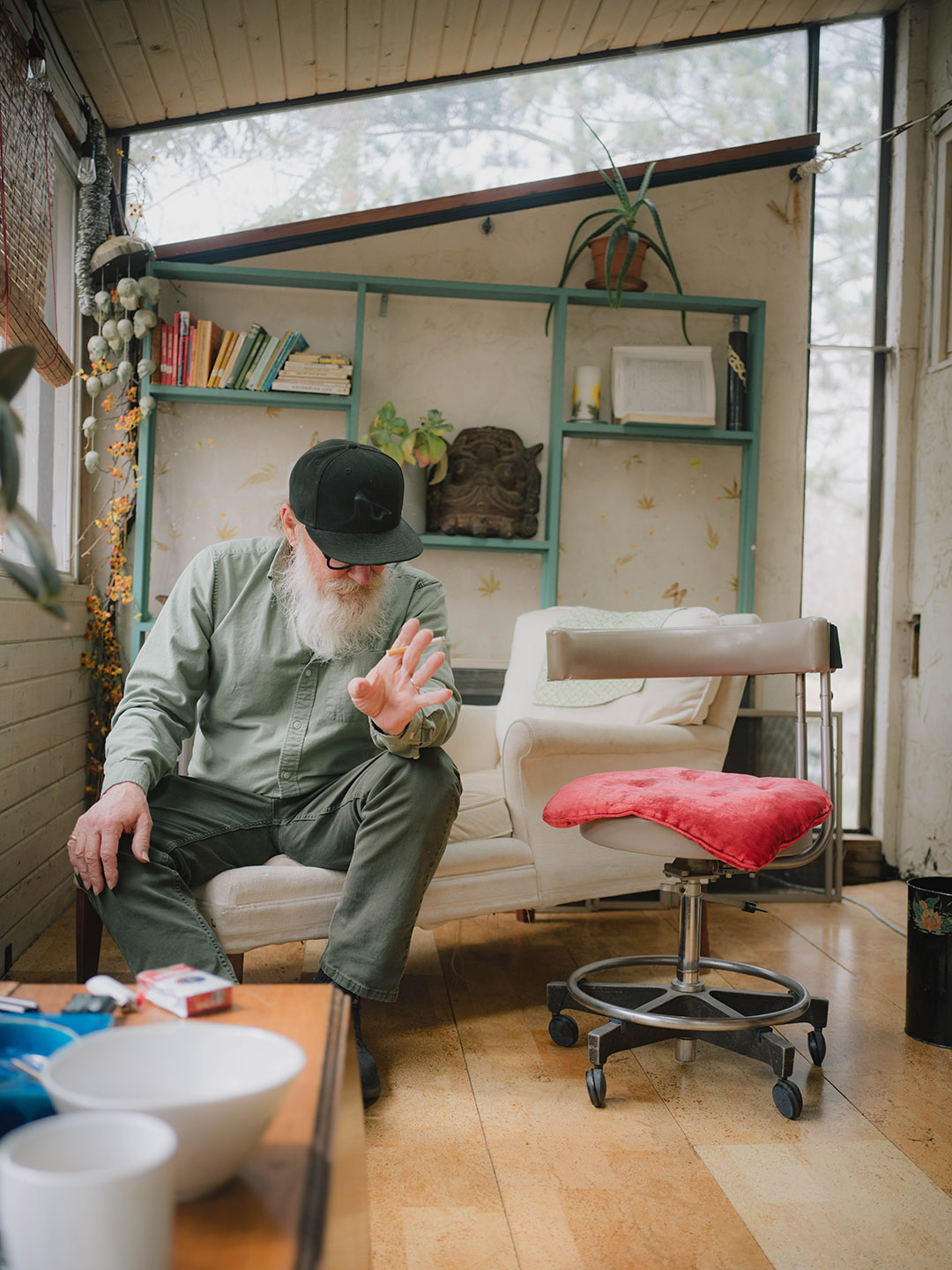
The other thing waiting is painting. Wagner wants to return to it seriously, making room for more than one kind of creative life. Earlier, our conversation had turned to a Tate exhibition placing late works by Turner, Monet and Cy Twombly alongside one another, and the freedom of artists who no longer seemed concerned with proving themselves. Wagner remembered reading about it and recognizing unexpected connections. With Lambchop, too, the possibilities now involve giving up some things that once seemed indispensable.
His faith in a changing band isn’t new. He recalls William Tyler joining at seventeen, later waves of musicians, and now the child of a longtime collaborator playing with them. “It was really just playing together with people that wanted to be there,” he says. Perhaps that is why these younger singers’ willingness matters: they have responded to Lambchop not as an institution to honor from a distance, but as music still open to being made.
For Wagner, the question now is how to keep making records without committing himself to everything that traditionally comes with them. He has already begun thinking about the next one, with musicians he wants to bring together and ideas he hopes to explore, although finding the time remains a practical obstacle. He also talks about the possibility of writing songs for other people, something he grew up around in Nashville, even if he suspects his own compositions might be too strange to attract many takers. Whatever form the next chapter takes, his enthusiasm for the work itself hasn’t diminished. “I do love writing songs,” he says. “I wanna make records. I don’t necessarily wanna give that up.”