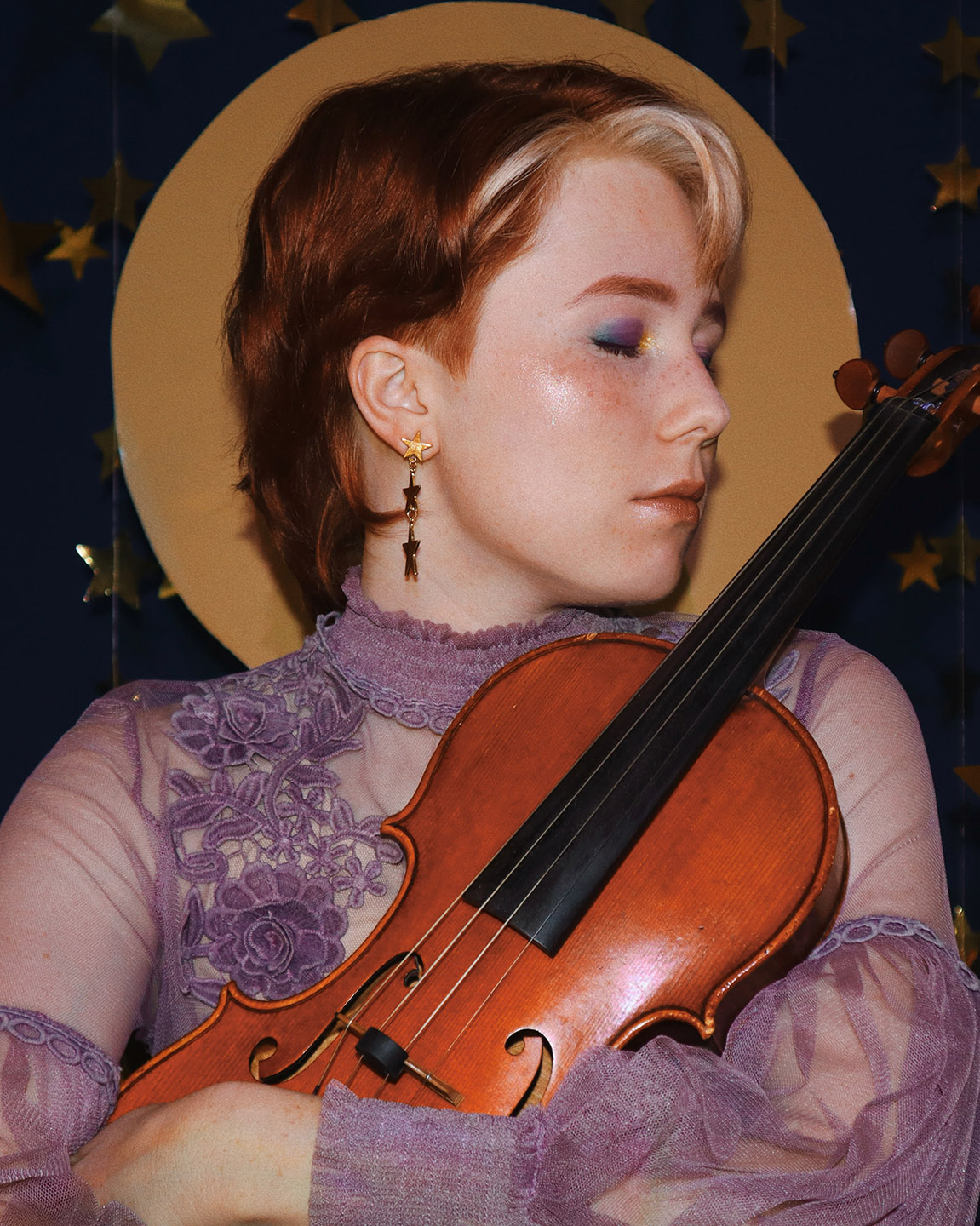
Ellis Piper Is Still EVOLVING AND FIGURING OUT HOW BEST TO TELL THE STORY.
Ask Ellis Piper whether three albums have taught them when to leave a recording alone and the answer arrives immediately. “No, absolutely not.” The singer-songwriter and multi-instrumentalist makes nearly every creative decision themselves, which sounds enviable until it comes time to decide something is finished.
– WORDS BY CJ • PHOTOS COURTESY OF ELLIS PIPER
“You get to decide everything, but then you have to decide everything,” Piper tells JAMBALOO. There is nobody else to tell them to put the pencil down. Even after release, they admit to quietly revisiting older work.
That tendency caught up with Piper during the making of Lovebird, their third album, released in February. Its 12 songs move through acoustic folk, country, jazz, and theatrical pop, often with elaborate arrangements. Piper had taken on so much recording and production work that by the time it was finished, little energy remained for promotion. “I’d recorded Lovebird and kind of felt very burnt out after it,” they explain. Their first instinct was to take a couple of years away from recording and forget about deadlines.
The alternative was to stop treating every release as a full-length project. In September, Piper put out “Lullaby for Laika” and “Fantasia for Félicette,” two companion songs that allowed detailed arrangements and storytelling on a smaller scale. “Or I could do something that’s not 12 whole tracks,” they remember thinking. The experiment proved more manageable, and Piper expects to continue releasing double singles for now. It also gives listeners two songs rather than asking one track to carry months of promotion. “That turned out being a lot more fun,” they say.
Previous releases had leaned toward melancholy, and Lovebird began as somewhere to collect the happier songs that hadn’t found a home elsewhere. Piper called it the “oops all love songs” record, an idea that worked until they listened to the material and found it emotionally one-dimensional. “Well, this is kind of one note emotionally,” they recall thinking.
The resulting album is more complicated, with “Best Friends Forever” and “Nothing Ever Lasts” sharing a track list. Piper hadn’t planned those songs as opposites, but the pairing makes sense given how often their writing returns to the temporary nature of relationships.
“I think the record ended up needing a little bit more contrast, to, like, feel the appreciation more deeply,” Piper says. They have come to recognize impermanence as a recurring subject, even when they think they are writing about something entirely new. “Every time I write a song I’m like, ‘Wow, I made something new,’ and like, no, it all comes down to that.” For Piper, the pleasure of a love song is inseparable from the knowledge that nothing remains exactly as it is. It gives Lovebird a thread of uncertainty beneath its affectionate surface, keeping the record from becoming the straightforward celebration they first imagined.
The arrangements are just as restless. Piper grew up listening to singer-songwriters such as Jack Johnson and Colbie Caillat, later developed an affection for musical theater, and studied orchestra at school. Those interests now share space in music that doesn’t care where one genre ends and another begins. On Lovebird, country influences sit next to jazz ideas and cinematic flourishes. Even “Prelude: Some Kind of Spell” reflects Piper’s interest in building a world around a record. Their previous two albums had preludes, but this was the first with lyrics. They might abandon the practice next time, unwilling to let a recurring idea become a rule.
There’s a similar contradiction in how Piper approaches the visual side of their work. Their day job is in marketing, and that knowledge informs the artwork and social-media presentation around the music, down to an Instagram grid whose colors have to fit before something can be posted.
Photo by Philip-Romano
Piper admits that such details can become obsessive, but sees them as part of a coherent artistic world. When hobbies, paid work, and creative ambitions overlap, there isn’t an obvious point at which the workday ends. “When do you stop and when do you get to shut it off and rest?” they ask. “And the answer is, like, kind of never as far as I can tell.”
The latest singles demonstrate Piper’s attention to a compact idea. Both take their subjects from space exploration: Laika, the Soviet dog sent into orbit in 1957, and Félicette, the French cat who survived a spaceflight in 1963 but was euthanized two months later for scientific examination. Rather than historical exercises, the songs explore different experiences of grief. “Lullaby for Laika” concerns loss after it has happened; “Fantasia for Félicette” considers the anxiety of knowing a goodbye will eventually come.
The first song originated in 2024, after Piper’s family dog Daisy died unexpectedly at four years old. They wrote several direct songs about the experience and discarded them, feeling that none expressed what the animal had meant to the family. Laika’s journey provided a less literal approach. “Every day that went by I felt like the time was kind of taking her farther away from me,” Piper says, explaining why the distance of space felt appropriate. An earlier version appeared on 2024’s Adjacent to Alright, before Piper returned to it this year.
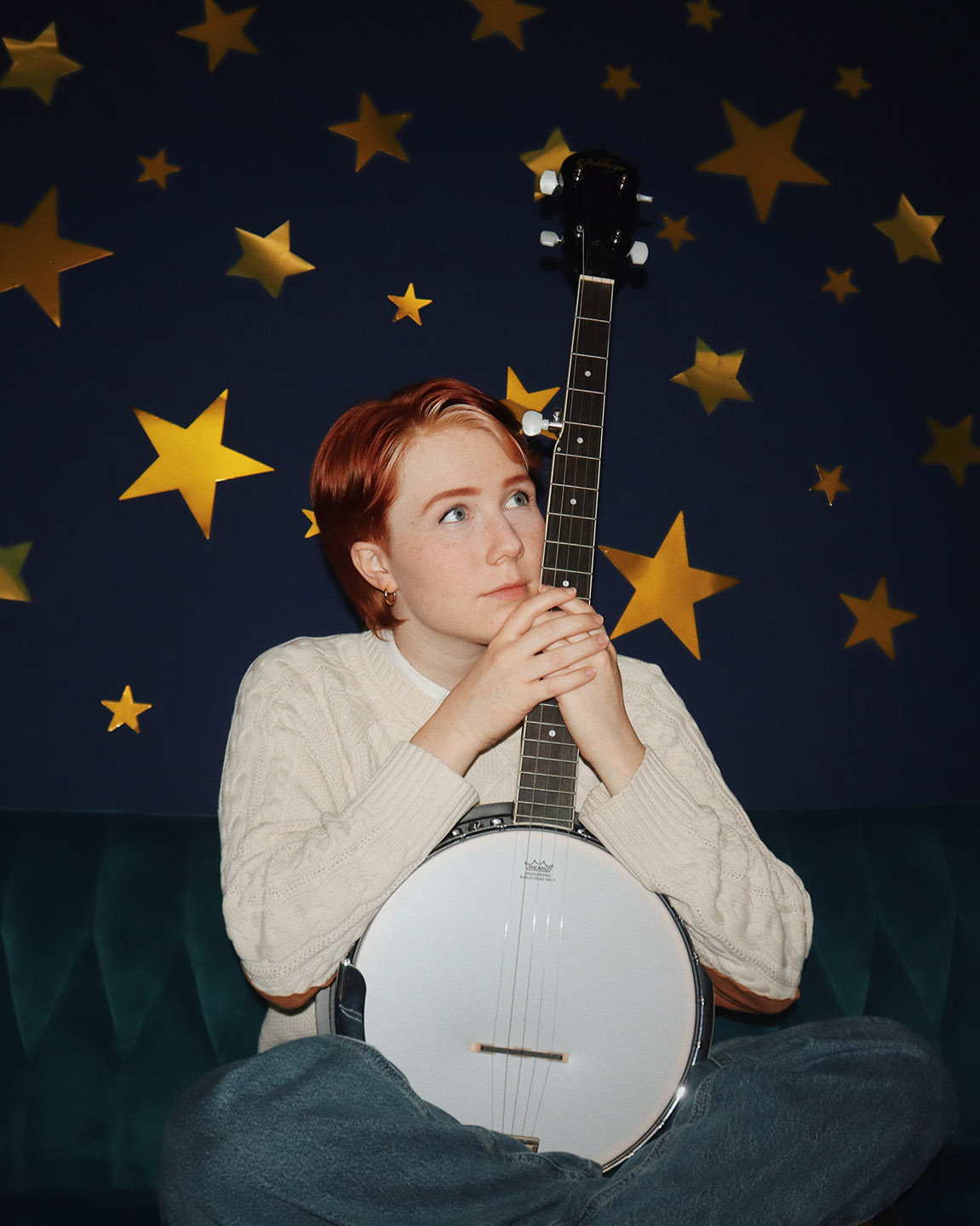
“Fantasia for Félicette” was written from the other side of that experience. Piper now lives with a healthy cat who is about the same age Daisy was when she died, and the earlier loss has made them conscious of how suddenly things can change. The song considers “grieving in advance as opposed to posthumously,” they explain. Félicette’s return from space, followed by her eventual death, gave them a narrative in which survival and an approaching goodbye could exist together. The pairing illustrates a broader change in Piper’s songwriting: they have grown less interested in describing their own experiences literally and more interested in finding characters and stories through which those feelings can travel.
“Therapy is expensive, songwriting is free,” Piper jokes about the direct approach they took when they started writing. Eventually, they became bored with using songs as personal accounts and began looking for material that felt emotionally familiar without being autobiographical. Historical episodes, folk-tale structures, and imagined perspectives now offer other ways to reach the same concerns.
The new songs aren’t a complete departure from Lovebird so much as an extension of its interest in affection and impermanence. What has changed is the scale of the project and the freedom Piper seems to have found in working with two closely related ideas rather than building an entire album around a single concept.
That change has implications beyond the studio. Piper began releasing recordings online during the pandemic and, until this year, rarely performed live. Translating Lovebird to the stage has been difficult because its arrangements aren’t easily reproduced by one person.
Newer songs are being written with performance in mind. Piper likes the possibility of playing them on one instrument or with one other musician rather than assembling a miniature orchestra every time. They are also enjoying the challenge of interpreting recordings that once existed almost exclusively as structured files on a computer.
None of this means Piper is about to settle into one sound. Lately they’ve been listening to artists loosely described as “whimsycore,” drawn to fantasy influences and musicians who choose a style according to the needs of a particular song. They see more freedom in the current musical landscape for independent artists to experiment without worrying too much about whether every release belongs in the same category. Piper’s own description of the approach is wonderfully uncomplicated: “Just put some weird stuff in it.” They are still considering using a loop pedal or backing tracks to expand the live arrangements, although they haven’t built that setup yet. “I haven’t got it that sophisticated yet,” Piper admits. “But definitely something that I do wanna try out.”