Radiator Hospital’s Next Chapter Starts With a Four-Track Recorder.
When Sam Cook-Parrott brings Radiator Hospital to Rubber Gloves in Denton on Thursday, there won’t be a band behind him. He won’t even be playing guitar. Instead, he’ll sing over backing tracks made on a four-track cassette recorder, sending sounds usually heard through headphones out through a club’s PA system.
– WORDS BY CJ • PHOTOS COURTESY OF RADIATOR HOSPITAL
Fifteen years into the project, it’s an unusual way to present a catalog built on scrappy pop songs, and Cook-Parrott is still getting used to it. “It’s crazy to not have a band and not have other people with me,” he tells JAMBALOO. “But it’s also, like, really fun, so I just am kind of trying to embrace it for what it is.”
Radiator Hospital began because Cook-Parrott got hold of a four-track and became excited about recording songs on his own. The Michigan-born musician eventually moved to Philadelphia and expanded the project into a band, pairing distorted guitars and emotionally complicated lyrics with the immediacy of classic pop. The group played together for years, but after 2023’s Can’t Make Any Promises, Cook-Parrott and his longtime bandmates stopped performing together. He spent the next couple of years unsure what Radiator Hospital would become. A conventional solo acoustic show didn’t interest him, and he had no desire to recruit a different band.
The four-track provided a way around both problems. Cook-Parrott knew people who used tape machines onstage, particularly in experimental music, but hadn’t considered building a set of pop songs around one. At first he reworked older Radiator Hospital material into arrangements that could be played back while he sang. “I hadn’t written songs with that in mind yet,” he says. “I just was like, ‘Oh, maybe I could do some of my old songs this way.’” That experiment became the foundation for new writing, giving him a way to continue the project.
For audiences familiar with Radiator Hospital’s full-band shows, the change will be striking. Cook-Parrott describes the cassette recordings through club speakers as something like a mixtape played at high volume.
The limitations of the source remain audible, but their effect changes when they fill a room. “It’s kind of fun to make this loud version of sounds that you kind of associate as having your headphones,” he says. Performing without an instrument can feel more solitary than his earlier solo tours, when he at least had a guitar in his hands.
The resulting album, Distorting Time, arrived this summer on Lame-O Records. Its 13 songs were written and recorded at home in January and February, with additional engineering and mixing by Jeff Zeigler at Philadelphia’s Uniform Recording. The songs aren’t sketches awaiting more elaborate treatment: drum machines, guitars, and tape-worn textures are part of their identity. After years in a traditional guitar-bass-drums lineup, Cook-Parrott has changed the tools available to his songwriting without giving up the instinct for a memorable chorus.
The record finds him thinking about time, though he resists the idea that its subjects were planned. On “A Fine Vintage,” the years behind him become part of the song’s perspective; elsewhere, memories are examined from an unfamiliar position. Cook-Parrott connects that thinking to the period after the band stopped playing together. He was already rebuilding older songs for the new live format, and the experience found its way into the record. “I wasn’t necessarily like, ‘I’m gonna write a song about this today,’” he says. “It was just kind of what was on my mind and what was happening.”
That approach is consistent with the way he writes lyrics. Radiator Hospital songs put uneasy feelings into easy melodies, and Cook-Parrott enjoys the contrast. “To say something kind of intense in, like, a really catchy, poppy way,” he says, amuses him.
But he doesn’t generally begin with a fixed message. Music comes first; he plays, searches for words that fit the melody, and gradually discovers what he is writing. Sometimes his initial standard is simply to arrive at lyrics he doesn’t hate. The finished songs can sound deliberate, even when the process was largely instinctive.
“Love Park Serenade” offers an example of his changing perspective. It opens with an encounter in the rain and asks what it means to love someone while allowing them to change. Cook-Parrott has been with his partner for a long time, altering his understanding of relationships. He laughs at the assumption that his older songs recorded personal experience. “I used to write songs where I was making shit up,” he says. “So many of my songs that sound like they’re about these, like, deep relationships was just, like, shit I made up.” The new writing still uses imagined situations, but comes from a different stage of life.
The most outward-looking song is “Walk With Love,” a brief response to the violence and political ugliness that now arrive as routine items in the news. Its directness might suggest a deliberate protest-song strategy, but Cook-Parrott describes a less calculated origin. He was overwhelmed by something he’d heard and wanted to write against the feeling of paralysis it produced. “There’s so much shit that happens that you see on the news that you really just can… It can just be, like, cripplingly sad,” he says. He wasn’t trying to make a grand statement so much as confront sadness without allowing it to defeat him. His politics inevitably enter the songs, though he remains primarily interested in making short, simple pop music rather than writing explicitly political material.
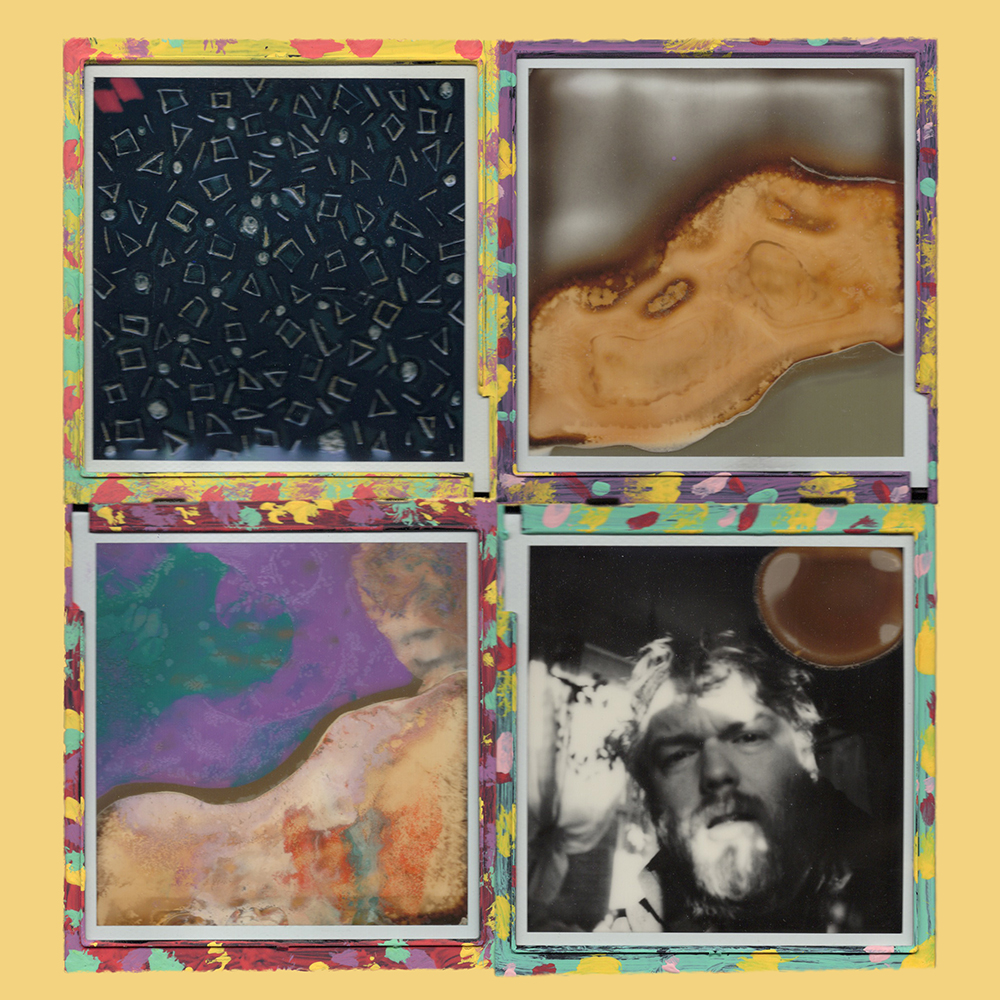
Distorting Time released on August 14, 2026.
Cook-Parrott has little anxiety about whether the rougher sound might limit Radiator Hospital’s commercial possibilities. He says he has never felt pressured to make the music more polished. A catchy song doesn’t become less convincing because of the equipment used to capture it. “I make my record, and to me I’m like, ‘I don’t know, that sounds cool. What’s not commercial about this?’” he says, laughing at the gap between his ears and the market. He understands that the records he likes, despite their pop sensibility, aren’t necessarily what gets heard on mainstream radio in 2026.
After a decade and a half, he remains surprised by which songs connect with people. He doesn’t assume that the tracks he likes most will be the ones audiences embrace. “I just like to make the songs and then let the world decide,” he says. The new setup changes the relationship between performer and recording, but isn’t designed to chase another audience. It offers Cook-Parrott a way to make familiar songs interesting to himself again, while giving newer ones a form they can inhabit onstage.
His definition of success is similarly modest, though hardly indifferent. Cook-Parrott has spent much of his adult life moving through independent labels, DIY venues, and the networks of musicians who make touring possible. Asked whether success means something different now, he points to the fact that he can still take his music to places he wouldn’t otherwise visit.
“The fact that I still get to do my music and go on tour at all is the sign that I am successful beyond my wildest dreams,” he says. He singles out Denton as somewhere he’s genuinely excited to visit, and the ability to keep making songs and taking them to new cities remains sufficient reason to continue.
The practical details of the new show are still unusual to him. He has toured alone with an acoustic guitar before, but standing at a microphone while the four-track plays feels like a different kind of exposure. Songs that once required a band can now travel with him, and new ones have emerged from learning to work within its constraints. Radiator Hospital brings those arrangements to Rubber Gloves on November 5, with Noun and Cheap Haircuts opening the show.