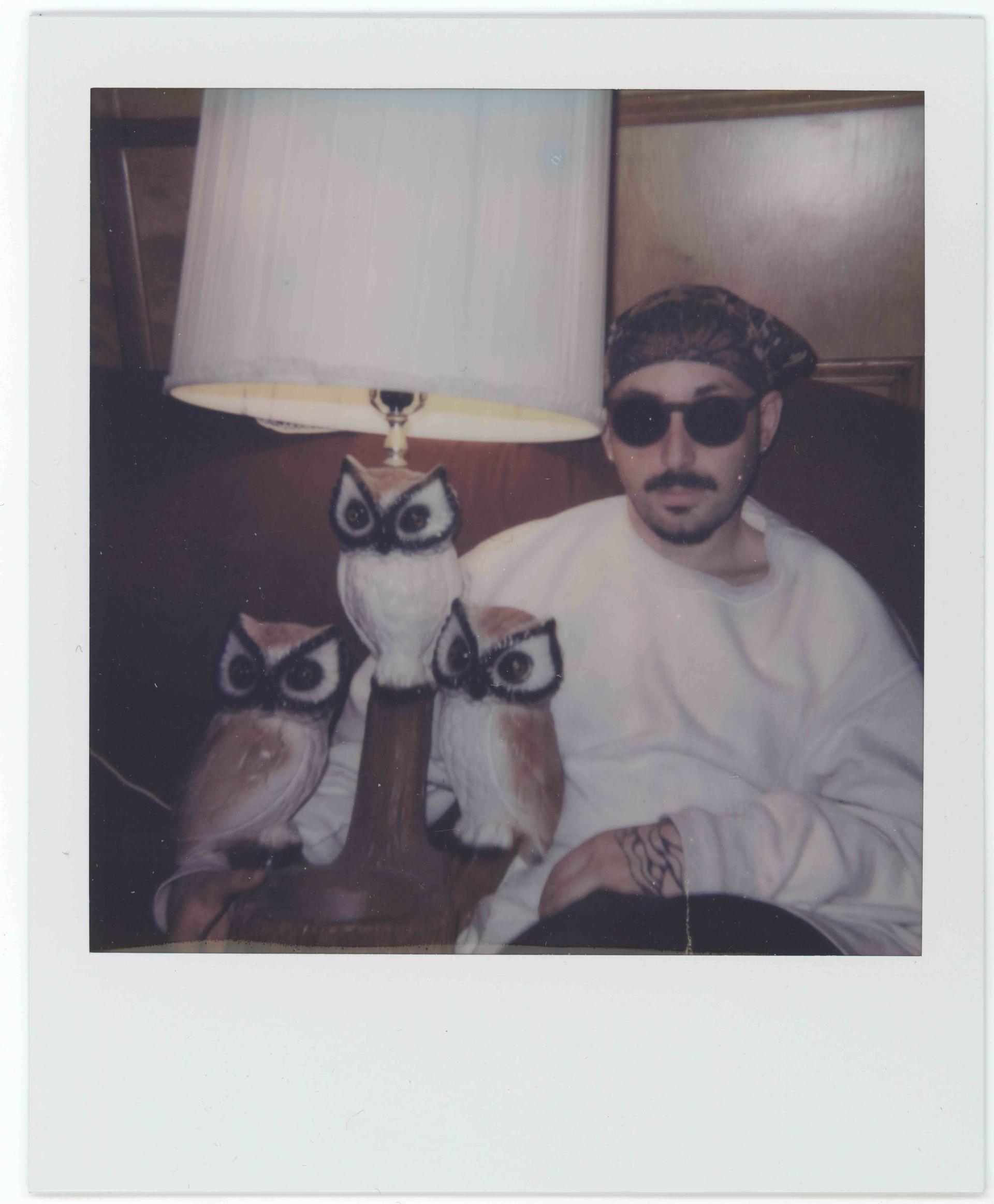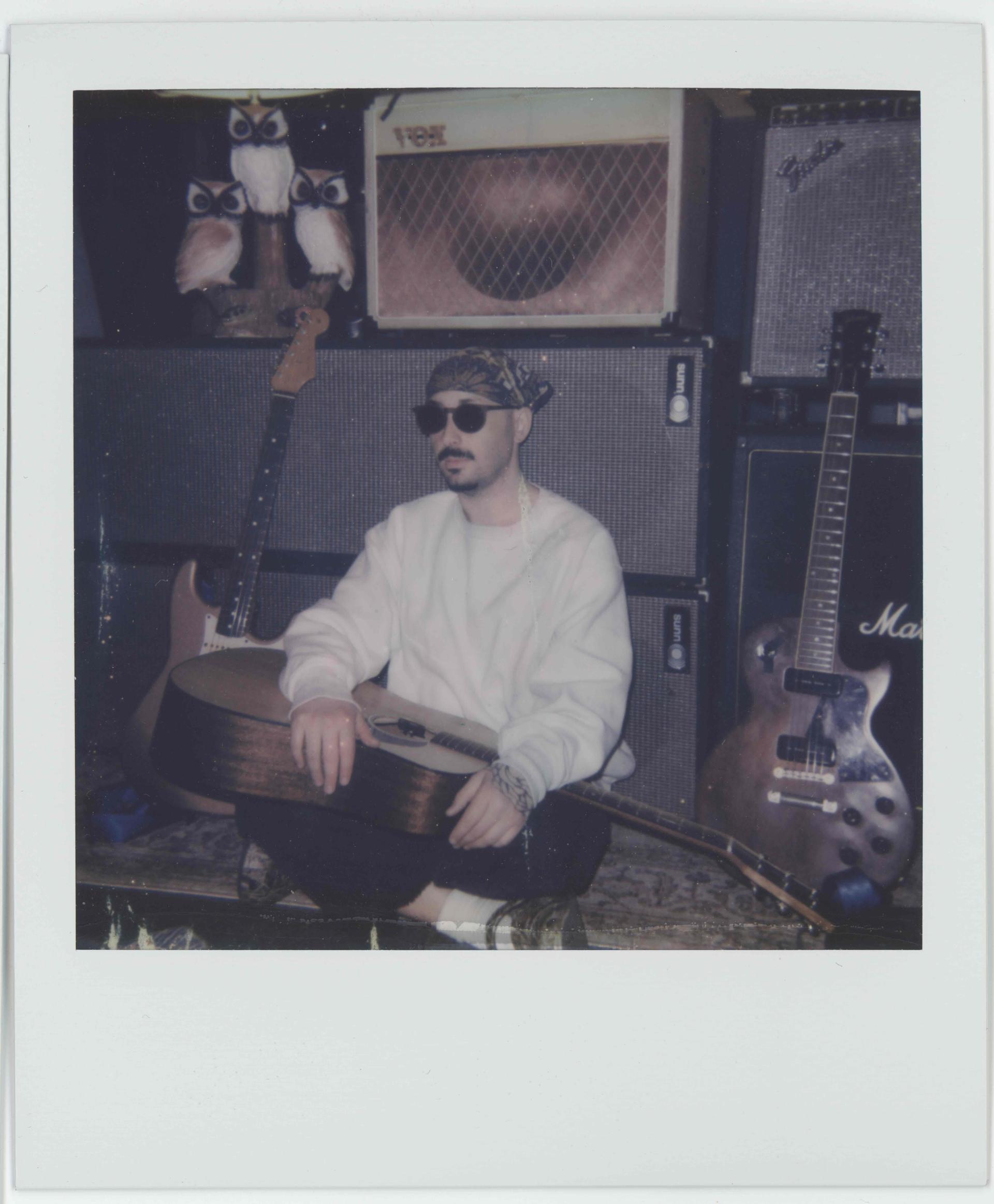
Oso Oso’s Jade Lilitri makes the Case of the Favorite Noun.
Jade Lilitri keeps getting asked about a noun. It’s a line from “the plant mouth,” a song Oso Oso released nearly a decade ago, about someone laughing at a joke involving their favorite noun. On the current tour, people have been bringing it up after shows, wanting to know what the word actually is. Lilitri likes that they’re still thinking about it.
– WORDS BY CJ
“Those conversations for me kind of reinforce the idea that people are digging into this,” he says. He doesn’t need everybody to arrive at the same interpretation. The fact that a line has stayed in someone’s head long enough to start a conversation is more satisfying than finding out whether a reviewer understood precisely what he intended.
It’s a useful place to start with an exchange of information, Oso Oso’s sixth album, released November 6 as the first record on Feral Twin, the new label founded by Hop Along drummer Mark Quinlan. The record has the big choruses and bright melodies that have become closely associated with Lilitri’s songwriting, but he’s wary of the way that description can flatten everything else going on. He’s read reviews that praise an album while leaving him wondering if the writer understood much beneath its surface. He doesn’t get too hung up on that. “I’m just happy that they listened to it and got something kind of from it,” he says. The people who approach him after a set and ask about a phrase or a particular feeling are giving him a more direct sense of what the songs are doing.
The album came about through a conversation Lilitri initially expected to concern the past. Quinlan approached him about repressing older Oso Oso records, and the discussion gradually opened into the possibility of making something new. After self-releasing 2024’s life till bones, Lilitri was conscious of what a label could offer beyond putting a record into stores. Making an album yourself could be satisfying, he says, but it was also expensive and limiting. Quinlan understood the mechanics of being in a band, and Lilitri had known him for years as someone who was genuinely supportive of Oso Oso. “I knew the creative part was gonna be cool,” he says. There was already enough trust for him to feel comfortable making the record he wanted.
Being Feral Twin’s inaugural release brought a different sort of responsibility. When Oso Oso put out a record independently, Lilitri could take the attitude that whatever happened afterward was simply what happened. With this album, somebody else had put money, faith and personal enthusiasm behind his music.
Photo by Michael Dubin
He wanted it to work for both of them. “I definitely feel a little bit invested where I’m like, you know, I want it to be successful,” he says. It’s not a story about a label imposing creative boundaries. Lilitri talks about Quinlan as a fellow musician whose understanding of the process made the relationship feel more personal.
The finished album also pushes against an increasingly familiar demand for shorter songs. Lilitri has noticed the pressure to get tracks under three minutes, something Oso Oso had leaned into on the previous record. This time he wanted to avoid doing it automatically. “Can you deeply listen to a song that’s two minutes?” he wonders, before acknowledging that he doesn’t have a definitive answer. The conversation turns to TikTok clips and the idea of writing several potential fifteen-second entry points into one song. Lilitri is less interested in making a sweeping complaint about younger listeners than in how people actually connect with what they hear. He points out that younger emo audiences can be intensely attached to direct, emotionally literal writing, even if it isn’t his own preferred approach.
His songs tend to leave more room for uncertainty. “Nothing is really black and white,” he says of the Oso Oso approach. “It all has its gray areas.” On “know you know me better,” what begins as a desire to understand another person becomes a series of harder questions about how deep a connection really is and whether two people can make it deeper. Lilitri describes the starting point as simple: you feel close to somebody, but over time realize that a strong, lasting connection might still have limits. The more he writes into that situation, the more questions appear. The song’s vulnerabilities aren’t arranged into a neat resolution, and he’s comfortable leaving them that way.
“the nights” approaches its characters differently. Lilitri says much of the album can be read both as a record about relationships and as an account of his relationship with music and the industry. This particular song, though, began with people he has encountered who hold firmly to their own convictions, even when society regards them with suspicion. He uses extreme examples, including sex work and a character involved in something resembling hired violence, to explore what it means to stand apart. As the discussion develops, he speaks about the hostility directed at trans young people and the fear that can accompany simply trying to live or advocate for friends. He sees the song as a gesture toward people whose lives are judged by others despite their doing nothing wrong.
The song’s bridge makes its position clearer. Lilitri talks about the discomfort of watching prejudice gain approval and the responsibility of deciding whether to speak up. He isn’t presenting every character as morally equivalent; he’s interested in the loneliness and risk of holding to something when the people around you might reject it. The writing has an unusually broad social frame for an artist often discussed primarily in terms of personal relationships and catchy choruses. It’s also an example of why Lilitri wants listeners to spend a little longer with the words before deciding what kind of Oso Oso song they’re hearing.
He isn’t particularly concerned about the genre label attached to it. Oso Oso has spent years being described as emo, and Lilitri understands why people reach for the term, but it doesn’t guide how he writes. “The part that enters my consciousness is the like, ‘I don’t give a fuck,’” he says, laughing.
Photo by Michael Dubin
If somebody wants to call a song emo, that’s fine with him, even if he suspects it sounds unlike much else under that heading. When he listens to new music himself, he tends to think of individual artists rather than combinations of subgenres. He’s been making records under the Oso Oso name long enough to know what comes naturally to him without having to fit every idea into a category.
Releasing an album doesn’t bring complete certainty, either. Lilitri describes the relief of finally getting a record out, followed almost immediately by noticing things he wishes he’d changed. “The second it’s out, there’s gonna be 10 new things that I’ve realized I don’t like about it,” he says. He spent the summer listening to an exchange of information, some days convinced it sounded great and other days thinking everything should have been faster. There’s also the fear that people who loved earlier releases might not come along for this one. Still, completing a record lets him stop revisiting every decision and start imagining what he might do next.
Live, those decisions become less permanent anyway. The band introduces little changes to songs, and sometimes Lilitri hears the original recording later and forgets a familiar part wasn’t always there. Audience reactions can surprise him, too.
One song that reliably stops him is “the view,” from basking in the glow. During its chorus, he can see people getting caught up in it and pointing toward the stage. After eleven years with Oso Oso, he’s more aware of how quickly that time has passed. He’s 34 and says he’d be thrilled to have another eleven years doing this. The sight of a room responding to a song is part of what gets him back into the van.
Oso Oso play Puzzles Deep Ellum on November 21 as part of the Deep Ellum Block Party. Lilitri has been looking into the other attractions surrounding the show and is especially curious about a possible dunk tank. Nobody seems certain whether there will actually be one, but he’s eager to volunteer if it materializes. “Throw some balls at me in the dunk tank,” he jokes.