INTERVIEW
Hudson Freeman and the Trouble With an Empty Country.
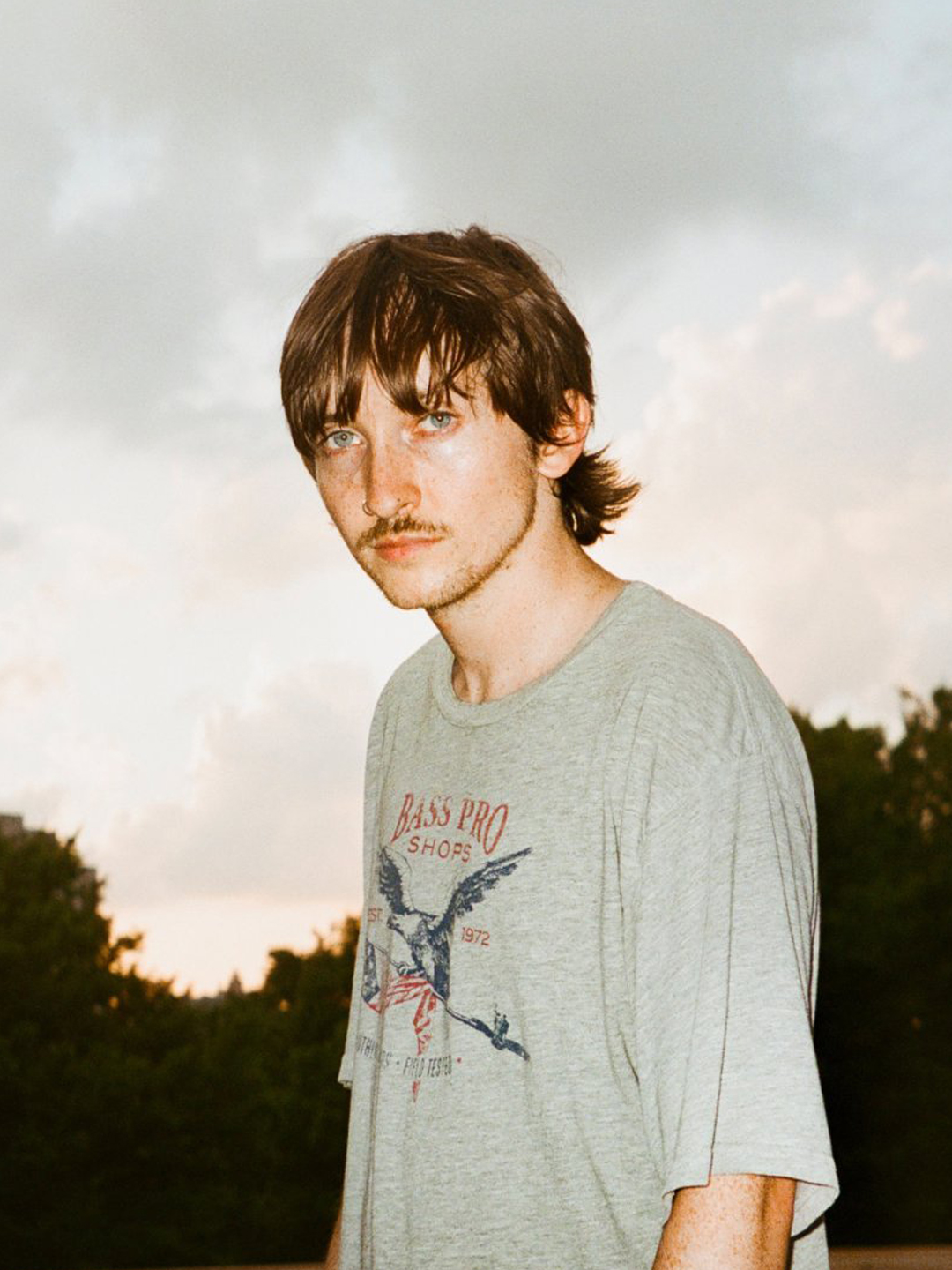
“I get massively depressed before releases, in truth,” Hudson Freeman tells me the day before his new album, Doom Country, comes out. He’s laughing a little at the admission, though the anxiety behind it seems genuine. Freeman spent much of the previous year adjusting to the peculiar experience of having a song become considerably bigger than he’d ever imagined it might, and the prospect of releasing an entire record into that newly expanded audience has given him rather a lot to think about.
– WORDS BY CJ
The song was “If You Know Me,” a performance of which he filmed in a soybean field while on tour with his guitarist. By the time they reached the end of that run, booking agents were turning up at shows and Freeman was receiving calls from record labels. A year later, he’s about to release an album that takes some fairly substantial liberties with the music that brought all those people to him in the first place. “I’m very curious what people will write about it,” he says. “It’s an album I feel really strongly about, so I’m very curious about what people’s interpretations of it will be.”
The title came out of conversations Freeman and his guitarist were having in the car during that same tour. They’d been discussing where their music sat among the various strands of American indie rock that had acquired a country inflection in recent years, particularly the heavier, more distorted stuff being made by bands like Wednesday. Freeman liked the idea of a name that accommodated the sludginess and slowcore tendencies of that music alongside its twang. Doom country sounded pretty good to both of them, and within a fairly short space of time they’d begun discussing an album of the same name. Freeman was listening to Bruce Springsteen’s Nebraska a lot at the time, and had long been enamored with Sufjan Stevens’ Illinoise. He’d never really attempted to write about America in geographical terms before, and the prospect of making a record that moved through the country, in the tradition of those albums and the great American road novels, was increasingly appealing to him. “I feel like it’s kind of a trope to really talk about the American road trip thing,” he says. “So I felt like I wanted to try my hand at a road trip album.”
The America Freeman began imagining for Doom Country, however, was one in which something had gone catastrophically wrong. On “I-40,” the interstate becomes part of an elaborate post-apocalyptic landscape, and the familiar romance of the American road trip acquires a rather uncomfortable new dimension.
PHOTO BY Sophia Brown
Freeman had become interested in the overlap between the fantasy of the American West, with all its historical baggage, and the peculiar appeal of post-apocalyptic fiction. Both offer the possibility of moving through an apparently unoccupied landscape, free from the inconveniences and obligations of other people. “I was thinking about the post-apocalyptic road trip as being, weirdly enough, kind of like this dark fantasy,” he explains, “of people aren’t there anymore, and you kind of do get to experience the Wild West in this kind of fucked-up way on the other side of an apocalypse.” There’s something wonderfully perverse about taking one of the most enduring images in American popular music, that of the individual getting into a car and heading wherever the hell they want, and imagining the circumstances under which that freedom might actually become possible.
Freeman is particularly interesting on the subject because he’s prepared to acknowledge how appealing he finds aspects of that fantasy himself. He and his wife, Sophie, moved to New York after attending university in Missouri, arriving in a city where they barely knew anybody. The experience left him contemplating his own capacity for independence, something he’d always found politically suspect but which, in certain circumstances, felt enormously attractive. He understands the appeal of getting into a car and dispensing with the complications of public transportation, of being somewhere where the distance between yourself and the next person is measured in miles rather than inches. He also remembers how isolating it was to arrive in New York with Sophie and very little in the way of an established community. “I kind of wanted to explore those feelings through this fantasy of being kind of stuck with her,” he says, “and it’s just us versus the world.” The difficulty, as Freeman readily acknowledges, is that the individualism at the heart of so much American mythology runs contrary to the way people actually live. “We live very much in interdependence,” he says. “That fantasy is one I think we should realize is a fantasy.”
Freeman had already experienced a considerably more dramatic geographical upheaval growing up. His family moved from the Dallas suburbs to Eswatini in Southern Africa, where his evangelical Christian parents hoped to contribute to humanitarian efforts in a country experiencing the devastating consequences of the HIV/AIDS epidemic.
Photo by Caity Krone
Freeman was homeschooled, spent much of his time with his family and began retreating into music, guitar and the internet. The disparities in wealth he encountered there, having previously lived in a relatively comfortable suburban environment, were difficult for him to comprehend at the time. It was only later, at university, that he began to acquire the political and intellectual vocabulary with which to reconsider much of what he’d experienced. His recollections of that period are complicated by the enormous affection and respect he retains for his parents, whose religious convictions he no longer entirely shares. “I really believe they had very good and humanitarian intentions for moving to Eswatini,” he says. “Which is maybe one thing why I tend to be very ambivalent in the way that I talk about how I grew up and my family’s faith.” He remembers the isolation of those years, but also recognizes something fairly ordinary about the way he found music and discovered the wider world through a computer, much as countless other kids of his generation were doing back in America.
That ambivalence has remained an important part of Freeman’s songwriting. He’s perfectly comfortable describing himself as someone who no longer considers himself an evangelical Christian, though Christianity continues to occupy a significant portion of his intellectual life. His father, he says, encouraged a curiosity that has made the possibility of simply abandoning the subject almost impossible. At university he found himself among a group of young people who were similarly reconsidering the beliefs they’d grown up with, forming a kind of post-evangelical church community in which the process of questioning those beliefs was itself a shared experience. He still misses aspects of that communal life and can imagine participating in a church again at some point. “I’ve never been able to quite let go of this sense of community that I felt like I quite genuinely had growing up,” he explains. There’s a certain generosity in the way Freeman talks about his religious upbringing, particularly given how easily those experiences could be organized into a story about escaping a set of oppressive beliefs. He seems more interested in what might be worth retaining, and whether some of the things he valued about Christianity can exist independently of the convictions that originally underpinned them.
One of the pleasures of listening to Freeman talk about Sufjan Stevens is hearing how much he’s considered the possibilities of Christian imagery within popular music. Stevens’ use of biblical references, religious narratives and theological ideas has given Freeman a way of thinking about the material he inherited as a child, as something with considerable literary potential.
Photo by Caity Krone
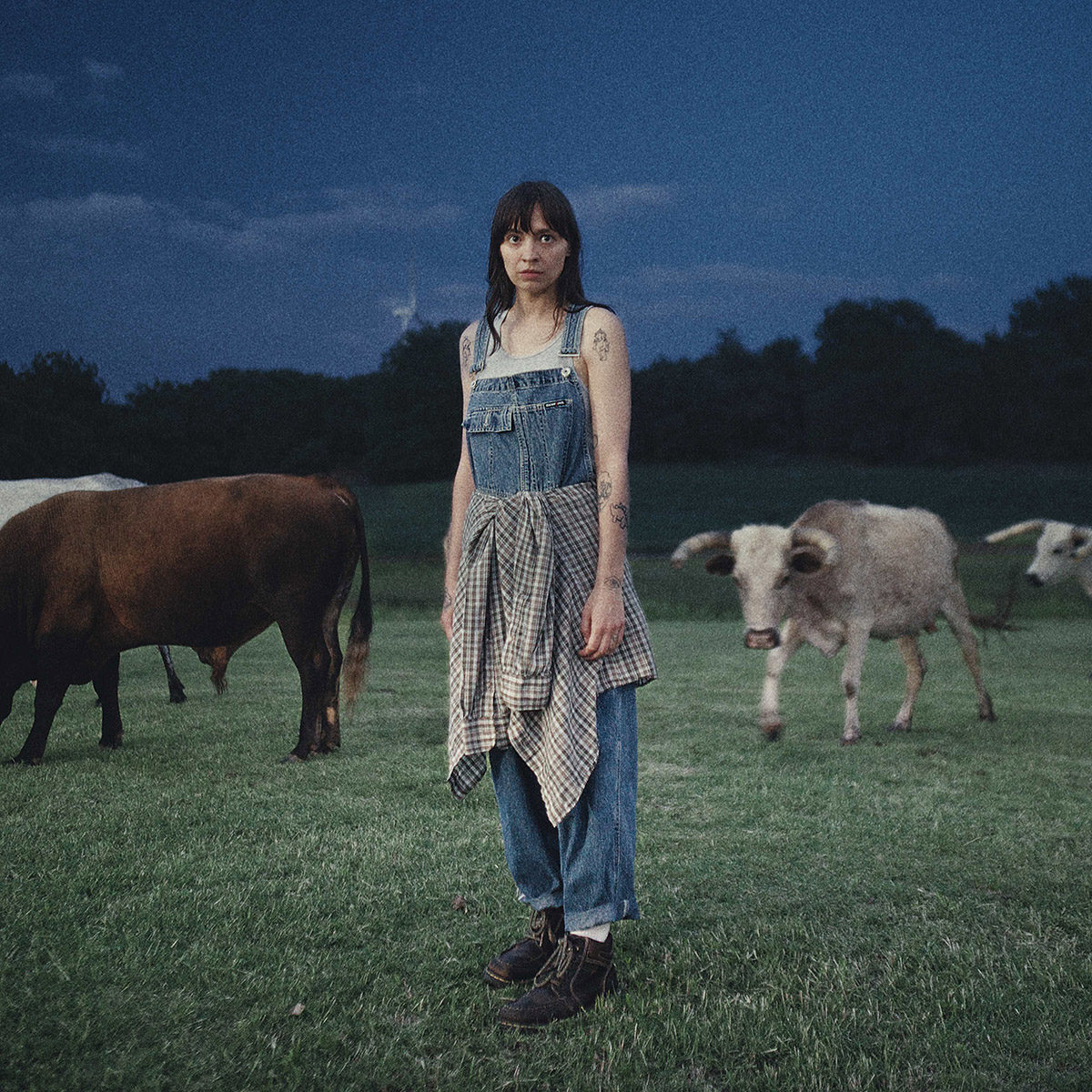
DOOM Country was released on November 6, 2026
For Doom Country, he returned to the Left Behind novels, the hugely popular evangelical book series that dramatizes the aftermath of the Rapture. Freeman remembers being darkly fascinated by those books as a kid, particularly the image of Christians ascending to heaven and leaving their clothes behind on earth. He thought it might be funny to reverse the perspective from which he’d encountered those stories, placing himself among the people who hadn’t been taken and spending an entire album exploring the world they’d been left with. “I thought it would be kind of funny and interesting to maybe invert this rapture thing,” he says, “and kind of imagine that I’m left behind and to kind of play out what that fantasy would be like.”
There’s a physical quality to Doom Country that suits all of this remarkably well. The instrumentation is heavier, the pacing often deliberately slow, and Freeman seems increasingly comfortable allowing the music to become quite unwieldy. Asked whether the political and emotional circumstances in which he was writing contributed to the way the record sounds, he’s initially reluctant to make too much of the connection. He likes that kind of music, he says, and much of the decision was aesthetic. But he begins considering the possibility that his musical instincts were responding to something he hadn’t entirely articulated to himself. He describes wanting “this slow trudging through the mud kind of feeling,” which is a pretty accurate description of how portions of Doom Country move. There’s an enormous temptation, when discussing a record that engages so explicitly with the condition of America, to ask its creator where he sees the possibility of things improving. Freeman is particularly resistant to the expectation that he ought to have worked his way toward optimism by the time the record was finished. “I feel very despairing about America,” he says. “I really wanted to kind of sit in that on this album.”
His thoughts on contemporary American politics are considerably more expansive than the electoral fortunes of either party. Freeman makes a distinction between America as a nation of people, with certain values and aspirations he remains sympathetic to, and America as an enormously powerful state whose influence on the rest of the world he finds deeply troubling. .
He’s skeptical of the ability of the country’s political institutions to meaningfully address that imbalance, and frustrated by what he sees as an increasingly desperate attachment to the idea of American supremacy. Even when discussing developments he finds encouraging, Freeman is wary of what happens once the initial excitement subsides. He’s considerably more optimistic about the people he encounters in his own life. “I feel a lot of hope and optimism in my neighbor,” he says, before returning to his skepticism about whether the political tide is genuinely changing. It’s a conversation that helps explain why Doom Country is able to contain moments of enormous tenderness without ever sounding particularly reassuring.
Freeman is looking forward to touring the album, although playing some of its slower material for audiences unfamiliar with the songs has already been an interesting experience. He’s noticed people taking a little longer to adjust to what the band is doing, particularly if their expectations have been formed by his earlier music. Having the record out will make those performances a different proposition. Sophie has also begun singing in the band, bringing a vocal presence that Freeman considers one of the most significant changes in the texture of his new music. The two of them, who arrived in New York knowing almost nobody, will now be traveling across the country together playing songs about an imagined version of it in which almost everybody has disappeared.
There is, however, one fairly glaring omission from Freeman’s forthcoming tour schedule, something that becomes apparent as we’re wrapping up our conversation. For all the time he’s spent thinking and writing about the places he grew up, he hasn’t yet managed to arrange a show in the state where much of his story began.
“I can’t believe I have a song about Texas on this album and no Texas dates,” he says. “So we’re gonna fix that.”