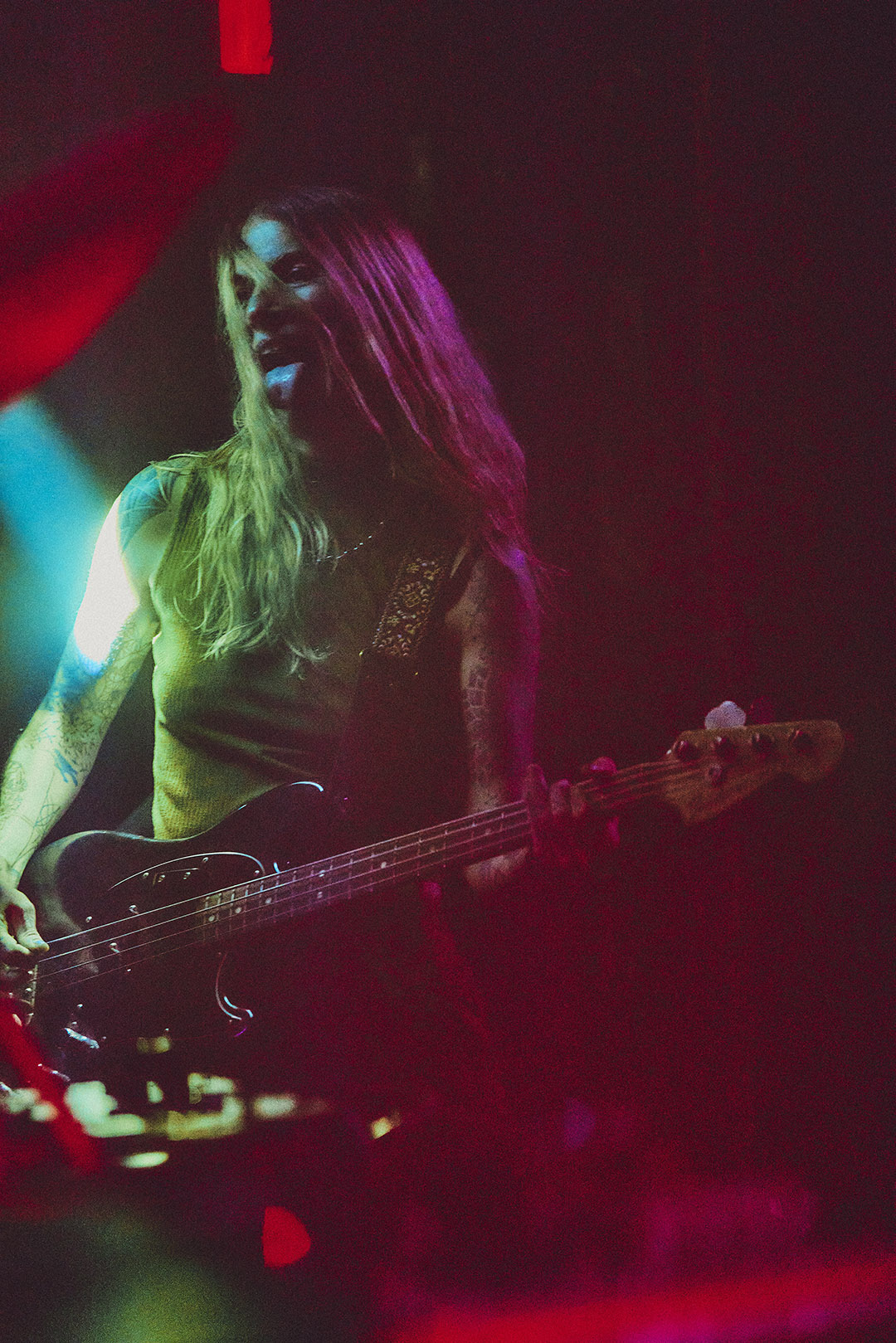
LABRYS: The Things Penny Pitchlynn Is Learning to Leave Alone.
On the day Penny Pitchlynn sits down to talk to us about LABRYS, she’s deliberately avoiding a considerable amount of work. There are songs in various stages of development that she could be doing something with, but she’s been trying to get better at leaving them alone. This is a relatively new approach for a musician who has been known to work on a demo until she’s perilously close to hating the song. “I am letting so many demos breathe by not working on them today.”
– WORDS BY CJ • PHOTOS by Hommy Wolfe Northcut
Tracking is generally the easy bit for Pitchlynn. When she gets going in the studio, she has a pretty good sense of when she’s finished. Mixing is another matter entirely. After enough listens, she can convince herself that a song she was excited about a few days earlier has become a bad one and that somewhere along the way she’s missed her opportunity to finish it. She describes the process as “a delicate balance of obsession and avoidance.”
LABRYS grew out of Pitchlynn’s need to make music of her own while playing in BRONCHO, and it continues to serve much the same purpose for her. There are times when she starts thinking too much about what the project ought to sound like or how she should approach a new group of songs, and she finds that simply sitting down and writing about whatever is happening in her life tends to clear up a lot of that confusion. “LABRYS was not created to be on stage necessarily, it was created because I had to create it,” she says. “It doesn’t need to make sense to everyone to make sense to me.” That’s afforded her a considerable amount of freedom, particularly in the kinds of things she’s been willing to put into songs, though it would be a mistake to regard her work in BRONCHO as any less personal to her. She considers the band an equal part of her self-expression and gets enormous pleasure from contributing to somebody else’s idea. “To be able to get behind someone else’s idea and bring some of your own magic to the moment,” she says. Working in both capacities has helped her get better at not taking things personally and at recognizing how much of her own satisfaction with making music is ultimately her responsibility.
There’s a great deal of emotional information in Pitchlynn’s earlier album, 10:10, some of which she’s still making sense of. When she sings those songs now, she can often get back to the place she was in when she wrote them, depending on the circumstances of the performance, although some of the lyrics have acquired meanings that would have been inaccessible to her at the time.
“There are definitely some songs I could never hold with the perspectives I had while writing,” she says. What interests her is how much her own writing can continue to tell her about herself as she gets older. The anger and fear that had occupied so much of her life while making the record have subsided considerably, and she’s grateful for that. There was also something in 10:10 that suggested she was already finding her way through much of what she was writing about. “10:10 was full of anger, sorrow, confusion and fear, but also forward motion,” she says, “and I’m still moving and working with all of those feelings.”
Pitchlynn sometimes finds out what she thinks about a situation considerably earlier in a song than she does in her actual life. “I tend to write about my life like I’m hovering above it watching it unfold,” she explains. “Sometimes words come out while I’m writing that I wished I hadn’t said. Like truths I didn’t mean to tell.” She began writing “Mistakes” while she was still in a relationship, getting as far as the line “so far we get on, we get along sometimes at least,” before putting the song aside. A couple of months later, she rather suddenly left the relationship and eventually returned to finish it. That line had been a fairly accurate description of things at the time she wrote it, though she wonders whether there was something more going on when the song first presented itself to her. It may have been a suggestion from her subconscious that she was heading in the wrong direction, something she hadn’t been quite ready to act on. “Truly some Jungian shit, if you ask me.”
There’s a similar curiosity at work in “Back Of My Mind,” a song whose concerns stretch a little further than the immediate circumstances of Pitchlynn’s own life. She has always liked asking questions, possibly to the annoyance of people around her, she admits, and she gets almost as much enjoyment out of a good question as she does out of acquiring the knowledge that might answer it.
Over time she’s become considerably less concerned with working everything out, which has implications for how she writes. A song can accommodate all the things she’s thinking about without requiring her to arrive at a particularly useful conclusion. “I prefer to live somewhere between seeking the answers, and enjoying the possibilities,” she says. There are days when she’s less enamored of the whole endeavor. “Some days just aren’t good days for sorting out the Universe and all its ins and outs.”
Pitchlynn starts most LABRYS songs on acoustic guitar, and she’s been spending more time with them in that form recently. For the time being, she’s put the full-band version of LABRYS on hiatus, choosing to perform solo until she can get another record out. She approaches those appearances quite differently from a show with the band, where the musicians are attempting to do justice to the sound of the recordings and occasionally arriving at something she describes as alchemy. The solo shows bring her back to the poetry of a song and the emotion that prompted her to pick up the guitar in the first place. There’s something particularly satisfying about being able to go back and inhabit a song in much the same way she did when nobody else had heard it. Playing those shows has been good for her soul, she says, and she seems quite happy to spend a while longer doing them.
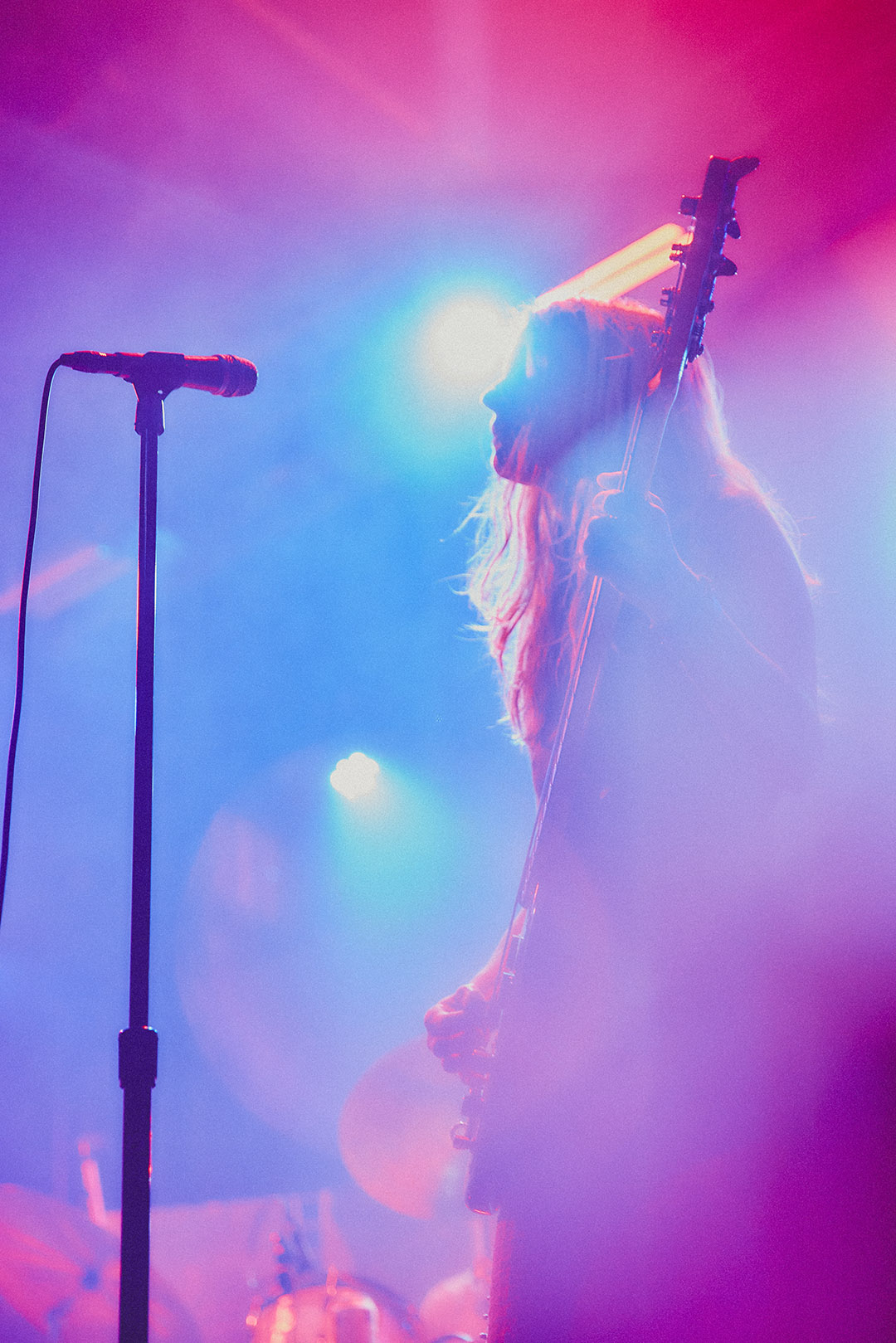
Asked what she’s chasing with the next group of songs, Pitchlynn puts it in terms of finding “the fullest most real expression of whatever idea or emotion I need to work with.” She’s reluctant to give that ambition any fixed musical boundary.
The decision to release “Comfortable Pain” as a demo came out of a similarly strong attachment to the early life of a song. Pitchlynn loves working with her producer, but there are occasions when a first recording has something she finds impossible to improve upon. She shared the demo with Ryan, who suggested she release it exactly as it was. “I kinda called the bluff and did exactly that,” she says. It was an unusually personal song, and she felt comfortable with people hearing it in that condition. It has also got her thinking about how much more music she might be able to put out if she occasionally allowed those first recordings to be the finished thing.
At a time when the technology exists to eliminate virtually every imperfection in a performance, or to produce something approximating a performance without a musician ever having to give one, Pitchlynn is finding those little imperfections increasingly valuable. “I think we all want to see other humans doing their best,” she says.
“I think we need to see and hear some flaws to know it’s real at this point.”.
There’s still a possibility that “Comfortable Pain” will find its way onto a LABRYS album, but Pitchlynn has already had the pleasure of letting people hear the version she was most attached to. She’d like to do more of that. “As a self-taught independent artist, it’s our time to shine!” she says. “I want to release even more raw recordings in the future. It’s liberating!”