Larry Gee Is Not Coming Back. He’s Still Walking.
With The Get Back returning on vinyl and “Keep Walking” opening a new chapter, Larry Gee talks about the record that nearly disappeared, surviving kidney disease and transplant, working with Jordan Richardson, and why coming back to music no longer means going back to the person he used to be.
– WORDS BY CJ
PHOTO BY Will Von Bolton
The story of The Get Back getting another life begins in the middle of a party, in a room full of people celebrating something else entirely. At the after-party for the 2025 Dallas Entertainment Awards at Charlie’s Starlight Lounge, Larry Gee found himself talking with Anton Schlesinger, president of DallasAF Music, while the night moved around them. Neither of them was drinking, and somewhere inside all that noise the conversation turned serious. Schlesinger told Gee that The Get Back, a record he had made years earlier and only recently released digitally, deserved more. He wanted to put it on vinyl, give it a proper physical release and make it the first artist release on his new independent label.
It is difficult to imagine a more appropriately named record returning to Larry Gee’s life now. The Get Back was made by a version of him who still feels familiar but increasingly distant: younger, ambitious, restless and convinced that music was supposed to take him somewhere. The songs were recorded with Beau Bedford as the intended follow-up to Weekends, then disappeared. Years passed. Gee moved into photography and videography, took on corporate work and watched music slip toward the background. Then, while he was sick, he found the songs sitting in an old Dropbox folder.
“Anytime I listen to those songs, it takes me back to who that person was,” he says. “It definitely gets nostalgic.”
He played them for his girlfriend, who could not understand why nobody else had heard them. Gee agreed, but there was one person he needed to talk to first. Then Bedford called him unexpectedly, simply checking in to see how he was doing. Gee asked for his blessing. Bedford gave it. An album that had effectively ceased to exist was suddenly alive again.
That could easily become a clean story about unfinished business — The Get Back finally gets its moment, Larry Gee finally gets his — but the longer Gee talks, the less interested he seems in making the present resolve the past. The most interesting thing about hearing him revisit this music is not that he has rediscovered the person who made it. It is how little interest he has in becoming that person again.
Songs like “Find Your Way To My Heart,” “You Gotta Have It,” “Walk Away” and “I Think I Love You” came from somebody willing to throw himself toward whatever he was feeling. Gee still recognizes that openness. If anything, he thinks he is more capable of it now. What has changed is what sits underneath it.
PHOTO BY Will Von Bolton
“I sat down and I really focused on, what do I really wanna say?” That question eventually led him to “Keep Walking.”
Gee had been diagnosed with kidney disease after a period in which he knew something was wrong but did not yet understand how dramatically his life was about to change. When doctors performed a biopsy, his immediate fear was cancer. He remembers getting the results, hearing that it was not cancer and briefly feeling relieved before being told he had stage-four kidney disease.
“I thought that was a win,” he says. “I was so excited.”
Then he called his father, a retired physician, and began to understand what he had actually been told. “Your life is gonna change,” his father told him.
Soon Gee was sitting in a class designed to prepare patients for dialysis, watching a video explaining the different options and looking around at a room of people being introduced to an entirely new version of their lives. His kidney function had fallen into the 10-to-12-percent range.
Gee remembers thinking: I’m not doing this.
A friend connected him with a plant-based health program in California, where a doctor named Dr. Lim began helping him change his diet and rebuild some sense of control over his body. When the conversation turned to exercise, Gee expected something complicated. Instead, the instruction was simple. Walk.
Start with a thousand steps. Eventually five thousand. Then ten. More importantly, on the days when Gee was scared, exhausted or unable to imagine opening the blinds, Dr. Lim gave him a sentence that stuck.
PHOTO BY Karlo X Ramos
“Just get your ass up and keep walking. You just gotta keep walking.” Gee started using it everywhere. A bad lab result: keep walking. Trouble finding a donor: keep walking. A day when fear got the better of him: give himself the space to feel it, then get back up. For somebody who had spent years unable to write anything that felt right, there was suddenly a song inside a phrase he had already been repeating to himself.
The opportunity came through the National Kidney Foundation, which asked if Gee would be interested in writing something connected to its annual walk. By then, he estimates that his writer’s block had stretched across roughly 12 years. He had tried writing after The Get Back material, but nothing felt right. COVID arrived. Music stopped almost entirely. So “Keep Walking” became an experiment as much as anything else: could he still do this?
The answer came faster than he expected.
Gee brought the bones of the song to Jordan Richardson and Daniel Hardaway, and over a weekend it began taking shape. Adam Pickrell added keys and organ. His friend Becky – Lady B – added vocals. The collaboration with Richardson was particularly important. The two had talked before Gee’s surgery about making a full-length record together, plans that were put on hold once recovery took over. Now those conversations are beginning again.
“Keep Walking” is inevitably inspirational, but Gee’s relationship with the phrase is too practical for it to become a slogan. Keep going. One day at a time. Put one foot in front of the other. These are things people say when there is nothing better to say. For Gee, their meaning comes from having actually needed them.
And recently he has needed them again.
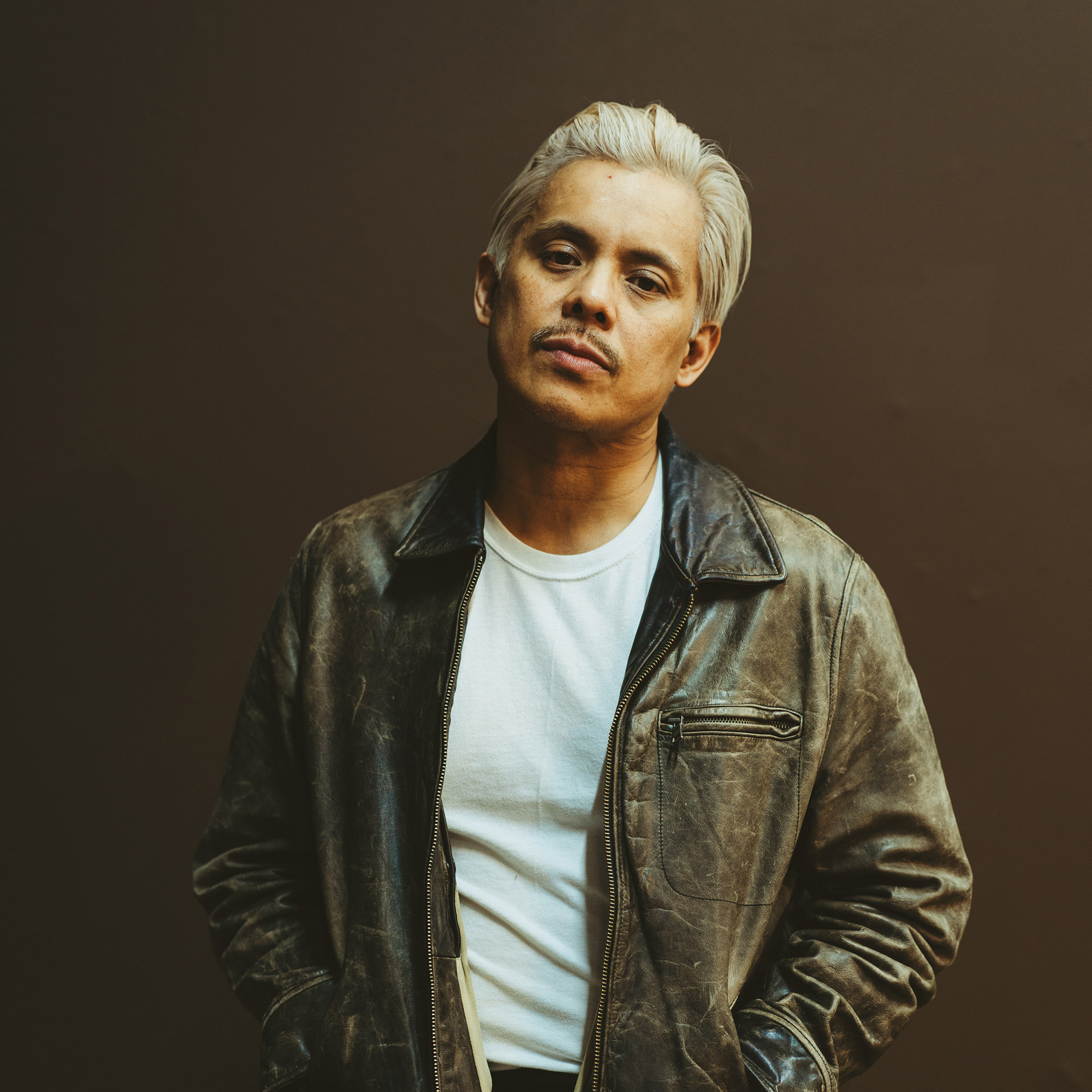
PHOTO BY Karlo X Ramos
Around the one-year anniversary of his transplant in June, Gee learned that his body was experiencing acute rejection of the transplanted kidney. His numbers, he says, remain steady, and he feels well, but it has placed him again in the position of concentrating on the limited number of things he can control. So he walks.
There is a strange circularity to it now. Gee has private links to “Keep Walking” and sometimes plays the song while he is actually out walking, listening to an earlier version of himself give the present one instructions.
“Life is what it is,” he says. “But at the same time, I feel like the song has so much purpose.”
That vulnerability has begun changing how he thinks about music beyond this one song. His TikTok, once an afterthought compared with Instagram, grew from around 300 followers before his surgery to roughly 11,000 as he began speaking plainly about kidney disease, staying off dialysis, transplant life and what he had learned. Messages began arriving from people trying to navigate their own versions of the same uncertainty.
Some wanted answers he did not have. What he could offer instead was honesty.
A friend filmed him absentmindedly playing piano while shooting B-roll at Modern Electric and later told him that whatever he made next should lean toward that feeling. There were no lyrics, no grand concept. It simply felt real. Gee understood exactly what he meant.
Even The Get Back is changing slightly as it moves toward vinyl. Schlesinger suggested adding “Sleeping In My Car,” a later song from around 2019 that Gee initially thought made little sense beside the older material. The track had largely been driven by other writers and producers, from the lyrics to the vocal approach and structure. Gee performed it, but never felt he had put all of himself behind it.
PHOTO BY Will Von Bolton
What he no longer seems interested in is the mythology that used to surround those desires. The younger Larry Gee wanted fame. He says that plainly. There was a period when people around him were assuring him that everything was about to happen, the producer, the label, the career-changing moment.
“I wanted so badly for the thing after Kimmel to work out,” he says. “I had so many people in my ear that were like, ‘Oh, your life’s about to change…None of that happened.”
Gee describes what followed as watching a house burn in slow motion. When everything appeared to be moving upward, there were people everywhere. As the momentum disappeared, they did too.
“You find yourself kind of like that guy in an empty gym at a party when the party’s over and you’re just there by yourself.”
That is why “comeback” starts feeling inadequate somewhere in the middle of talking to him. From a distance it is irresistible. A Dallas musician disappears, survives something enormous, finds his old record, makes a new song and returns.
Except Gee is not trying to get back. He is 50 now. The ambitions that animated his thirties no longer fit neatly over the life he has lived since. Illness changed his priorities, but so did the quieter realization that the life you expect is not necessarily the life that arrives. “I have so much more perspective on life than I did before,” he says. “I see things and people differently than I did before. There’s less judgment.” Then, knowingly or not, he arrives at the phrase that connects everything. “I’m walking with purpose.”
The limited-edition The Get Back vinyl will arrive through DallasAF Music as the label’s first artist release, taking songs that nearly disappeared and pressing them into something physical. It is a second life for an album, arriving during a second life for the person who made it. But second life does not mean second chance at the first one.
The point is not to return to the guy who made The Get Back, or finally collect everything that the younger Larry Gee thought he had been promised. The point is Larry gets to keep walking.