Chlöe Jobin Is Figuring It Out in Real Time.
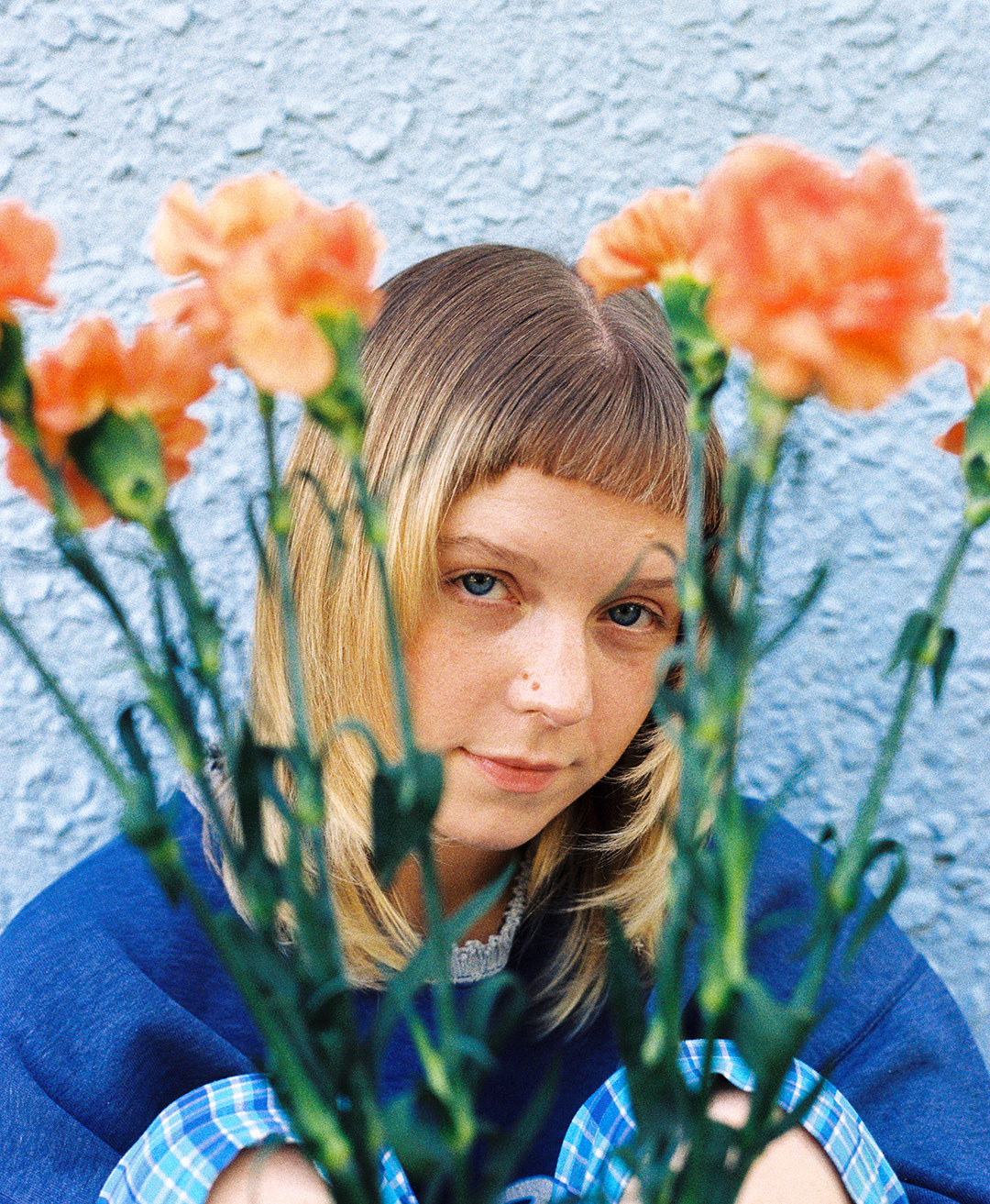
There is something fitting about Chlöe Jobin calling her new EP Over Time. The songs were not written as one neat chapter, or even necessarily with the intention of eventually sitting beside one another. They survived instead. Ideas written years apart kept circling back until Jobin finally decided they deserved to be finished.
– WORDS BY CJ • PHOTOS BY ABIGAIL MUELLER
After the breakup of her first band, she spent more than a year barely releasing anything, stuck in what she describes simply as a rut. Eventually, making Over Time became less about having some grand concept and more about finding a reason to move again. “I really just needed to create some momentum and, more or less, give myself a project to focus on,” she says. “The hope was to get back into the motion of completing and releasing songs.” The deciding factor became which unfinished pieces she could not quite forget. “Out of all the demos and song ideas that get worked on and pushed aside, it’s not too often that I have that feeling of, ‘Damn, I wish I finished that.’”
That gap between writing and finishing gives the EP an unusual perspective. Some of these songs belong to versions of Jobin she no longer completely recognizes, particularly when she thinks back on the situations and relationships that initially produced them. “With some of these songs being years old, there’s definitely the feeling of not really being able to directly relate to where I was whenever I first wrote them,” she says. Rather than making the songs feel less relevant, that distance has created another way into them. “It’s cool to either be able to re-insert myself back to a certain period and look at it through a fresh lens, or to find an entirely different meaning altogether.” A song might begin with something painfully specific, but she does not believe it has to remain attached to the same meaning forever. “None of it’s fixed.”
Jobin usually begins with an idea or feeling she understands, but the interesting part comes when the song starts revealing something beyond the original thought. “I feel like I almost get to take a backseat as my ideas start to make more sense of themselves and go beyond the more obvious concepts that served as my starting point.”
That willingness to leave things unresolved runs throughout Over Time. Songs like “Licking My Wounds” and “On the Brightside” might be concerned with getting back to somewhere emotionally steady, but neither is particularly interested in pretending that recovery happens cleanly. “I don’t think life is generally neat,” she says, “and I think music is the perfect outlet to explore the messiness, confusion, and contradictory nature of being a human.” Even when she sets out to write something encouraging, the opposite feeling usually finds a way inside. For Jobin, that contradiction is often where the song becomes real.
Honesty is something she is fiercely protective of, particularly when it comes to the way the music gets made. The live version of Chlöe Jobin may increasingly involve a band, but behind the scenes she remains deeply involved in writing, producing and engineering her own work. Collaboration happens, but usually only once she knows exactly what she wants from a song. “I am 100% still protecting that first part and all parts of the process,” she says. “I’m super intentional, even just around when to bring other people into play, especially with writing.” She calls Chlöe Jobin a true solo project and is emphatic about what that means. “When it’s all said and done, I want to have the final say. The music I’m working on, where I’m working on it, how I’m working on it, and who I’m working on it with. So basically, I’m a mega-control freak about all of it.”
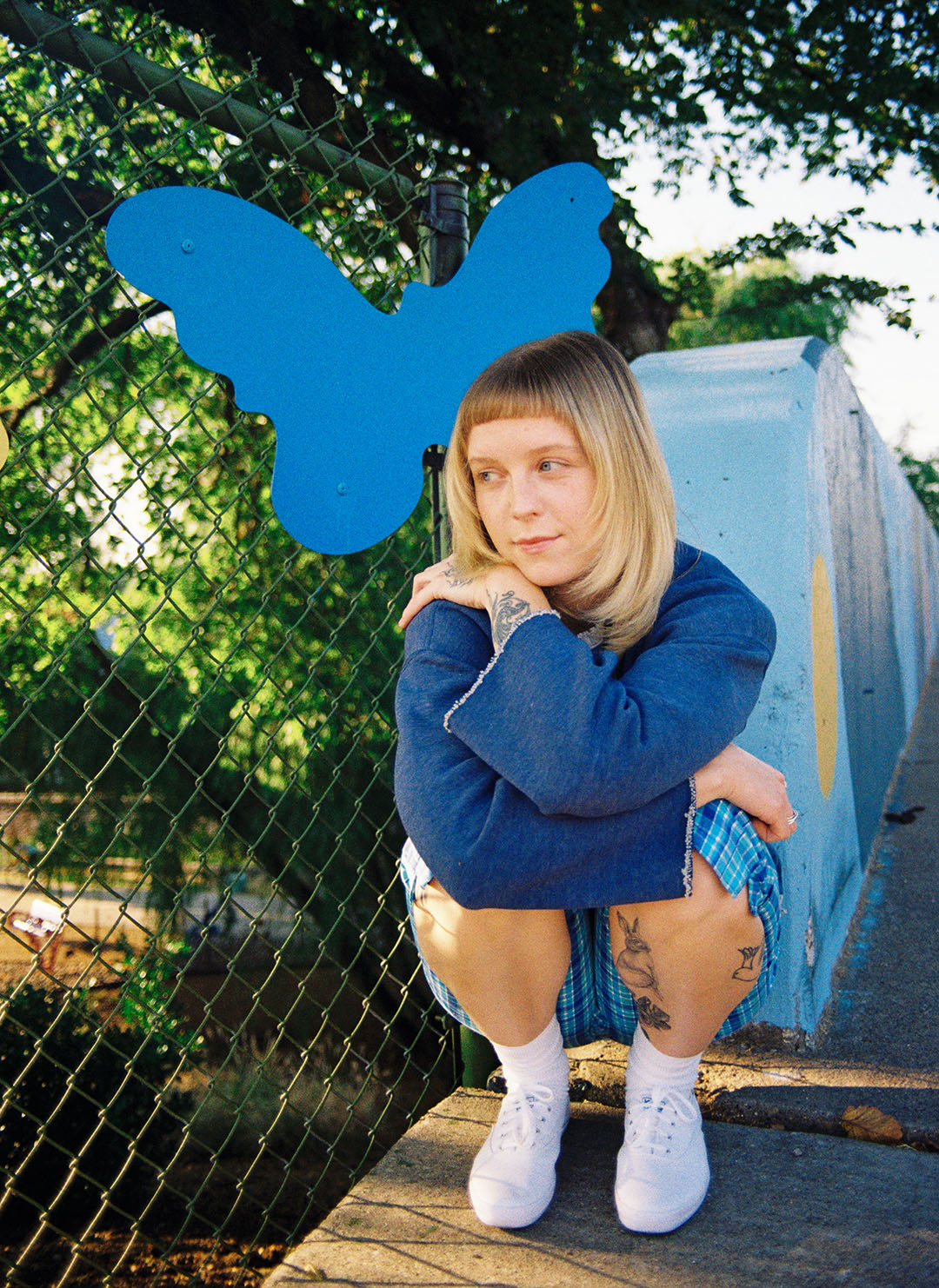
There is a more serious reason behind that insistence on self-sufficiency too. “I think it’s especially important for women in this industry to be as self-sufficient and knowledgeable as possible, and also headstrong as fuck when it comes to carrying out their vision.” That does not mean shutting everyone else out. Jobin readily admits that some of the most rewarding moments have come from trusting the right people enough to relinquish some control, but the distinction is important. Collaboration is welcome. Surrendering ownership of the idea is not.
That sense of ownership may also explain why the Chlöe Jobin catalog has been so difficult to box in. Indie pop can give way to heavier guitars, quieter songs can sit beside stranger, more experimental moments, and seven years into releasing her own music, Jobin is comfortable admitting that she is still figuring out exactly what connects it all. “I’m still figuring out exactly what Chlöe Jobin’s ‘sound’ is, what its defining characteristics are, and making sure to do my fair share of experimentation along the way,” she says. “With each passing year, I do feel like I’m zeroing in on it little by little.” For now, the method is simply to keep making things and pay attention to what survives.
That growing trust in herself is something she hears when comparing these songs to older releases like Chlöe Was Here or Empty House. The difference is not necessarily some dramatic stylistic leap. It is smaller than that, but perhaps more important. “I hear more ‘me’ coming through on my songs in a way that feels more genuine,” she says.
There is less hesitation now, more certainty about when an idea works, when it needs another pass and when something simply is not there yet. “It feels easier and easier to decipher between, ‘Yeah, I like that,’ and, ‘No, that’s not all the way there yet.’” Confidence, for Jobin, seems to look less like certainty and more like trusting herself to know the difference.
“The more I do this, the more I naturally have this sense of self-reliance and inner knowing that I’ll figure out whatever it is that I need to figure out,” she says. Place has been part of that process too. Over the last seven years, Jobin has lived in Austin, Dallas and now Denton. She does not hear those cities directly in the sound of the music, but she does see herself as part of the creative community surrounding it. “To me, being an artist in DFW is more about a shared sense of community and relatability amongst all of us who are embarking on any type of creative pursuit.” Often, it is not the big moments that stay with her, but conversations with musicians, artists and people working around the scene that quietly shift the way she thinks.
That might be the thread running most clearly through Over Time. It is a record built around the understanding that very little about a person stays fixed: not what a lyric means, not what confidence feels like, not how you hear your own voice, and not necessarily the person who originally wrote the song.
Jobin has never found sharing that vulnerability particularly frightening. Strangely, music may be the one place where she worries least about being misunderstood. “The very words that might make me feel a little bit too exposed are ultimately the lyrics that are going to make someone else feel seen.”
For somebody who describes herself as sensitive, emotional and anxious, songwriting is not where those parts of herself become a problem. It is where she gets to do something with them. “I view my music as less of a place where I meet those uncomfortabilities within myself, but a place where I get to work them out and see myself out the other end feeling a little less messy.” Which, in the end, feels like another way of describing Over Time: not a record where everything gets resolved, but one where finishing the song can sometimes be enough to understand how far you have already moved.