Hey, Nothing Let Hound Be Everything at Once.
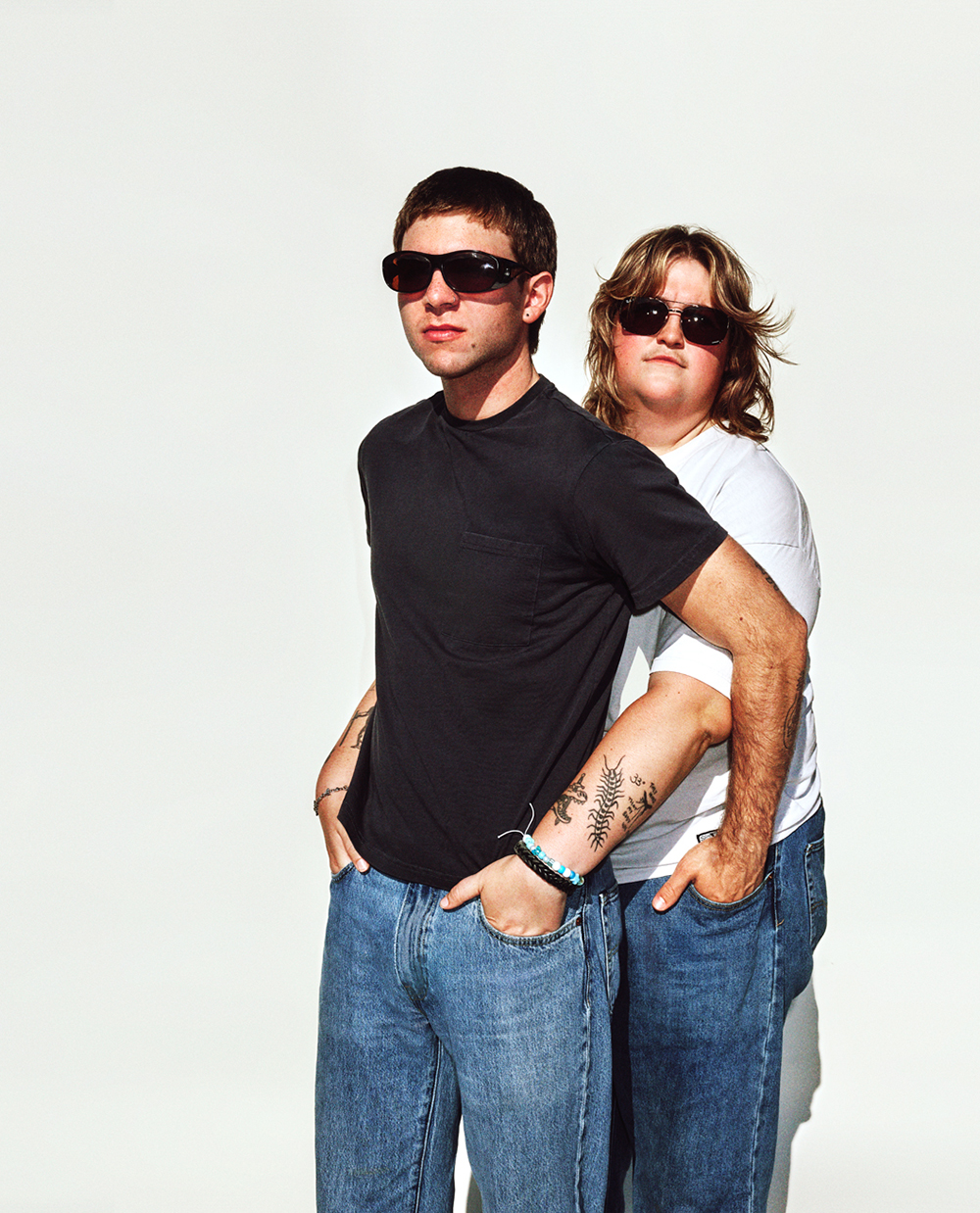
With their debut album Hound, Harlow Phillips and Tyler Mabry stopped second-guessing what a Hey, Nothing record was supposed to be, trusting strange images, direct conversations, gratitude, anxiety and the occasional bit of completely invented studio confidence.
– WORDS BY CJ • PHOTOS BY ANDI ELLOWAY & TRENT WAYNE
There was a moment during the making of Hound when Harlow Phillips walked into the studio and told producer Tommy Trautwein to pull out a U67 for the acoustic guitar. It sounded convincing enough. The only problem was that Harlow did not really know what they were asking for. “I didn’t even know what that meant,” they say, laughing as Tyler Mabry supplies his own version of the session: “Tommy, turn those knobs. I don’t know what those knobs do.” For Hey, Nothing, that mixture of conviction and uncertainty became unexpectedly useful. This was the first record they had made while music was their full-time job, and instead of treating that new reality as a reason to become more cautious, they began making decisions as though they already trusted themselves completely. Tyler calls Hound “a record about confidence,” although he is quick to admit some of that confidence had to be invented before it could be believed. “It’s a lot of false confidence,” he says. “But then what comes out of that is real confidence.”
Harlow describes the process even better: “Supplement your confidence until you no longer know that you’re supplementing it.” That attitude gave Hound a freedom their earlier records approached differently. Decisions stopped being provisional. If a production choice felt right, they followed it.
If a lyric was strange enough to make the other person react, it was probably worth keeping. The result is a record whose certainty has very little to do with being tidy. Hey, Nothing sound more comfortable precisely because they are allowing more things to coexist: the blunt conversation of “Arteries,” the oddness of “Beluga Whale (Call Again),” the looping unease of “When the Rain Comes,” jokes arriving in places where another band might protect the seriousness of the moment. “Every decision we made, we were like, ‘That’s the decision we’re gonna make,’” Tyler says. Even when the decision was partially blind, they stopped assuming that uncertainty meant they were wrong.
That instinct is clearest when Harlow and Tyler talk about the images that keep finding their way into their songs. Animals appear everywhere, partly because both of them genuinely love them and partly because nature gives them a vocabulary that is less predictable than simply naming the feeling. They are especially interested in metaphors that feel new enough to briefly confuse the person hearing them. “Coming up with a metaphor that you’ve never heard of before is definitely something that’s super alluring to us,” Tyler says.
Harlow explains that when they write together, they are often trying to surprise each other, which makes the opening image of a beluga whale in a kitchen feel less like calculated surrealism than the natural consequence of two writers waiting for the other one to say something they could not have anticipated. Tyler remembers hearing the image and immediately understanding it emotionally, even if its literal logic was absurd. That instant recognition is enough. Hey, Nothing are not especially interested in explaining a strange line until all the strangeness has been removed from it.
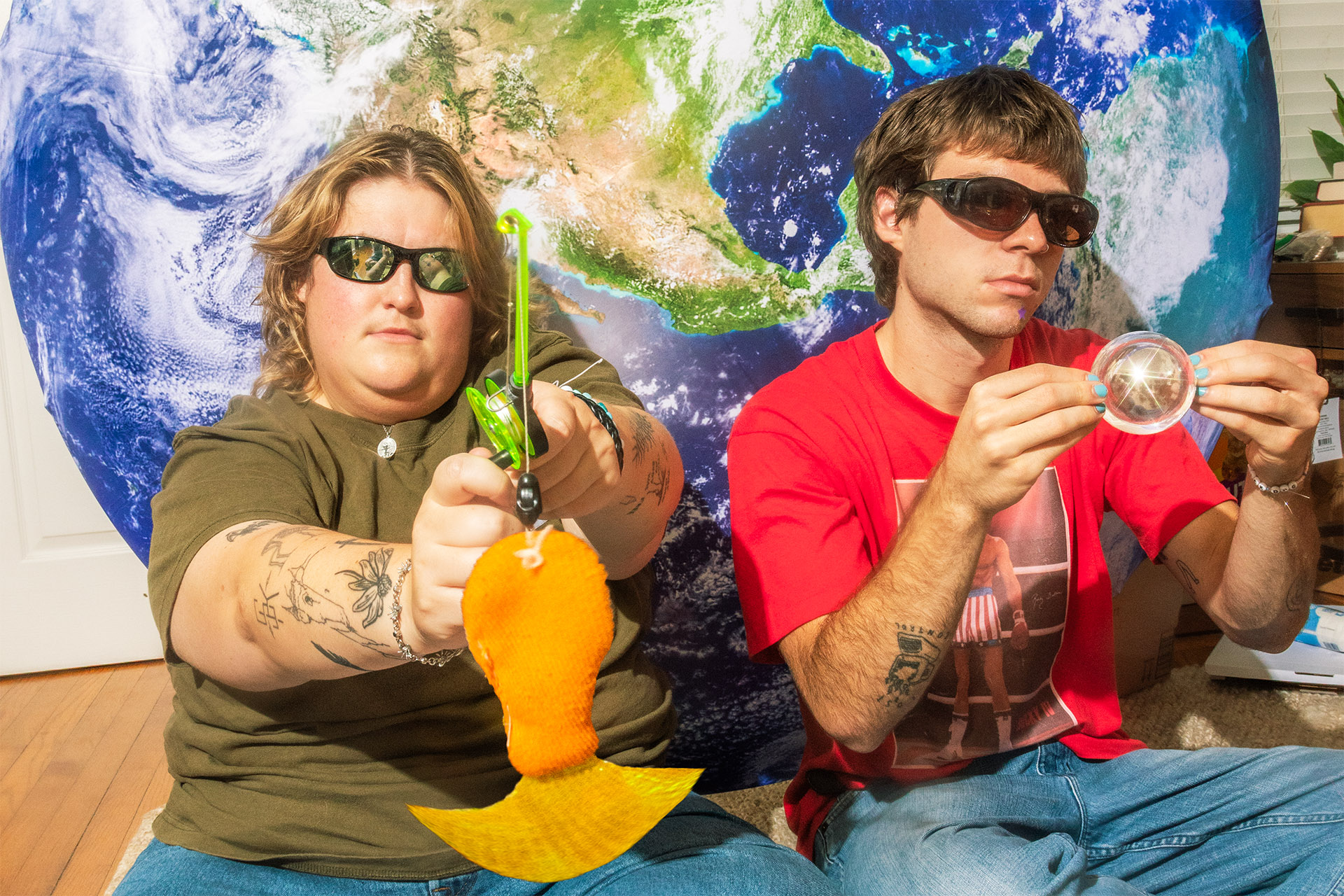

“When the Rain Comes” was almost the reverse experiment. Rather than filling the song with new images or explaining its central thought, Harlow and Tyler kept returning to it, changing the angle slightly and then arriving back where they began. Harlow compares the decision to Schrödinger’s cat: there was a version of the song where they could follow the thought outward into a larger story, and another where they simply remained inside it. They chose repetition because it sounded more like the experience itself. “It really does feel like you’re sitting in the rain contemplating something,” Harlow says, describing the cyclical anxiety of replaying the same possibilities until each new interpretation becomes another route back to the original thought. Tyler recognizes that sensation immediately, especially the habit of imagining every possible consequence of one decision before anything has actually happened. The arrangement then gives all of that nervous circular thinking an almost comically earthy setting. “All over some tasteful bluegrass,” Tyler says. “Some tasteful licks,” Harlow adds. They both laugh, without feeling any need to protect the song from the joke.
That range has taken years to become comfortable. “i haunt ur dreams” was written when Harlow and Tyler were fifteen and reached an enormous audience while they were still young enough to assume that sudden attention must contain instructions. If one song had connected, surely the sensible response was to make another one like it. Then “Maine” travelled just as far while sounding almost completely different, leaving them with two contradictory examples of what people apparently wanted from Hey, Nothing. “Maybe we can put out whatever we want,” Harlow remembers eventually realizing. It took longer to actually live by that idea. For a period, both of them hated “i haunt ur dreams,” wanted nothing to do with it and resisted playing it, until rehearsing for the Hound tour unexpectedly returned the song to them as something much simpler. “This is fun as shit,” Tyler remembers thinking. “It’s a catchy song. I see why people like it.” He laughs when he says there is room for both versions of the band now, which may be one of the quietest but most important changes behind Hound: they no longer need to disown an earlier instinct in order to follow a new one.
The same change appears in the way they write about themselves. After the exposure of Maine and 33 Degrees allowed Harlow and Tyler to construct a story around other people and put their own experiences inside it at a safer distance.
Tyler describes the approach without romanticizing it: “It was an avoidant tactic for us.” Harlow remembers how unsettling it was to watch something intensely vulnerable begin to feel like a product once people were listening to it in huge numbers, and fiction created a way to keep writing honestly without feeling as though every detail had to be attached directly to them. “We can give the people what they want,” Tyler jokes of that period. “They want sad? We got it. But we don’t have to do our own sad.” By Hound, they had become considerably more comfortable walking into a writing session and admitting what was actually happening. “Arteries,” Harlow says, is essentially a conversation the pair had with each other, transferred almost verbatim into a song.
What changed was not simply a willingness to reveal more. Harlow and Tyler were also questioning which emotions they had trained themselves to notice first. Both describe being depressive, angsty teenagers, when songwriting naturally became somewhere to put the ugliest thing in the room. As they got older, they began making a conscious effort to look elsewhere without pretending those feelings had disappeared. Tyler talks about his mother as an example: he could enter a song through something painful she had done years earlier, or he could think about the many occasions when she had shown up for him. “It’s just like a switch of perspective,” he says. For Harlow, writing from gratitude was connected to wanting the songs themselves to participate in whatever growth was happening outside them. “If we’re only focused on writing sad, depressing songs, that growth isn’t gonna happen,” they say. Hound still contains difficult subjects, but difficulty is no longer automatically treated as the most truthful thing available to them.
There is something similar in the way they talk about Andy Hull. Manchester Orchestra are Harlow’s favorite band, and Hull once occupied the unreachable position that favorite musicians tend to occupy when you are seventeen.
Then Harlow and Tyler went to see him play an acoustic show in Los Angeles and discovered that Hull wanted them to join him onstage, not only for one of his songs but for one of theirs. “There’s suddenly this guy that I low-key obsessed over when I was seventeen years old who now respects me as a person,” Harlow says, still sounding faintly bewildered by the idea. They also called Hull bald onstage. “He looked mad bald,” Harlow insists. Hull apparently agreed. It is the kind of story that could have been turned into a neat symbol of Hey, Nothing reaching some new professional level, except they are far more interested in how bizarre and funny it still feels.
“I hope it never gets normal,” Harlow says. They talk about wanting to keep some “whimsy” around the band, to stay impressed by the people they meet and excited by circumstances that would be easy to start treating as ordinary. That feels closer to the spirit of Hound than any straightforward story about two musicians growing up. They know more now, certainly. They trust themselves more and are willing to write things they might once have buried in somebody else’s story, but they have not become interested in sanding off the ridiculous parts to demonstrate that progress. A beluga whale can still turn up in the kitchen. Anxiety can sit over bluegrass. A conversation between two friends can become a song without being disguised first. Harlow can confidently request a studio microphone they barely understand, and somehow that can be part of getting the record exactly where they wanted it to go.