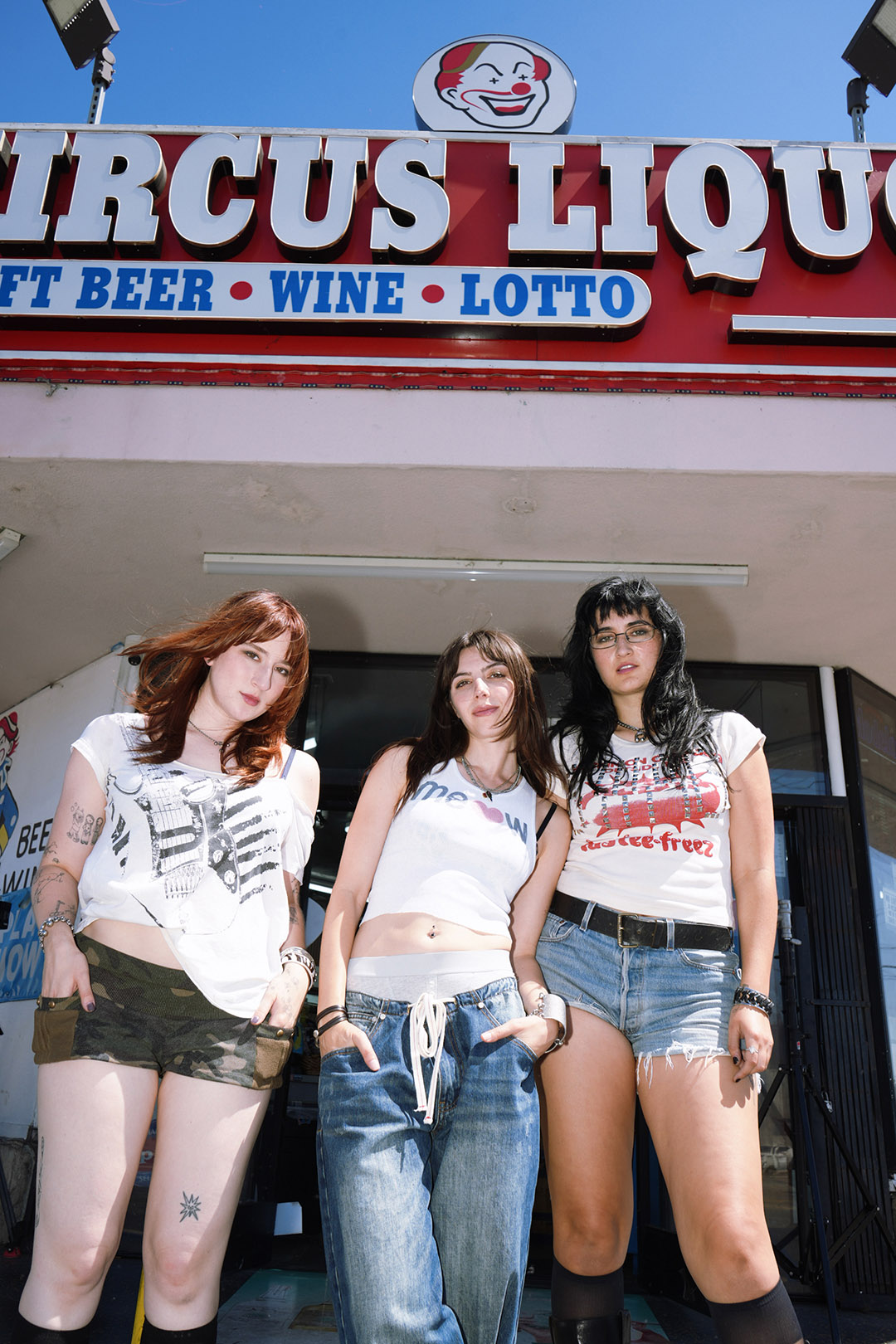
NINE YEARS ON FROM A DISASTROUS FIRST SHOW, KID SISTR ARE JUST GETTING STARTED.
Kid Sistr’s first show should probably have been their last. Sabel Englert had bronchitis, her voice was giving up on her, and somewhere in a cover of The Pretenders’ “Brass in Pocket,” whatever dignity remained in the performance disappeared along with the higher notes. There might still be footage, apparently filmed by drummer Becca Webster’s father.
– WORDS BY CJ • PHOTOS BY Maytal Star
Kid Sistr’s first show should probably have been their last. Sabel Englert had bronchitis, her voice was giving up on her, and somewhere in a cover of The Pretenders’ “Brass in Pocket,” whatever dignity remained in the performance disappeared along with the higher notes. There might still be footage, apparently filmed by drummer Becca Webster’s father.
The remarkable thing is that the band came away delighted. They’d packed a small room with friends and family, everyone seemed to have enjoyed themselves, and the three musicians decided there was something worth pursuing. “We were kind of like, well, it can only go up from here,” Sabel remembers.
Nine years later, she’s still making music with Webster and bassist Sara Keden, and the three of them are laughing about that first night as though it happened last week. Before the interview, we’ve drifted into a conversation about Ireland, where the band loved playing Dublin, and the unsettling silence between songs at American shows. Irish audiences, I explain, generally prefer to continue the gig themselves while the musicians are tuning. Kid Sistr seem entirely in favor of this arrangement.
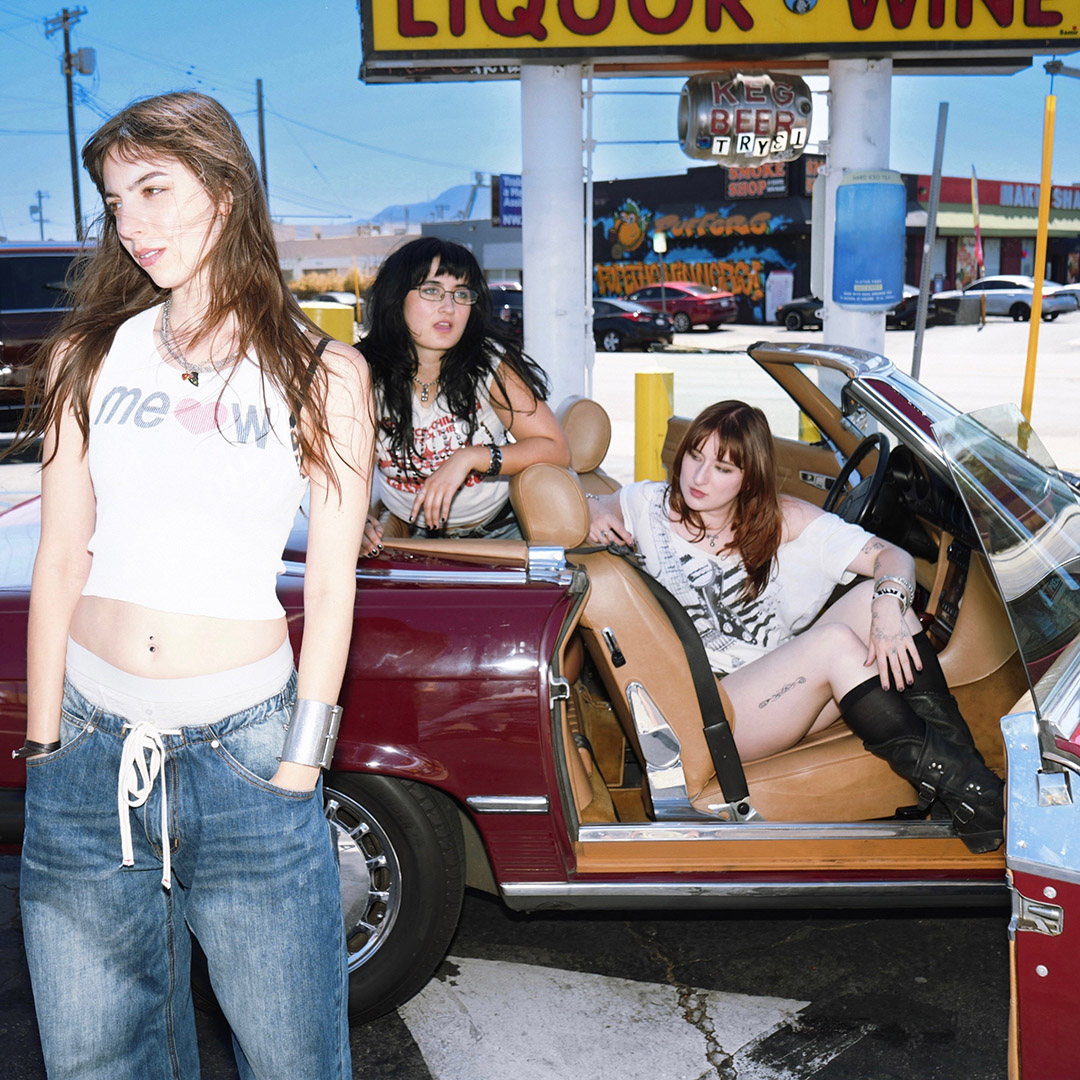
Their latest EP, American Teenage Prophecy, is the work of a band that sounds increasingly comfortable following its own peculiar instincts. The songs can be tender, funny, noisy and gloriously ridiculous, often without warning. That combination makes considerably more sense once you meet them. They’re constantly interrupting one another, returning to old stories, correcting details and disappearing into laughter. The friendship is as much a part of Kid Sistr as any instrument.
Becca was still in high school when they started. Looking back at early footage brings some discussion of how dramatically she’s changed, although the others are quick to point out that nobody has emerged from the intervening years entirely recognizable. They’ve grown up together, through relationships, personal difficulties and professional setbacks, without losing the band along the way.
“We’re really close friends, and we care about each other a lot,” they tell me. “We’re really good communicators.” It’s probably more useful than most explanations for surviving nearly a decade in a band. Seventeen-year-olds rarely grow into the people they imagined, and three musicians aren’t guaranteed to change in compatible ways.
Kid Sistr have had to keep discovering who the others are, and what the group can be, without treating every difference as an existential crisis.
That business of revisiting adolescence runs through American Teenage Prophecy. Sara tells me about an old high-school friend who came to a show, prompting a rather belated realization that there might have been something romantic between them. In her imagination, their prom night suddenly acquired an entirely different ending. Instead, both went with other people, and the possibility remained unexplored. “Low-key, we were in love, babe,” she laughs.
It’s a funny story about the teenage experiences we assume everyone has. For young queer people, recognizing a feeling and feeling able to act on it can happen at very different times. The EP gives some of those missed possibilities a life of their own. Sara describes it as a little bit of grief, but also a way of honoring the wish. Kid Sistr don’t approach it solemnly.
In the video for the title track, there are genuinely moving images alongside the sight of Sara dressed as a baby, spitting up milk. They tell me they cried on set, which seems entirely plausible, although I suspect there was plenty of laughing too. The band’s visual world is full of deliberate absurdity, and I wonder whether making people laugh gives them permission to go somewhere more emotionally exposed. “I’m so much more ready to feel strong emotions when I’ve laughed a little bit first,” Sara says.
We talk about films that are hilarious and heartbreaking in the same scene, and Sacha Baron Cohen’s observation about laughter opening the door to other feelings. It’s a useful insight into their music. Kid Sistr aren’t switching between a serious identity and a comic one; the jokes are part of the way they think. Their personalities don’t conveniently separate into promotional material, songwriting and the things they say onstage.
That last part has occasionally presented difficulties on tour. Supporting bands with large queer audiences has usually meant playing to rooms where they feel immediately understood. Elsewhere they’ve found themselves wondering how much of their between-song conversation will land, or whether they ought to introduce an unfamiliar crowd to their humor more gradually. The discussion expands into rock’s reputation as a refuge for outsiders, a reputation the band isn’t prepared to accept without qualification. Rebellion has always sold records; it hasn’t always made the people involved particularly welcoming.
None of it has dampened their enthusiasm for playing. Live performance has become the most reliable way of testing both their songs and their instincts, particularly after spending so much time refining American Teenage Prophecy with producer Suzy Shinn.
Recording meant taking familiar songs apart and challenging arrangements they’d lived with for years. At a certain point, they explain, it’s difficult to know whether you’re defending a musical choice because it works or because you can’t bear to hear the song any other way. Sometimes it takes an outside voice to suggest the obvious change that nobody in the rehearsal room wants to make.
“Sometimes I really can’t tell if I love something because I’m just so used to it or if it’s actually what’s right for the song.”
Shinn encouraged them to investigate the artists who had influenced their own influences, following musical ideas backward and seeing how differently other musicians had used them. Sara admits she can become obsessed with a particular sound, then worry that borrowing it will make her sound like somebody else. The exercise helped loosen that anxiety. Three musicians with nine years of shared history are unlikely to make an exact copy of anybody, however hard they try.
Onstage, there are fewer places to hide. A recording can be carefully constructed until every moment feels convincing; a song played in front of people has to survive the room. Sara calls the audience a “weather vane,” an immediate indication of what connects and what simply doesn’t. They’re not letting listeners write the music, only learning which studio arrangements they actually enjoy playing.
They learned something similar from their experiences online. During the pandemic, Kid Sistr built a substantial audience on TikTok, occasionally watching videos climb toward a million views. Then came the less exciting question of what to do with all that attention. Another viral post could produce another enormous number, but it didn’t necessarily make the band feel any more connected to the people watching.
“Can’t wait to get another TikTok that gets a million views,” Sara remembers thinking. “What’s the point?”
Getting back into venues changed things. The audience was no longer an abstraction, and the reward wasn’t dependent on whatever happened to a video after they uploaded it.
They talk about leaving even terrible shows in better spirits than when they arrived. If there are two people watching, there are still two people in a room with them, hearing those songs happen in real time. It’s something they had missed more than they realized.
Now they’re talking excitedly about making their first full-length album, bringing everything they’ve learned about recording and performance into the next set of songs. They’ll also return to Dallas on November 17 with The Wrecks and Worry Club at Granada Theater.
Toward the end of our conversation, Sara tells me that all three of them consider themselves the biggest fans of Kid Sistr. After nine years together, there’s something genuinely wonderful about that. They’ve spent nearly a decade learning each other’s musical instincts, watching one another grow as songwriters and discovering what happens when three different personalities bring their ideas into the same room. You might imagine that some of the excitement would have worn off by now, but Sara talks about the band with the enthusiasm of somebody who’s only just discovered them. And nine years later, that enthusiasm is still contagious.