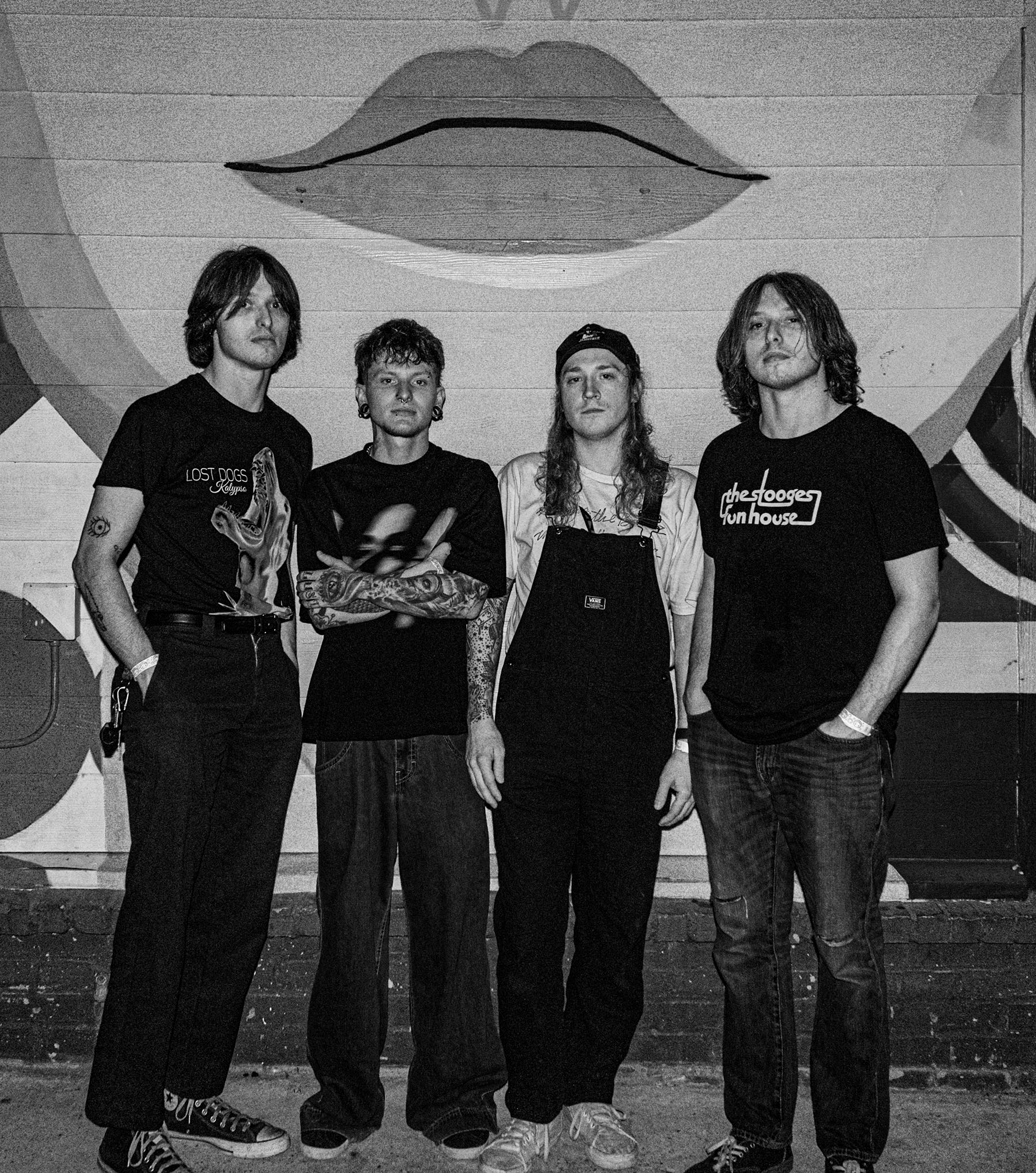
LABELS Have Signed With Spaceflight Records. Don’t Expect Them to Clean Up.
For a band that spent years learning how to play together before properly figuring out how to be a live band, that feels like a fairly big marker in the road.
– WORDS BY CJ / PHOTOS COURTESY OF LABELS
Not a reinvention, and not some dramatic line between the old version and the new one. More like evidence that the thing they built themselves is starting to travel a little further. The Fort Worth band got here through the unfashionable route: rehearsing for years, teaching themselves their instruments, recording and producing themselves, then playing the same cluster of DFW rooms until the songs started making sense in front of people.
Signing with Spaceflight changes some of that infrastructure, but LABELS don’t sound particularly interested in surrendering the parts that made the band theirs in the first place. “Starting off with your own music by self-recording and self-producing is a very big plus,” they say. “But with joining Spaceflight, it gives us a little less stress when it comes to finding connections and promoting ourselves fully.” The timing makes sense alongside White Hot, a record that sounds like a band increasingly sure of what it wants to do. It arrived barely fourteen months after Moral Laws and was made across roughly six months, with less hesitation and a lot more urgency.
“With everything that was going on politically in the United States, it was a big topic that was on our minds as a band,” they say. “We already knew directionally that we wanted the next project to be more energetic and raw, with more punk influences.”
That combination, anger and momentum, became the center of the record. It is there in titles like “Devastation of Our America,” but it also sits underneath songs that look more personal on the surface. LABELS didn’t necessarily begin White Hot with a manifesto pinned to the wall; the shape of it appeared as the material accumulated. “As time went on, we had collected a good amount of material. It was becoming apparent, with the angst and anger in the way these songs were played, that we had a clear focus on what we wanted to speak about.”
They are also careful not to close those songs down by explaining them too neatly. “We love having people interpret what our lyrics or song names mean. We want people to create what they mean to them in their own way.” “Wake Up (And Wait for the World to End)” is probably the clearest example of that tension, more than five minutes spent anticipating something terrible without ever pretending that disaster arrives with a convenient beginning and end. When asked what they were waiting for when the song was written, the band are reluctant to pin it to a moment because, from their perspective, the wait has not ended.
“We are still waiting for people to realize that there are still wrongdoings happening in the United States now,” they say, pointing specifically to ICE taking people from their families. “I just don’t want it to fade away from people’s minds once that certain time period has passed or when it’s no longer happening as prominently.” There is something fitting about a band concerned with unfinished business having an unfinished record buried somewhere in its own history. LABELS removed their first album from streaming after deciding they had released it before they were really ready, less because they were embarrassed by the songs than because they were unhappy with how the thing had been captured. “It felt unfinished and not as complete as we would want it to be now.”
They still defend it, though. “It came from the pure love of creation. We were new in our ability to play our instruments, but we still wanted to create and put our musical input out into the world.” That early lack of technical ability is part of the LABELS story. Braden and Taylor started writing while they were still learning what their instruments could do, and while some bands lose something once everybody gets better … the strange choices disappear, the accidents stop happening, everything gets tidier. LABELS don’t think that has happened here. “It just makes creating songs a little easier and more fluid.”
The same is true of playing live. For several years, LABELS largely existed in rehearsal rooms, a period they now credit with giving them the time to learn their instruments and understand how to play together. There is also a sense that they might have stayed hidden slightly too long. “We do wish we had started playing shows a little sooner,” they say. “Playing shows is where you learn the most.” They have now been doing that for around three years and say those years taught them more than all the rehearsal time that came before.
The next lesson was leaving home. Fort Worth, Dallas and Denton are forgiving places when you have spent enough time building a community around a band. Eventually you have to play somewhere nobody knows the songs, nobody knows your friends and nobody particularly cares what you did last weekend.
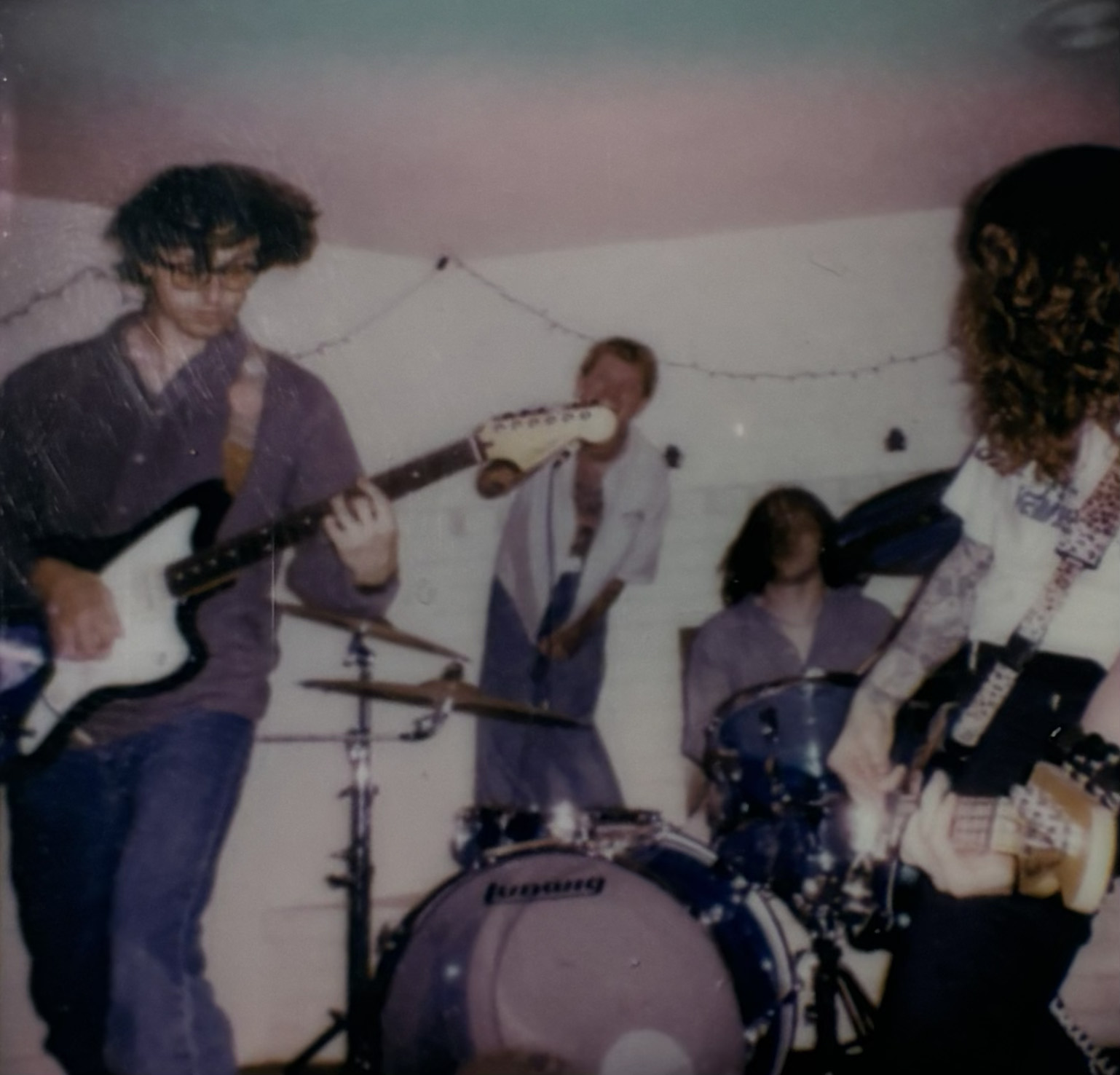
LABELS found that they liked it. “It brings a confidence and a drive that feels different when you play outside of the few cities that consistently hear your material,” they say. “It changes my mindset knowing that our songs can make people outside of our hometowns feel excited and included.”
That may end up being the most important part of the Spaceflight deal. LABELS already know how to make records and put on shows. They already know how to disagree with one another without turning it into a crisis; something helped by friendships that predate the band and, in Braden and Taylor’s case, being twins. The thing they need now is reach: not somebody to come in and explain what LABELS should be, but somebody who can make the distance between Fort Worth and everywhere else a little shorter.
After doing nearly everything themselves, they have earned the right to let somebody else make a few phone calls.