Moon Darling’s Second Act Runs on Instinct.
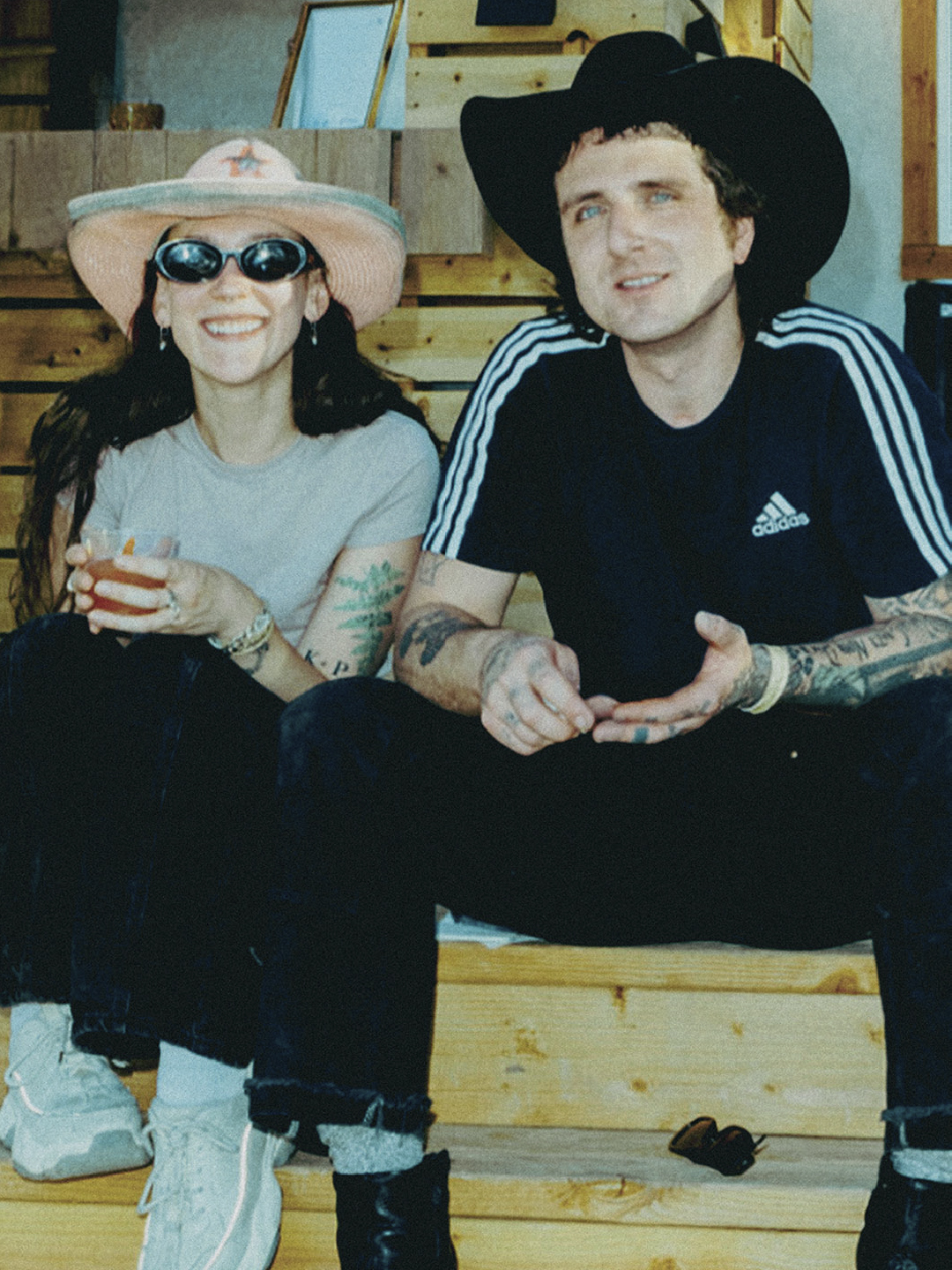
Moon Darling might not have returned if Eliza Karpel hadn’t asked Michael Julian an obvious question: why was he sitting on all those songs? The Seattle-born project had been inactive while Julian worked elsewhere, but he still had a backlog of material.
– WORDS BY CJ • PHOTOS COURTESY OF MOON DARLING
He and Karpel were playing in another musician’s group when he showed her old Moon Darling videos and recordings. She heard something worth pursuing. “It just felt special when Michael showed it to me,” she tells JAMBALOO. “I was like, ‘Why is this not like… Why are you sitting on this?’” By the end of a subsequent tour, sitting together in a diner, she was suggesting they invest their energy in Moon Darling instead.
That decision led to Hearts to Blame, a nine-song album released in September, and a close creative partnership. Julian started Moon Darling in Seattle, developing psychedelic pop songs shaped by old recordings and cinematic arrangements. Karpel already loved those songs, but the project quickly became more than one songwriter recruiting a sympathetic instrumentalist. They were writing, arranging, recording, and planning tours together, often with little division between working hours and the rest of their lives.
For Julian, this depth of collaboration was unfamiliar. His usual method had been to write a song and ask other musicians to play it. With Karpel, ideas moved in both directions, sometimes in marathon sessions surrounded by synthesizers. “We’ve sat there all night,” he recalls, describing the excitement of finding a sound and calling the other over to hear it. He still arrives with a foundation, but Karpel’s keyboard figures, bass parts, and other details can alter a song’s direction. Julian credits her synth and keyboard work with crucial melodic elements that wouldn’t otherwise exist.
Karpel describes the process as instinctive rather than a negotiation between two musical identities. The older Moon Darling songs had struck her emotionally, and she interpreted them through her playing. With new material, the overlap became clearer.
They often found themselves about to suggest the same thing or arriving independently at a similar idea. The record sounds like two people responding to the same emotional cues rather than one executing the other’s instructions. “A lot of it’s kind of just unspoken and intuitive,” Julian says.
Neither musician describes songwriting as an attempt to communicate a predetermined idea. Julian considers himself emotional and says songs arrive before he has decided what they’re about. “It’s like when I write a song, it’s like never planned,” he explains. “It kinda just like happens.” Karpel recognizes that instinct as something that attracted her to his work. Both admit to feeling things intensely, occasionally becoming dramatic, and allowing those moods to shape the music. Spending so much time together has blurred the boundary between personal responses and creative decisions.
The album’s title emerged from that process. They had intended to call it In the Wildwood, after its closing track and the story surrounding the record’s creation. Julian then rewrote the lyrics to another song, which became “Hearts to Blame,” and the title seemed to describe them more accurately. Karpel explains it as their tendency to act from emotion, making decisions with the heart before the head catches up. The phrase doesn’t pretend those decisions are necessarily wise. It acknowledges the impulse guiding the work, from reviving the band to shaping individual performances.
The music moves between vintage psychedelic rock, pop songwriting, and rhythms that reveal a shared fondness for disco. Both grew up with family record collections, loved Fleetwood Mac, and played in marching bands as children, despite living in different states. Julian says Karpel would probably recognize every album he inherited from his mother.
That common vocabulary helps them communicate without explaining every reference. It gives Hearts to Blame a wider range than its retro touchstones suggest, with layered keyboards and bass lines doing as much work as the guitars.
Julian is drawn to Ennio Morricone, whose spaghetti-Western scores have fascinated him since childhood. The influence surfaces in dramatic arrangements suggesting a scene beyond the song. But he doesn’t necessarily describe a precise image to Karpel. “I don’t know if Eliza understands what I’m doing,” he laughs, admitting his attempts to convey a feeling can become less coherent as he gets animated. Karpel is highly visual herself and often hears Julian’s writing and imagines an emotional setting. Arrangements grow out of those responses rather than an agreed storyboard.
Her bass playing illustrates the distinction. Karpel calls herself a perfectionist, but says she repeats a take less to remove technical flaws than to reach the feeling she wants from it. “I’ll do it over and over again,” she says, “but not to get it, like, technically in the way I want, but more so to get the feel.” Julian can be almost the opposite. He might record a single take and decide that it already captures what he needs, even if someone else hears a detail that could be fixed. He doesn’t have much patience for musicians repeating a vocal part 20 times when the earlier performances were already convincing. Their different tolerances for revision have become another useful form of balance.
Julian taught himself to engineer because studios were expensive, and Hearts to Blame was recorded in a rented cabin near Centralia, Washington, with him handling the engineering. The recordings may invite the description “lo-fi,” but Julian rarely thought in those terms while making them. He isn’t convinced that an expensive Los Angeles studio would have produced a better record. “At least if people wanna call it lo-fi,” he jokes, “at least they’re not calling it shitty.”
Karpel is more comfortable with the label when it suggests that artists can make worthwhile work using the resources available to them. She sees a growing appetite for handmade music and a reaction against the increasingly frictionless possibilities of digital production, including AI-generated material. For her, the value lies in being involved at every stage and leaving some of the personality of the process in the recording. The two don’t necessarily want every musical question resolved or every edge polished away. Their interest in feeling rather than technical perfection makes the sound a consequence of how they work, not simply an effect added afterward.
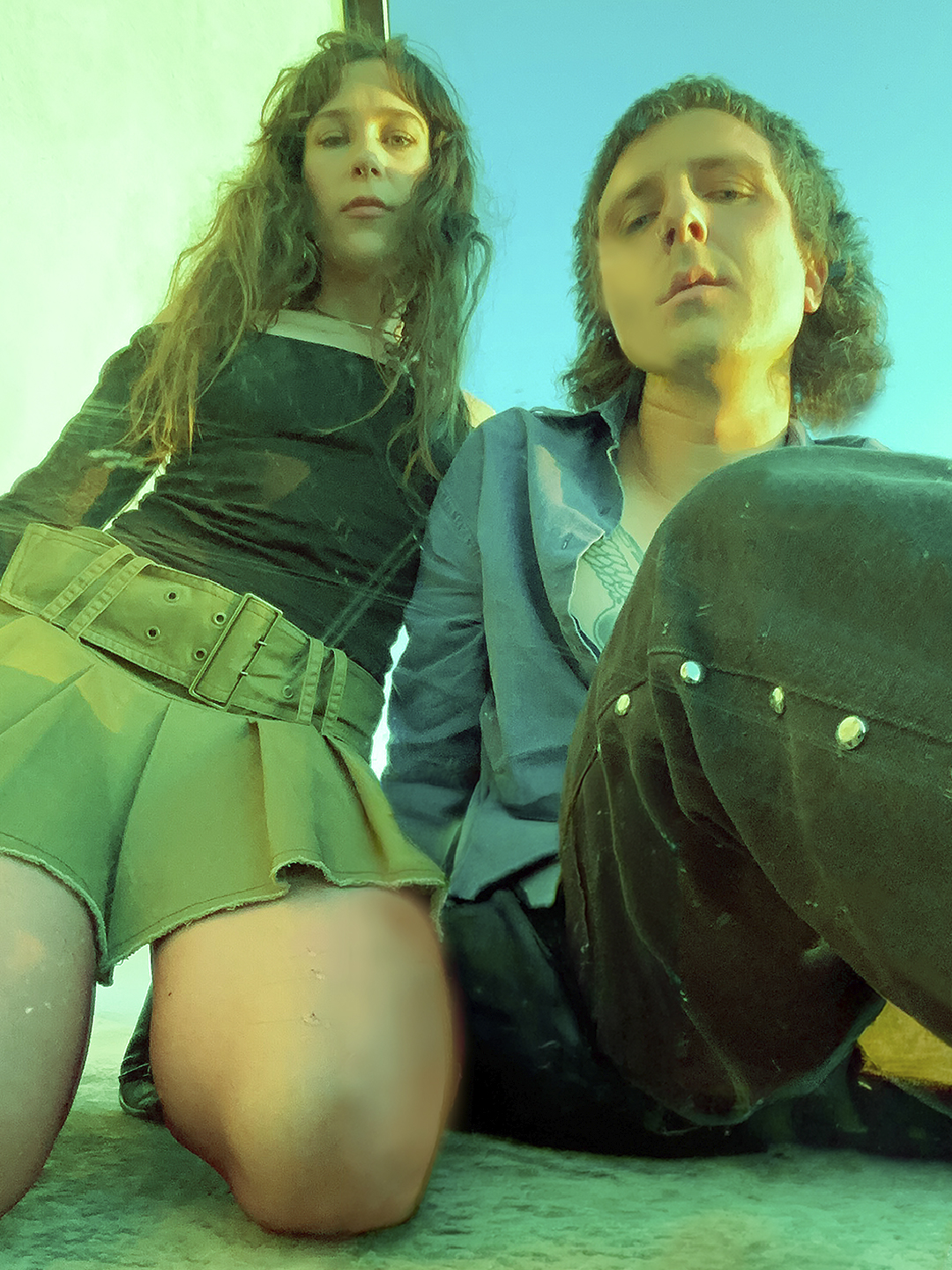
That degree of creative closeness has its costs. Julian says they spend so much time together that even casual conversations tend to turn toward songs, recording ideas, or plans for the band. They can get tired and frustrated with each other, though disagreements rarely involve whether a piece of music sounds good.
Karpel suggests the messier moments usually concern emotions rather than arrangements. Both are still learning how to make space for ordinary responsibilities, difficult days, and the exhaustion of working together so intensely. The experience has given them a much clearer understanding of each other’s instincts, but neither considers that process complete.
Now they’re taking the material on tour, where songs assembled through long sessions and close listening have to work in a room full of people. Moon Darling plays Three Links in Dallas on November 7, with The Infamists, Henry the Archer, and Daughters of Evil. Julian and Karpel are looking forward to the Texas dates, though they know touring will be another test of the collaboration that brought the project back. They have been almost continuously writing and recording for the past year; the coming shows will put those decisions in front of an audience rather than the two of them sitting together, deciding whether a take finally feels right.