Overstreet Knox Have a Home to Build From.
After building a Dallas following around songs that were barely available to stream, the four-piece are preparing their debut album and learning how much of a band’s future can be decided in the house where it rehearses.
– WORDS BY CJ • PHOTOS COURTESY OF OVERSTREET KNOX
By the time Overstreet Knox began releasing music from their debut album, some of the people coming to their Dallas shows already knew the songs. The band had spent so long writing, rehearsing and playing the material before putting a full record into the world that a chorus could have a life of its own before it appeared on a streaming service. That creates a slightly unusual challenge for a new act: the recordings have to introduce the music to strangers while remaining recognizable to people who have watched the band work it out onstage. With Is It Good for the Company? due January 29, 2027, the four members are finally reaching the end of a recording process that began in considerably less polished surroundings.
The group came together in Dallas while pursuing conventional careers, with a shared interest in making music but no guarantee that four separate schedules could support it. Their first writing space was a small shed behind a house, and the physical circumstances shaped how much they could do. Things changed when they started living under one roof. “We all live together” is a simple enough description, but it means somebody can bring a guitar part into the room without arranging a rehearsal several days in advance. It also means everybody lives with the consequences when an idea doesn’t work. Disagreements over a song cannot be left behind when the rehearsal ends, and the members have had to get better at deciding which opinions are useful and when to stop arguing over a detail. “We know how we communicate” is the practical advantage of spending so many hours around each other, rather than meeting up once a week to play through a set.
The four do not bring identical musical histories into that room. Their conversation wandered from older rock and blues to heavier guitar music, contemporary indie bands and the appeal of songs that can get away with relatively little.
They talked about Kings of Leon and the way an apparently straightforward arrangement can still feel enormous, but their own writing is rarely a matter of agreeing on a reference and trying to reproduce it. Somebody arrives with a part, somebody else hears a change and the song has to survive all four interpretations. Sharing a house has allowed them to move between ideas quickly, but making that arrangement productive has required the band to understand one another beyond their individual instrumental parts.
Taking the songs to Tre Nagella at Luminous Sound involved another kind of adjustment. The material was familiar to the people playing it, but recording under the supervision of an experienced producer is different from running through a song in the rehearsal room. The first surprise was how exposed everything could feel. A guitar line that works naturally at home becomes something to repeat under scrutiny, often while the person playing it becomes progressively less convinced they can get it right. Nagella created “a safe space for us to fail,” while still expecting everybody to return to the part and make it better. That combination was important: the band could experiment without being embarrassed by a mistake, but the producer was not going to accept an arrangement simply because everybody had grown attached to it. There was “a lot of tough love” as well, especially when a part wasn’t meeting the standard the sessions demanded.
Length was a recurring problem. Overstreet Knox like to follow a musical idea, and the result can be a song with considerably more sections than a first-time listener expects. They had to work out which elements were making the records stronger and which existed because the group had enjoyed playing them.
That question became particularly important when choosing what to release first. “Breathe” had been with them since early in their time together and offered something immediately accessible, including a “sing-along chorus,” but it couldn’t represent everything the album does. “Melt My Skin” pushed the guitars further forward. Together, the singles introduced different aspects of a band that was still deciding how much of its range to reveal before the full record appeared.
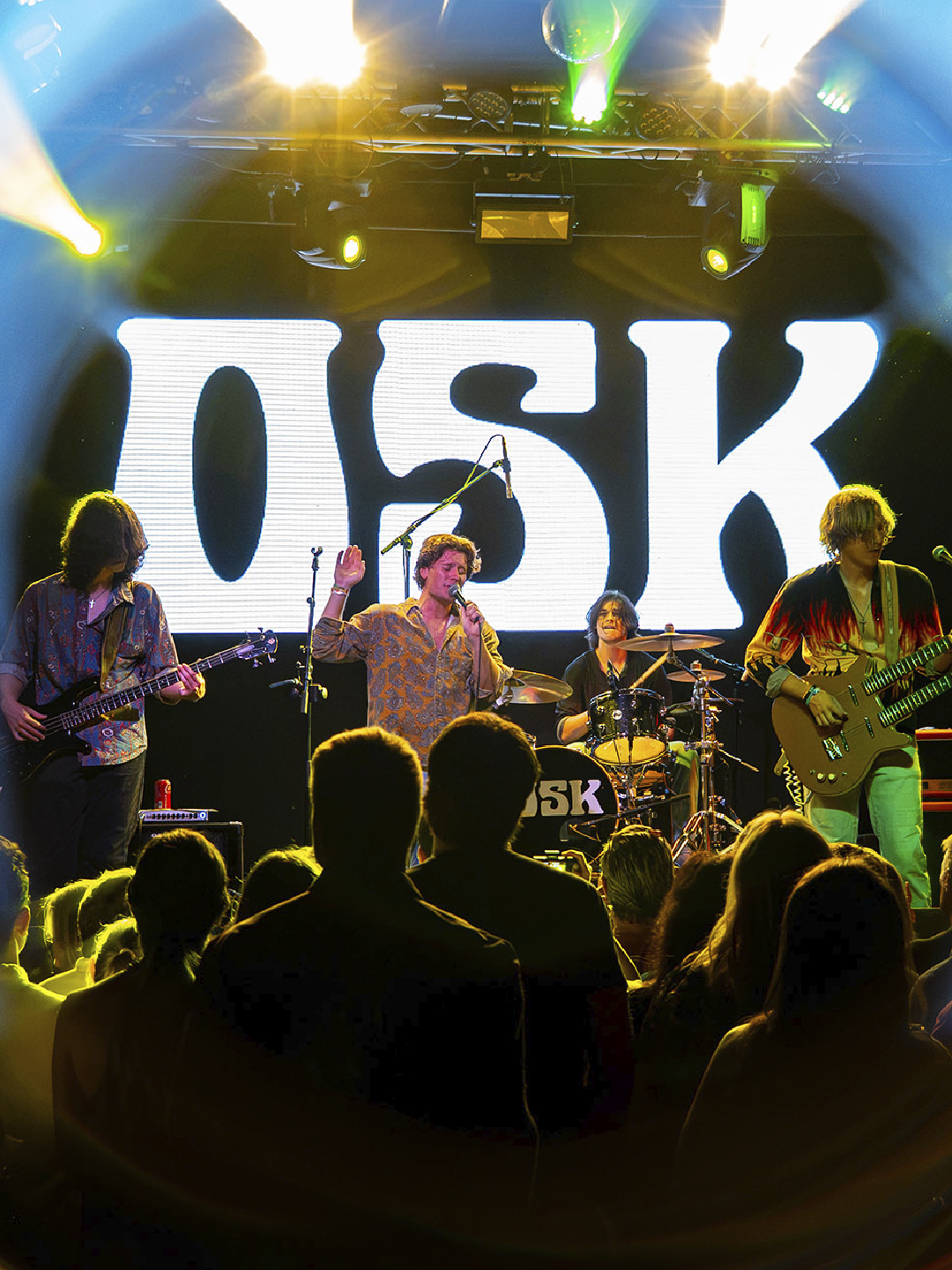
The live response has been unusually useful in making those choices. Before a song is released, a crowd’s familiarity with it is earned through repeated shows rather than a playlist recommendation. The group have played around Dallas, including at Trees and Sundown at Granada, and gradually become aware that people were recognizing material they hadn’t yet recorded for public release. “We love playing live” comes across as more than a routine declaration when the songs have already been tested in front of those audiences. They have been able to notice which ideas connect, which choruses stick and what an unfamiliar listener responds to without having to ask anybody to analyze the music for them. That direct exchange also helps explain their interest in the current appetite for guitar bands.
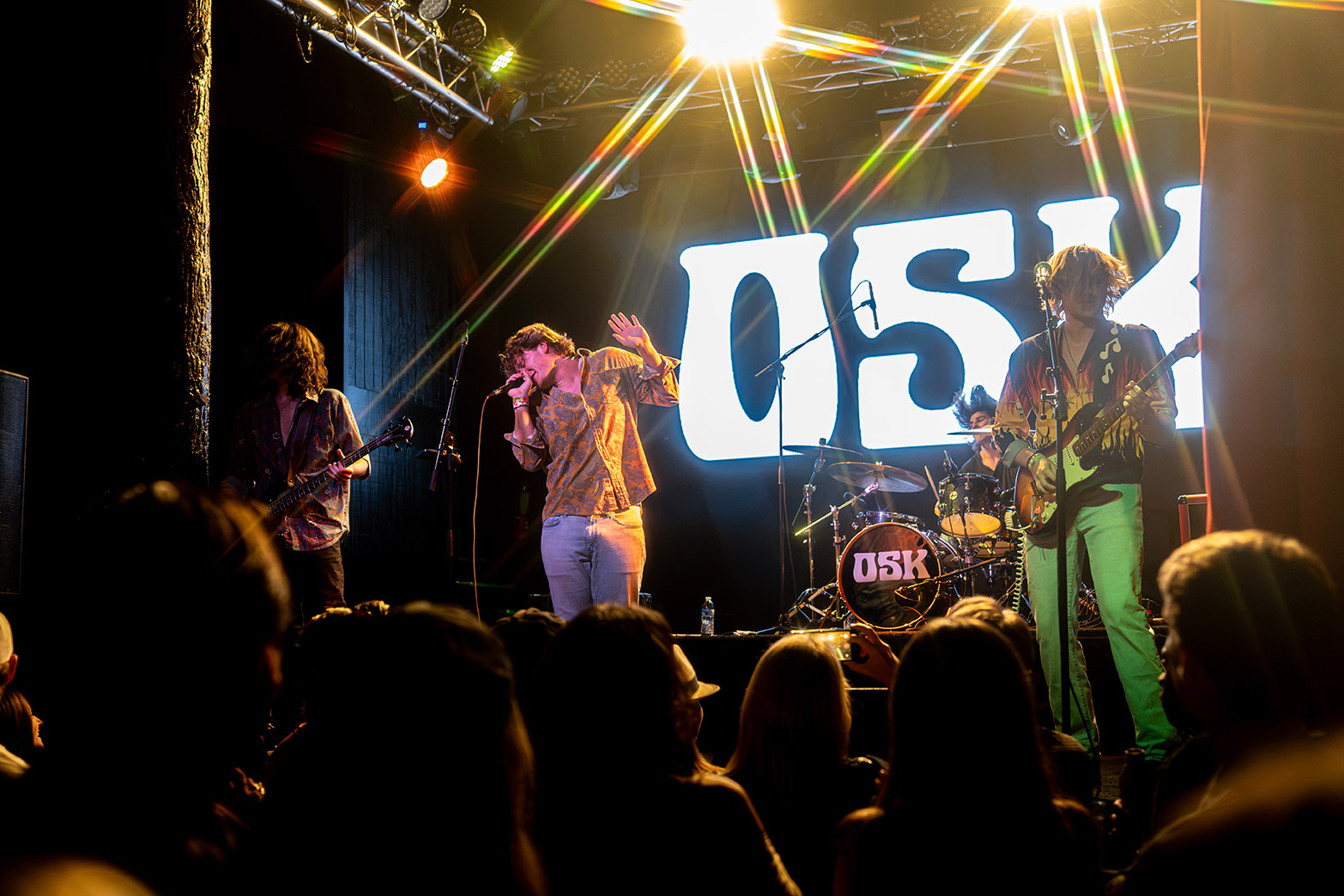
The conversation turned to rock music’s changing place in a culture increasingly concerned with metrics, online discovery and AI-generated material. The group were less concerned with defending a particular definition of rock than with the experience of making something collectively, in real time, and hearing an audience react to it. Their tastes are broad, and they recognize that contemporary guitar music can be heavy, polished, melodic or deliberately rough. The thing those styles share at a show is the presence of musicians whose choices are visible and sometimes imperfect. Overstreet Knox have spent enough time onstage to know that those decisions can be part of what makes a performance compelling.
For now, the question is how to take the music beyond Dallas without giving up the circumstances that have helped them develop it. “As much as we wanna hit the road tomorrow” captures the attraction of touring, but the discussion quickly moved to the financial reality of taking a young band from city to city. Attention on social media is not the same as a room full of people prepared to buy a ticket. .
The members would like to keep expanding their reach while putting deeper roots down in North Texas, where the songs already mean something to an audience they can see. They have started to involve people on the business side of the band, too, and that adds another set of decisions about spending, booking and where a show would genuinely help them grow.
Is It Good for the Company? arrives January 29, 2027. The songs that started life in the shed have since been rehearsed at home, played on Dallas stages and taken apart in Nagella’s studio. The album will be the first chance for people outside those shows to hear the whole collection, while the four people living together will still have the practical business of finding the time to write what comes after it.