
Remy Reilly Is a Little More Complicated Than That
The Dallas songwriter on dancing through heartbreak, growing up around the music business and refusing to let experience harden her.
– WORDS BY CJ / PHOTOS COURTESY OF REMY REILLY
Before Remy Reilly understood what the music business was, she understood what it looked like from the floor.
One of her earliest memories is being five years old at Kiss FM, stacking CDs while her father worked in music promotion. She followed him into radio stations, concerts and backstage rooms, watching adults turn songs into schedules, campaigns and careers. The machinery was never hidden from her.
For a while, that may have been enough to keep her away.
Then one of her father’s artists needed to borrow a cajón. The instrument was sitting at the family home, and Reilly spent the night playing it, making up songs and accidentally stepping into the life she had been watching from the edges.
“It was over,” she says. “That was the night I knew I wanted to be a singer.”
Remy began performing live at twelve. Everything she had already seen, including the pressure, politics and business surrounding music, became irrelevant the moment she was standing in front of an audience.
“There is nothing that the evils of any industry can take away from the feeling of singing live in front of a captive crowd,” she says. “There is nothing like it on the planet.”
Reilly has now spent close to a decade releasing music in Dallas, growing up in public without ever leaving home long enough for the city to forget an earlier version of her. Local musicians remember the fourteen-year-old songwriter. They remember the high school years, the first releases and every awkward stage between then and the artist who recently collected three Dallas Entertainment Awards.
She does not seem embarrassed by that history. She speaks about it with affection.
“I always say they had a part in raising me,” she says of the Dallas-Fort Worth musicians who watched her grow up.
There has been no dramatic reinvention. No calculated attempt to destroy the old image and replace it with something more adult. Reilly still recognizes the younger person people remember. She now speaks more freely, censors herself less and carries a little more life into the songs, but the energy and weirdness remain intact.
The more meaningful change happened inside the writing.

When Reilly was younger, she could convincingly enter stories she had only observed or imagined. Distance offered protection. She could write about a feeling without admitting exactly where it came from.
That distance has gradually disappeared.
Songs including “Dirty Work” and “Half Price Books” are not character studies or exercises. They are confessions. Reilly now writes almost entirely from her own experiences, which has made the songs more honest while complicating what happens after they are finished. Performing something personal means repeatedly deciding how much of the life behind it belongs to the audience.
Reilly describes herself as an open book away from the stage, especially when somebody else is willing to begin the conversation. Singing is different. A deeply specific song can reopen the feeling that created it, but it can also take some of its power away.
“Every time I sing one, I feel a piece of myself heal,” she says. “When I get to have that moment with someone who relates to a song of mine, I feel like we’re both being seen.”
The audience rarely hears a song exactly as its writer intended. That is part of the exchange.
After one performance, a listener told Reilly that “Half Price Books” had helped them feel more comfortable coming out as non-binary. Reilly had written the song from her own fear of intimacy and the isolation of feeling fundamentally different. She had not considered that somebody might hear its references to needing to be “injected and fixed” as a rejection of the pressure to become more acceptable to other people.
The listener found their own life inside it.
“My heart sank in the best way,” she says.
It was proof that a private experience does not have to remain private in meaning. The details may belong to Reilly, but the loneliness does not. Neither does the desire to be accepted without first being repaired.
That tension between the personal origin of a song and the lives it gathers after release runs throughout Reilly’s work. So does the strange way old ideas wait for their proper moment.
The piano figure behind “Ricochet” first appeared when Reilly was in eighth grade, staying at a family friend’s house in Houston. The house had an electric piano she could play through headphones without waking anyone. Late one night, she found the riff, recorded it into a voice memo and left it there.
She continued playing it around the house throughout high school. At one point, she built an entirely different song around it. Even then, the subject was similar: wanting somebody while remaining conflicted about what being with them might require.
Years later, the same riff became “Ricochet,” a bright, restless dance song about being unable to escape another person’s pull. The eighth grader who found those notes had unknowingly created something durable enough to survive several versions of the person playing them.
“I joke and say that I wrote my future and it happened,” Reilly says.
Taken together, her songs refuse the clean version of heartbreak. Love does not disappear because a relationship ends. Healing does not arrive in a straight line. Self-protection can begin to look a lot like isolation. With Remy Reilly, it is always a little more complicated than that.
“Ricochet” sits alongside “What Do Ya Know” and “Dirty Work” as three separate encounters with love rather than a neatly planned trilogy.
“What Do Ya Know” reaches back to Reilly’s first love and the difficult end of that relationship. The song does not ask her to erase what happened or pretend affection disappears when communication does. It accepts that love can remain even after the relationship carrying it has ended.
“Dirty Work” began with the same person, but another, more damaging relationship later changed how Reilly understood intimacy altogether. She shut down for a year. The possibility of letting somebody close became something threatening rather than romantic.
Eventually, she went to life coaching. Slowly, the spark returned.


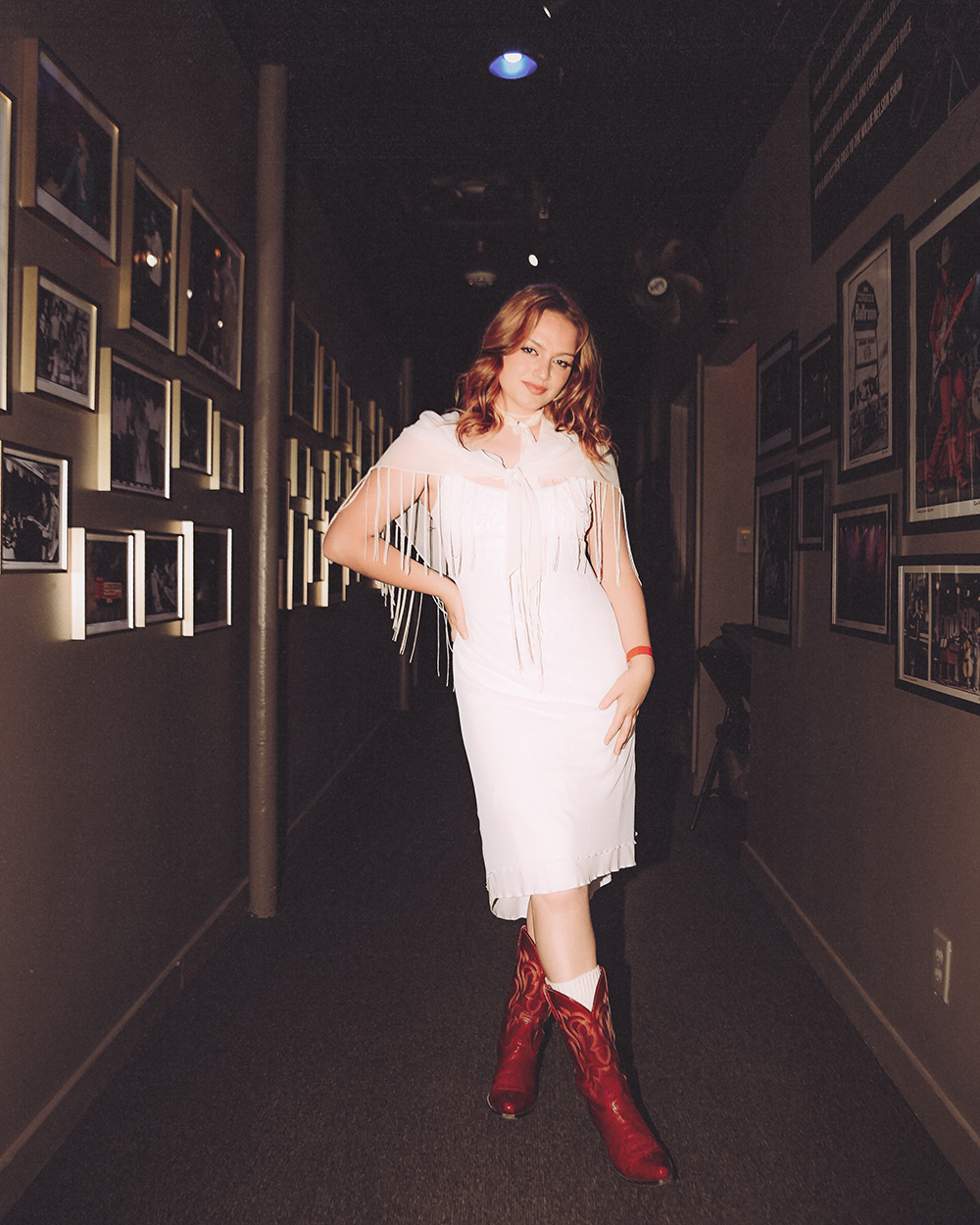
Then she came back to “Ricochet.”
The problems had not suddenly become simple. Reilly had simply decided they might be more enjoyable with movement underneath them.
“Instead of being sad about failed relationships, I can now dance about it,” she says. “I find it way more enjoyable that way.” That could sound like an easy resolution. Heartbreak becomes a hook. Pain is transformed into something bright enough to perform. Reilly is less tidy than that. She openly acknowledges the difficulty of finding love while trying to build a life in music. Her conclusion is not that the right person eventually arrived and made the earlier songs irrelevant.
She found a more dependable form of love in herself.
“Once you fully love and respect yourself, no one can ruin your life,” she says. “Just keep dancing through it all.”
Musically, Reilly has never seemed interested in staying inside one clearly marked room. She describes her catalog as a rainbow, with each song taking on a different color and sometimes an entirely different genre. After almost ten years of releasing music, she still struggles to name exactly what kind of artist she is. The lack of a settled genre does not mean the songs are disconnected.
Her voice provides one recognizable line through them. So does her fondness for unusual metaphors and words slightly too large or peculiar to arrive in a typical pop lyric. There is also the vocal flip she has used since she began singing, something close to a yodel, although not quite. It appears throughout the recordings and at nearly every performance.
It was not manufactured as a signature. It simply became one.
Color functions similarly. Reilly does not treat it as packaging added once the music is complete. Songs acquire colors while she is writing or shortly afterward, then expand into mood boards for recording sessions, photographs and visual ideas. The instinct began extremely early. Reilly traces her fixation on rainbows back to watching My Little Pony as a child, although the childhood qualifier may no longer be entirely accurate.
“Maybe even now,” she admits. “Don’t tell anybody.”
There is something fitting about an artist who resists committing to one genre remaining fascinated by a world in which every character arrives in an aggressively specific color.
Reilly does not experience herself in tunnel vision. She sees too many colors in herself and in the world around her to reduce the music to a single category. The audience is free to assign different colors to the same songs.
“So we’re all just one big rainbow,” she says.
Recently, Reilly has begun studying audio engineering, stepping behind the glass after years of working primarily through instinct. Greater technical knowledge has not immediately made her fearless. It has made her more self-conscious.
She is blunt about not yet considering herself a talented engineer. Technology does not come naturally to her, which is precisely why she chose to study it. The point was to challenge the belief that she would never be able to engineer her own music.
Learning how recordings are assembled has also increased her respect for the people responsible for them. She now hears the number of decisions hiding inside every finished track, along with the hours spent listening, adjusting and listening again.
Even before she is ready to control the entire process herself, she can better communicate with engineers onstage and in the studio.
“One day, you’ll hear me brag about engineering one of my songs,” she says. “Just not today.”
That willingness to admit what she cannot yet do feels consistent with the rest of Reilly’s work. The songs have become more personal not because she has solved every problem inside them, but because she has become less interested in disguising the uncertainty.
The same openness can make the music industry particularly difficult to navigate. Reilly believes kindness and sensitivity are strengths, but she is not naïve about an industry shaped by money, power and the occasional friendly face concealing less friendly intentions.
As a woman in music, she says, learning to protect yourself is not optional.
Her solution is not cynicism. It is a more alert form of kindness, one capable of standing up, drawing boundaries and refusing to let softness become submission.
“Never change your kindness,” she says. “But take no one’s bull.”
It is the closest thing Reilly offers to a philosophy.
Remain open, but not unguarded. Keep the strange words. Keep the vocal flip. Keep every color. Let a song begin in eighth grade if that is how long it needs. Allow somebody else to find a meaning in it that you could never have written deliberately.
When the old fear returns, put a beat under it.
Keep dancing through it all.