Share Were Never Supposed to Be in the Same Room.
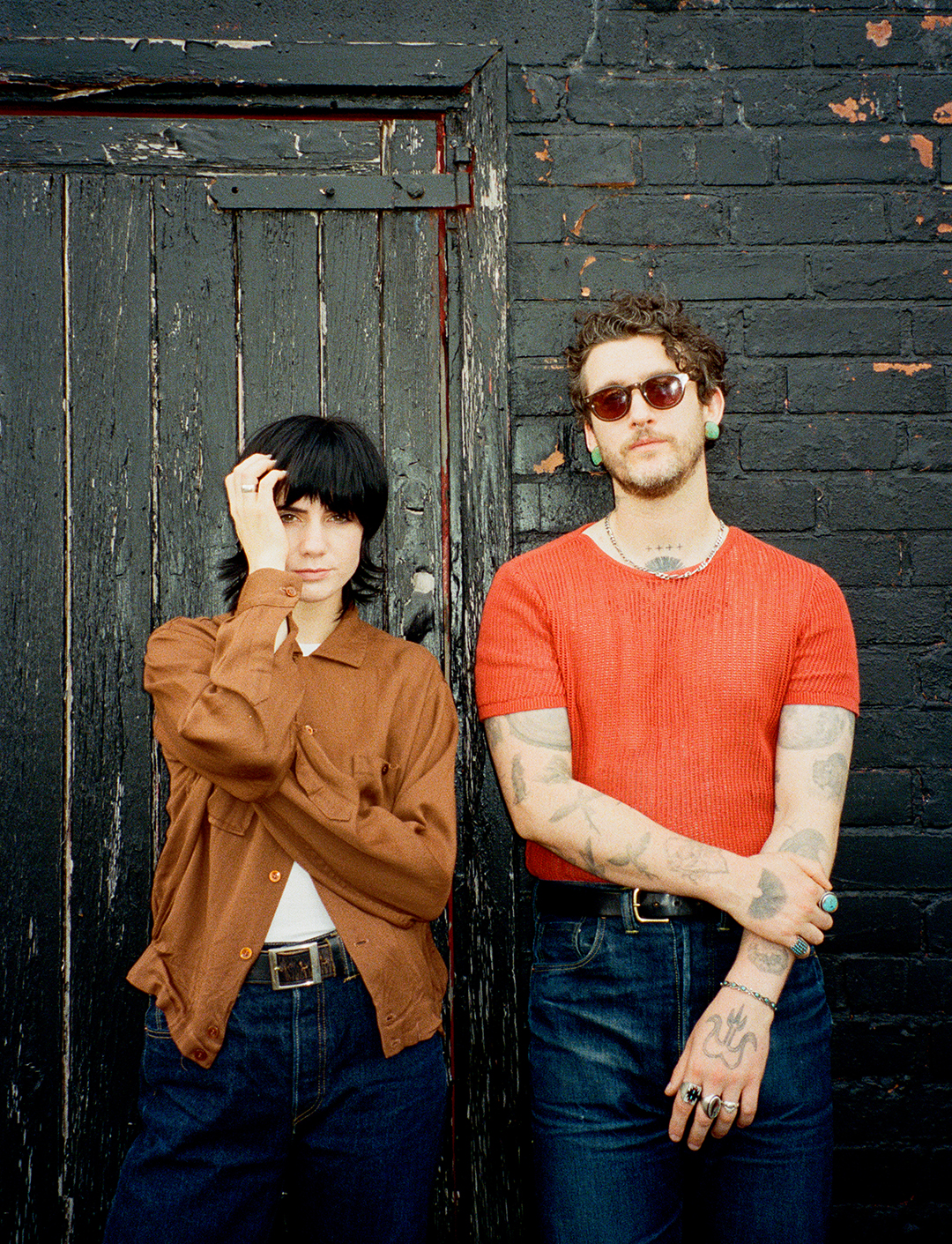
Share began with two people sending songs across an ocean without any real plan for what came next. Four years later, Kaylen Alan and Nile Marr have built a band out of distance, instinct and the strange moment when collaboration stops feeling temporary and starts changing the shape of your life.
– WORDS BY CJ • PHOTOS COURTESY OF SHARE
There is something almost absurd about the beginning of Share. In 2022, Kaylen Alan was in Montana and Nile Marr was in Manchester. They had never met in person. Alan didn’t even have a passport. There were just two people sending music to one another because making something together felt good. “We were just two people writing music together for the love of the game,” Alan says. “There was no discussion about goals or expectations.” Nobody had to decide what the project was supposed to become before the songs had a chance to tell them.
Then the songs started accumulating. Four became five, and the distance between Montana and Manchester began to seem less important than whatever was happening inside those demos. “When something is working, you don’t question it,” Alan says. Eventually, not questioning it required a fairly extraordinary act of faith. She got a passport, gave up her apartment in Missoula, sold her things and flew to England to live with Marr and his wife. The first time Alan and Marr actually met was at Manchester Airport. Four years later, that improbable decision has become a band.
Marr remembers the beginning with a little less romance, which somehow makes the whole thing better. He knew Alan’s previous work, thought they would get along and recognised something in her that suggested she might be ready for a change.
Once they started writing, the process was immediately productive. Alan remembers the leap, Marr remembers the work. Share has always existed somewhere between those instincts. The collaboration has become less about division of labor than learning how far each can push the other without losing the song.
Their writing process now has the efficiency of two people who have learned the shape of each other’s habits. Sometimes Marr sends Alan an instrumental and she writes the words and melody; sometimes one arrives with something more complete and the other begins pulling it into a new form. He has also noticed that she will occasionally hide the best hook at the end of a song, use it once and move on, apparently unaware that she has just found the center of the whole thing. His response is usually to drag it forward and rebuild the song around it. Alan says she doesn’t think of something she has written alone as a Share song until Marr has worked on it too; the identity lives in what happens once both have disturbed the original.
You can hear that particularly clearly in “Winona,” a song that exists somewhere between memory and invention. Alan began with a picture of being at the mall with her older sister, feeling awkward and looking at people only slightly older than her with the conviction that they had somehow discovered a secret she had missed. From there came drugstore makeup, stolen wishes, the Mall of America, cars and that adolescent belief that somewhere just beyond you is a version of life where everything finally makes sense. Winona Ryder enters less as a real person than as a symbol of that feeling. Alan wanted the song to reach toward the same kind of nostalgia she hears in The Replacements’ “Swinging Party” or Big Star’s “Thirteen,” with Ryder representing the comfort of seeing some version of yourself in somebody you admired when you were young.
That idea gets close to the emotional center of Share. Alan writes in details because details can hold feelings without having to explain them. She keeps a running note on her phone filled with stray sentences, things friends say and fragments spotted on billboards, anything that might later become scaffolding for a song. The finished songs often end up populated by people watching life from slightly outside it, wanting to leave with somebody while already suspecting that leaving may not fix anything. Asked why she returns so often to relationships suspended between escape and ending, Alan’s answer is strikingly plain: “I suppose because it’s easiest to write about what you know.”
Marr’s role is often to make those feelings move. He likes pop music and thinks constantly about what a song will do inside a small venue, not only how it will feel through headphones. If Alan brings ambiguity, longing and emotional distance, Marr pushes toward momentum, the kind of guitar part that can physically lift a room while her writing complicates whatever brightness he puts underneath it.
That is why Share’s songs can feel happy and bruised at exactly the same time. Marr puts it more practically: get enough “toe tappers” into the set first, and then the band has earned the right to become brooding.
The same push and pull exists inside the arrangements. Marr has spent more than a decade working around orchestras and large bands, which means his natural instinct is to hear empty space and fill it. Share requires him to resist that instinct. The central production question is much simpler: can you hear what Kaylen is saying? If the answer is no, something has to go. Making the song work means being willing to remove a guitar part you love because somebody else’s voice matters more in that moment. The arrangement becomes an exercise in trust, not because either musician is passive, but because both are required to loosen their grip on whatever they brought into the room.
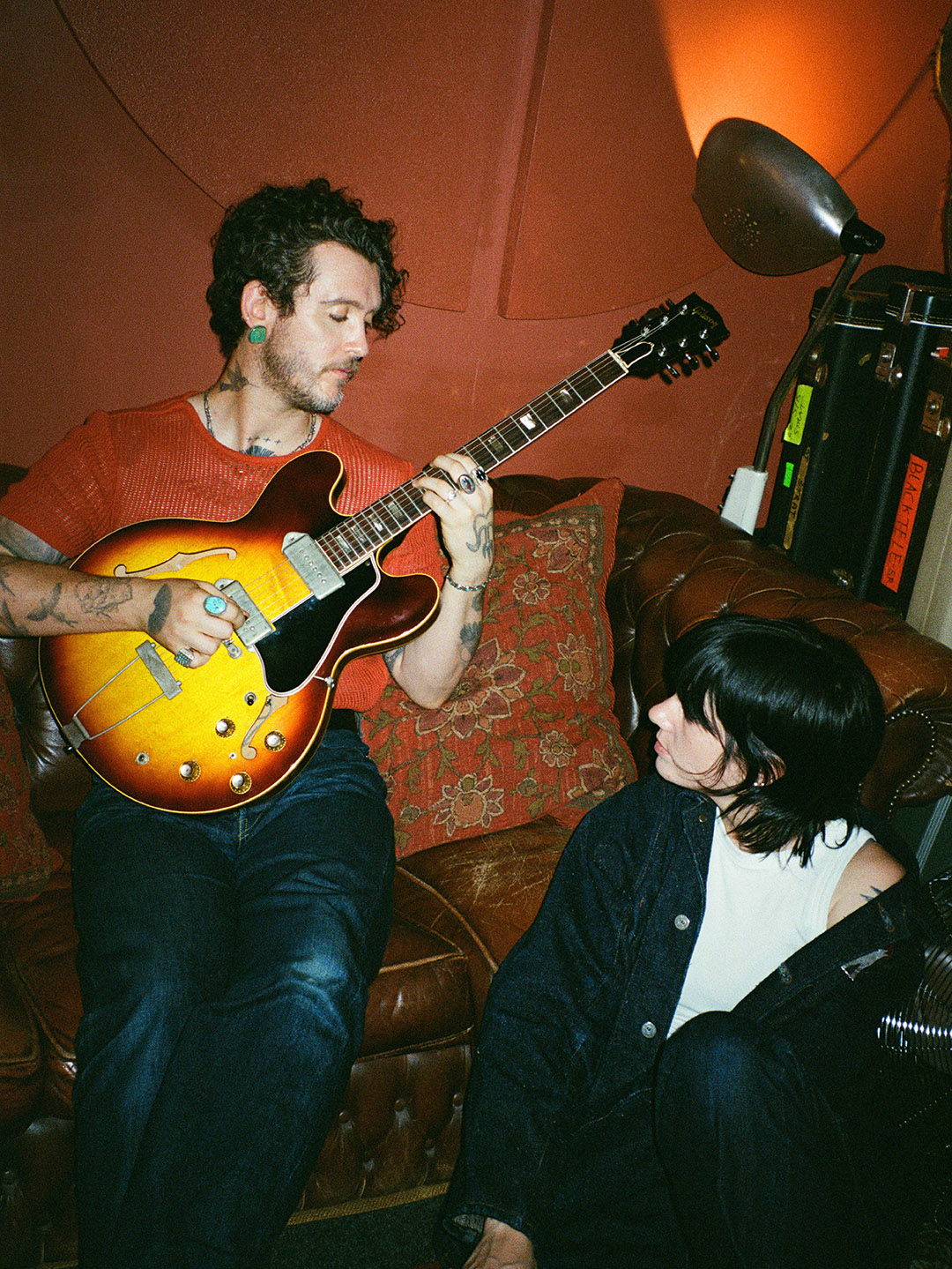
Perhaps that is why Share’s origin story continues to feel present in the music. The band began with a refusal to treat distance as a final answer. One person sent something. The other answered.
Another song arrived, and then another, until eventually one of them got on a plane. Their songs are often full of people caught between staying and leaving, watching another life from the edge of the frame, wondering whether movement is the same thing as escape. But the band exists because, at least once, somebody decided that the impossible distance between one life and another was worth crossing.
Alan says a Share song does not really become a Share song until both of them have made their mark on it. Marr has his own pragmatic checklist: a vocal melody he thinks is “mint,” something that would work in the venue down the street, guitar playing he is proud of, and a song that either makes people move or becomes a great headphones listen. It sounds almost comically practical after everything that brought them here, but perhaps that is the point.
Share was built from a huge leap into the unknown, and it survives through the much smaller act of turning up and finishing the song. Four years ago there was no band, no room and no certainty that there ever would be. There was Montana, Manchester and a stream of demos travelling between them. Everything that came after began because neither person decided to stop replying.