INTERVIEW
The Bird Calls: Trying to Get to the Thing.
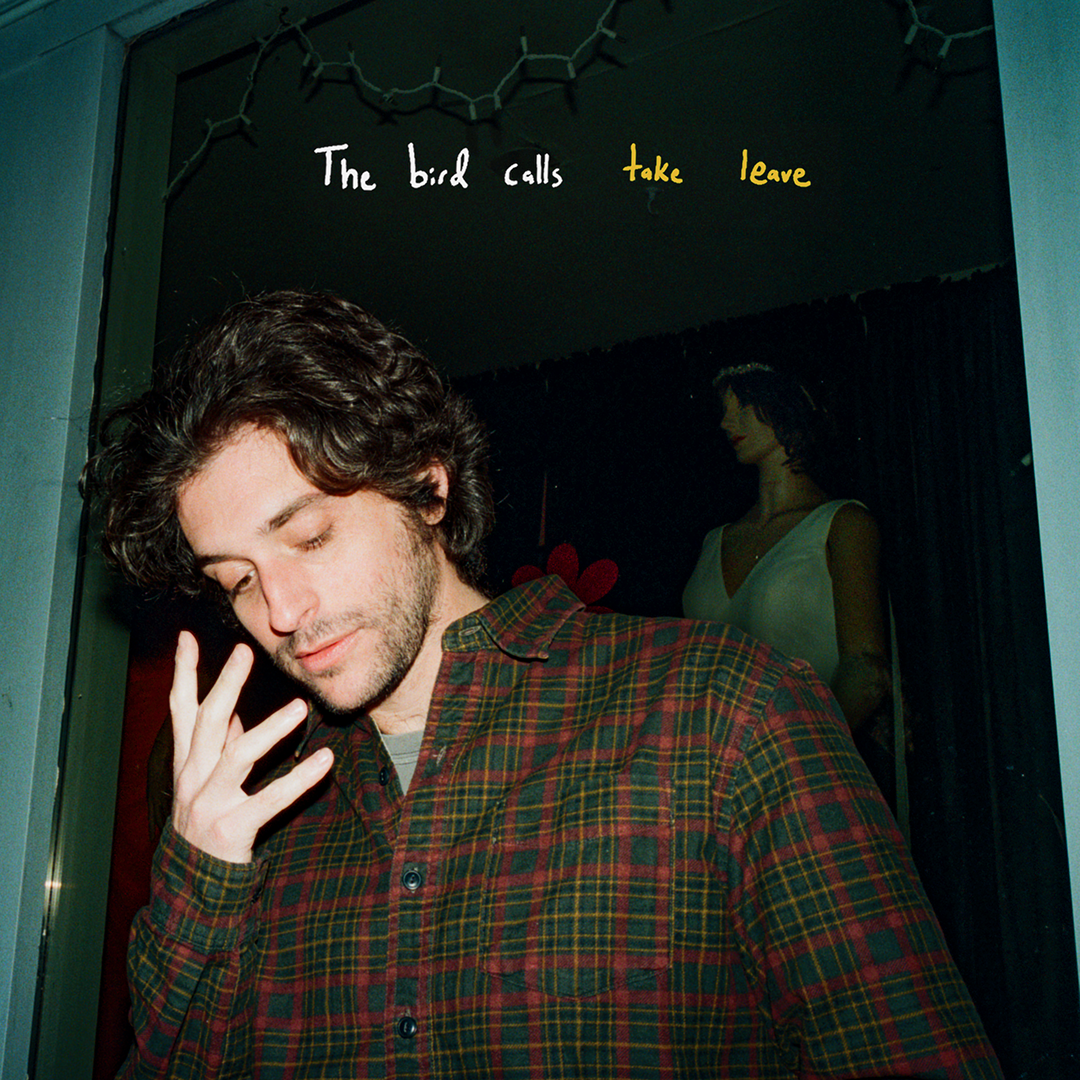
Sam Sodomsky has been making records as The Bird Calls since he was 13, long enough that even he sounds slightly suspicious of the number. What has changed is not the urge to write, but the urge to release everything he writes. “I still write a lot,” he says. “I think I just don’t put it all out anymore.”
– WORDS BY CJ
That difference is all over Take Leave. The record feels patient, less interested in catching the first flash of an idea than in finding out whether it survives. Sodomsky kept writing, discarding songs and moving closer to whatever the record was trying to become. He thinks about a Springsteen interview where an interviewer marvels at how many songs Springsteen had written and assumes it must have been a period of inspiration. Springsteen corrects him: “That’s not inspired writing. That’s desperate writing.”
Sodomsky understands that instinct. “Dissatisfaction is a really good impetus for making a lot of art,” he says. “You’re trying to write to come up with the thing that you’re trying to say, and along the way you come up with cool stuff, and you get closer every time.” His previous record, Melody Trail, came quickly. Take Leave needed him to live with it. The irony is that all that work was in service of making the finished thing sound inevitable. “That’s kind of what you’re trying to capture when you make an album this way,” he says, “the feeling that it’s seamless and inevitable and all the songs fit together.”
The title appeared early. Sodomsky liked the contradiction of Take Leave, two ordinary words that begin pulling against each other as soon as they are placed together. The idea came partly from reading about meditation and Judaism, both of which led him toward ideas about leaving familiar patterns behind. Soon he started noticing versions of leaving everywhere: leaving by choice, being pushed out, looking back at an old life from enough distance to finally understand its shape.
His last record had been written partly in the aftermath of losing his job, while he was still in what he calls “the shock zone.” Take Leave comes from farther away. “This record was a little more of seeing your old life from a distance,” he says. For all the weight of the subject matter, Sodomsky wanted the language to remain conversational.
That often means allowing humor into places where it probably should not belong. “How do you sleep? Well, I don’t sleep” is bleak on paper, but he understands that refusing to dramatize the misery can make it hit harder. The humor does not cancel the sadness. It keeps the sadness from becoming too pleased with itself.
He has always been attracted to familiar language, idioms, clichés, phrases people repeat without thinking much about what they mean, and to the possibility of nudging those phrases until they become strange again. A title like “To Everything There’s a Ceiling” takes the promise of limitless possibility and quietly puts a roof over it.
“I was pretty bummed out when I wrote that song,” he says. Songwriting gives Sodomsky permission to follow thoughts he would not necessarily defend outside the song. “Anything can happen in a song,” he says. “You can say stuff that it’s unbecoming to believe.” That is partly why the moments of hope on Take Leave feel convincing.
Sodomsky loves Springsteen because the optimism rarely arrives without darkness beside it. Brian Wilson occupies a similar space for him: music that can sound enormous and joyous while carrying loneliness underneath. “There’s something almost Biblical about them,” he says of The Beach Boys. “If you invoke a Brian Wilson line, there’s a hymnal quality.”
That gap between what a song says and what it sounds like has become increasingly important to The Bird Calls. Looking back at some of his older, barer recordings, Sodomsky thinks the arrangements sometimes announced the sadness before the lyrics had the chance to complicate it. “The music is part of the text itself,” he says. It is one reason his relationship with producer Ryan Winer has become so important. Sodomsky tends to obsess over words; Winer hears melody, arrangement and texture. “The goal is marrying a very fragile, very vulnerable lyric with music that doesn’t mask it but complements it,” Sodomsky says.
For somebody who spent so many years making records largely on his own terms, he now talks about collaboration with almost childlike enthusiasm. “Feeding off his excitement is pretty important to me now,” he says. “I see why people do this with other people. It’s really fun.” That shift mirrors a larger one. Sodomsky no longer seems particularly interested in proving that The Bird Calls can keep going. It simply does.
Starting a band at 13 usually comes with fantasies about getting bigger, being noticed and reaching some point where success confirms that the whole thing worked. Twenty years later, Sodomsky’s definition is much smaller and probably more durable.
“The goal of it for me is to make it and to keep myself interested and to keep myself proud,” he says. “I think if I didn’t feel that way, I would stop. And I don’t want to stop.”
There is an interesting tension there because Sodomsky also works as a music journalist, spending much of his professional life trying to explain other people’s records. You might imagine awareness making songwriting harder. Instead, he says the critical part of his brain disappears when he writes music.
“Writing songs is largely drawn from the subconscious for me. I think all art comes from there. It’s like dreaming, where if you think about it too much, you wake up and you kill the flow.”
Maybe that is part of why The Bird Calls have lasted. The songs are the place where Sodomsky does not have to explain things. What he wants from them is closer to recognition. He remembers being at summer camp as a kid, listening to OutKast’s “So Fresh, So Clean.” When the song mentioned YKK on a zipper, a counselor told everyone to look down at their clothes. There it was. “That to me was like a magic trick,” he says. “It was like a song acknowledged something that I never noticed.”
That feeling never really left him. A song can point at something that has been sitting in front of you forever and make it visible again. It does not have to explain your life or promise that everything will work out. Sometimes noticing accurately is enough.