THE TABASCO BIRDS ARE TAKING COSMIC AMERICAN MUSIC SOMEWHERE NEW.
Somewhere among the credits for The Tabasco Birds’ debut album, Cosmic American Music, alongside the pedal steel, fiddle, piano and saxophone, you’ll find a bicycle, a radio and somebody credited with crickets.
– WORDS BY CJ • PHOTOS COURTESY OF THE TABASCO BIRDS
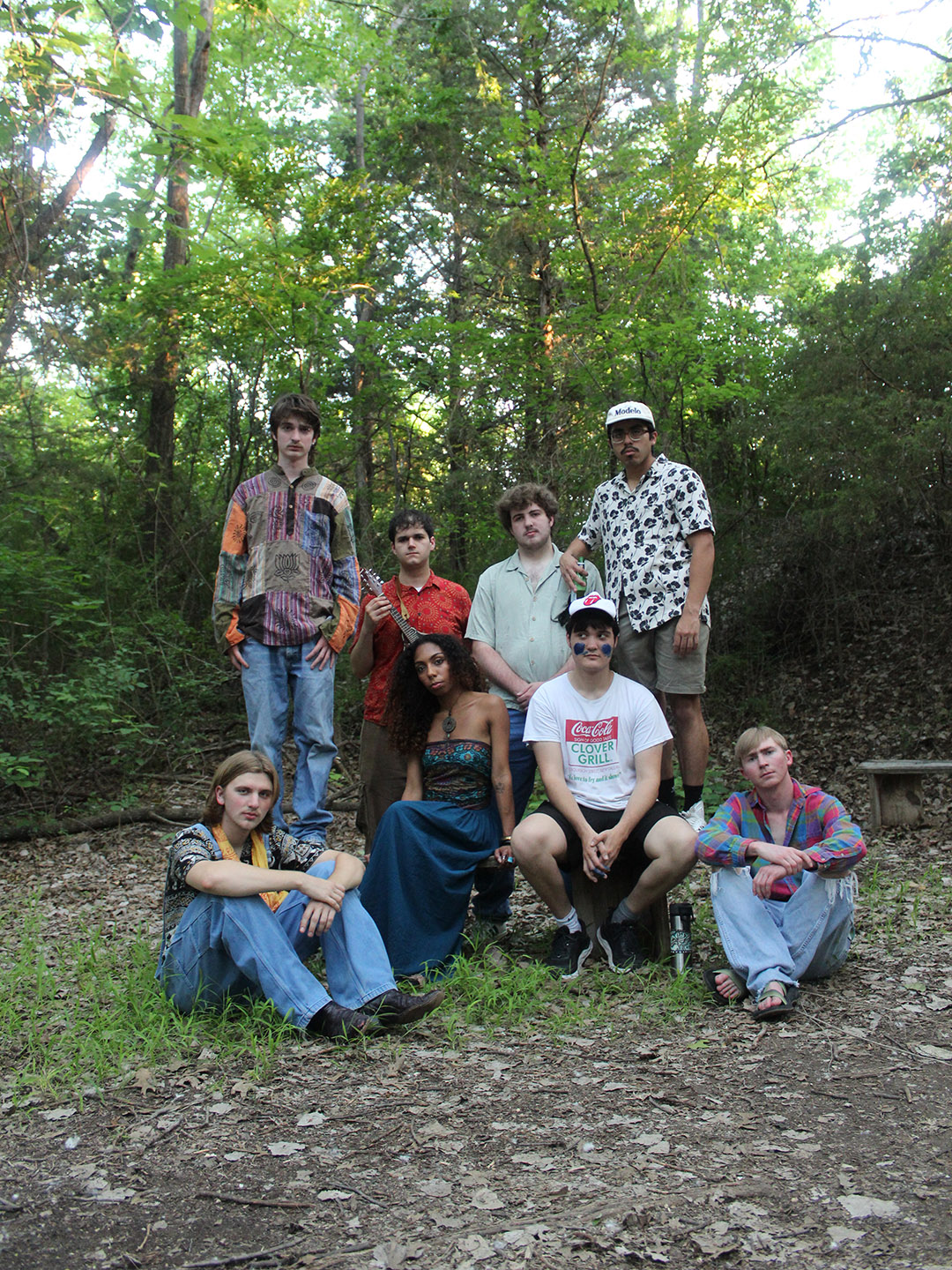
Eight musicians, five songwriters and apparently an entire collection of things that weren’t originally intended to be musical instruments. It’s a wonderful introduction to a band whose understanding of country music seems to involve asking how much they can squeeze into it before somebody tells them to stop. Fortunately, nobody appears particularly interested in stopping them.
The Denton eight-piece released Cosmic American Music in March, ten songs that travel through country, folk, rock and a few less immediately identifiable places, borrowing freely from a century of American songwriting while sounding like they’re having an extraordinary amount of fun making their own contribution. There’s a looseness to the arrangements, a willingness to follow an interesting musical idea wherever it might lead, and the peculiar chemistry that develops when a group has enough musicians to turn almost any passing suggestion into something worth trying.
Their description of themselves on Bandcamp is wonderfully economical: “We focus mostly on songwriting and happiness.” You could spend considerably longer explaining what they do and probably arrive at something less accurate.
The band came together from two existing projects, The Paper Bears and Flamingo Tree, whose members had known each other through Dallas’s Booker T. Washington High School for the Performing and Visual Arts. Owen Swift, Cathal Mayfield, Jacob Bullman and Logan Bolan had already been developing their own musical identities, gradually discovering a shared enthusiasm for country music despite having approached it from different directions. By the summer of 2024, those overlapping interests had turned into The Tabasco Birds, with Chris Smith, Cole Chaney, Joel Mena and a succession of bass contributions helping build the expansive sound heard on their debut.
What makes that history interesting is how little the resulting band resembles a conventional songwriter-and-backing-musicians arrangement. Five people are contributing songs, several take lead vocals, and an idea that begins with one person’s guitar can eventually accommodate seven other people’s musical instincts.
It’s a fairly extraordinary arrangement when you consider how possessive songwriters can become about something they’ve spent an afternoon creating alone in their bedroom. The Tabasco Birds have built a whole musical identity around giving those songs to a room full of people who might have completely different plans for them.
And then there’s that album title.
Gram Parsons used the expression Cosmic American Music to describe his ambition to bring country, gospel, soul, rhythm and blues and rock together in a single musical language. He was thinking about what these traditions might become if musicians stopped treating their differences as boundaries. More than fifty years later, the phrase has acquired an almost mythical status, particularly among musicians who like their country records with a little psychedelia and their rock music with pedal steel.
It’s an interesting inheritance because the original idea was always about musical possibility. Once something becomes a revered part of history, people can become terribly concerned with reproducing it correctly. The Tabasco Birds have an obvious affection for the records Parsons was making and the musicians who surrounded that period, but their own record is populated by the sounds and ideas of people who have grown up with far more than country music in their ears. Their influences stretch from The Band and Bob Dylan through to David Berman, Adrianne Lenker, Talking Heads, Erykah Badu and King Gizzard & the Lizard Wizard. There’s plenty of room for an argument about what constitutes cosmic music in 2026, and The Tabasco Birds seem like exactly the sort of people who would enjoy having it.
The album opens with “Reflections off the Water,” a five-minute introduction that almost functions as a demonstration of how the whole enterprise operates. Written by Logan Bolan and Jacob Bullman, it begins with a conversational vocal delivery before the arrangement gathers momentum, making space for saxophone, fiddle, pedal steel, organ and piano.
There’s an appealing sense of movement to it, the instruments arriving with different personalities and somehow finding enough common ground to keep everything moving forward.
“Cowboys in the Front Line,” written by Swift, heads somewhere brighter and more direct, its guitar-driven energy and harmonica providing an entirely different sort of momentum. The contrast gives the opening of the record an unusually broad character, particularly for a band whose musical vocabulary includes so many recognizable country instruments. They understand that the presence of a pedal steel doesn’t automatically make every song a country ballad, and that a saxophone has just as much right to be there when the arrangement calls for it.
There are quieter moments, too. “The Farm (Bubblegum Orchid)” and “Amanda” make wonderful use of Chris Smith’s voice, introducing a gentler, more reflective quality that gives the record some breathing room. “Amanda,” credited to Bullman and Swift, is especially affecting, with the pedal steel drawing out the sadness of a story about love and separation. The songs have room to develop their own identities, even when the same collection of musicians is responsible for bringing them to life.
The variety becomes particularly interesting when you consider how long some of this material has existed. “Sam and I Will Be Leaving This Town,” “Cowboys in the Front Line” and “Reflections off the Water” were among the songs taking shape before the band recorded its debut. They arrived at the sessions carrying years of musical development, along with the experience of playing together and discovering what these arrangements could accommodate. Songs written for an earlier version of a musician’s life can become unexpectedly different when eight people begin working on them, especially when the musicians themselves are still learning how to play together.
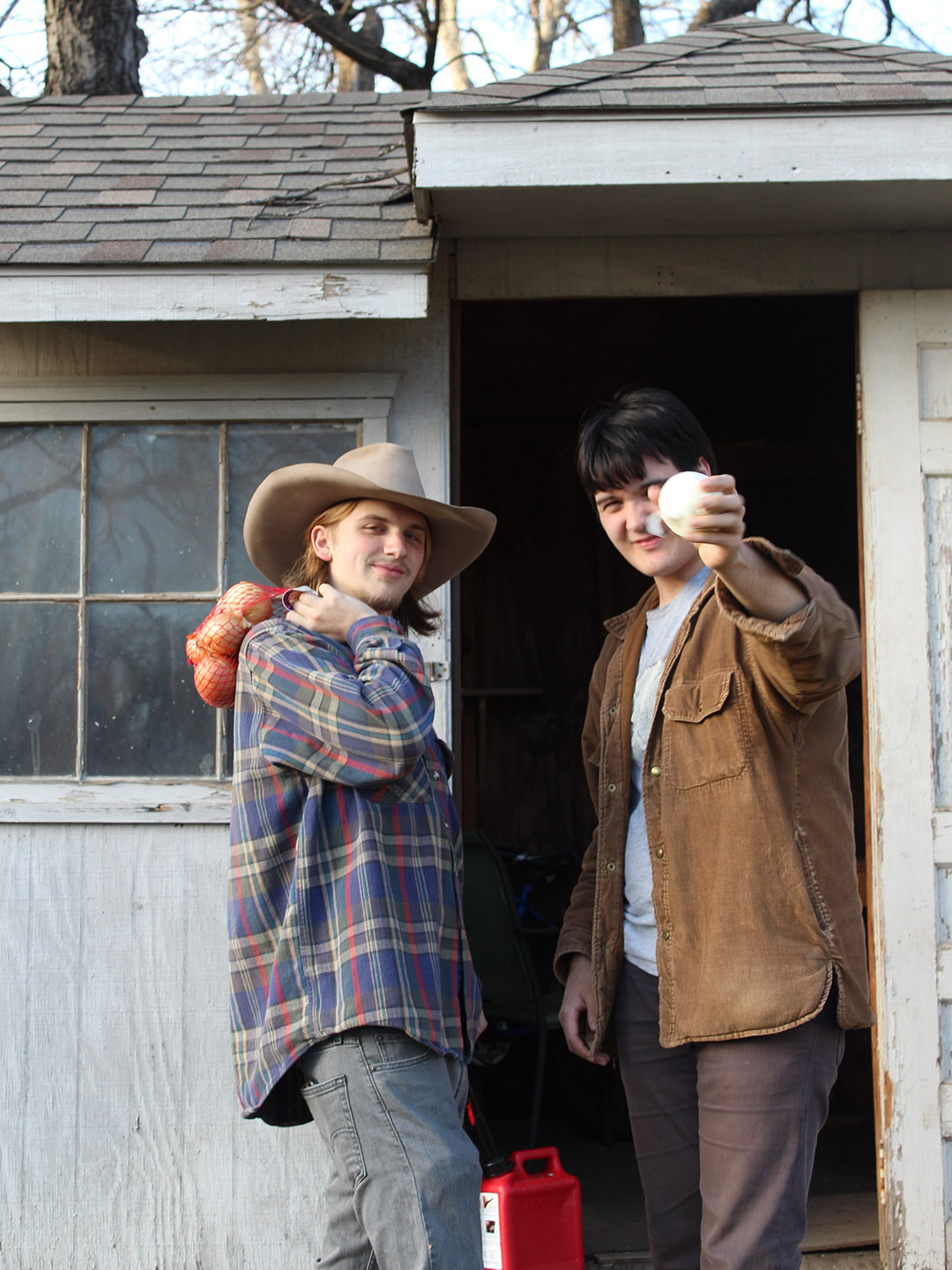
Recording took place at Echo Lab in Argyle, a studio situated on a farm, with Nathan Walters handling production. It’s an appropriate setting for a record that feels comfortable moving between fairly traditional instrumentation and much stranger studio possibilities. Swift’s credits alone include fiddle, bell kit, chord organ, bicycle and radio, while Walters contributes the aforementioned crickets. Somewhere in the middle of all that activity, the group has managed to retain the individual character of its songwriting, which is considerably more impressive than simply finding space for another instrument.
Their geographical identity is equally interesting. Denton has a long history of musicians moving between bands, experimenting with genres and developing ideas in rooms where the distance between audience and performer is practically nonexistent. The connection to Dallas adds another layer, with the members’ earlier musical lives at Booker T. Washington feeding into the more informal, collaborative culture surrounding the University of North Texas and Denton’s independent venues. It’s easy to hear why a band with this many different interests might feel at home there.
The history they draw from is vast, but they’re also young musicians who have the advantage of encountering that history without having lived through the arguments that originally divided it. To them, country music exists alongside experimental rock, indie songwriting and psychedelia as part of the same enormous collection of things worth listening to. They’re able to take a particular sound or musical technique and decide whether it serves the song, without necessarily worrying about the tradition to which it belongs.
And the next record could become stranger still.
With enough material already written for multiple releases, The Tabasco Birds have discussed moving further into psychedelic territory, including experiments with reel-to-reel recording. It’s an intriguing prospect for a group whose debut already contains so many competing musical personalities. Tape offers its own peculiar possibilities, from saturation and natural compression to the accidents that happen when musicians start experimenting with the physical recording process. For a band already happy to involve bicycles and radios, you wonder what might happen once the machinery itself becomes another instrument.
There’s also the question of how those five songwriters will develop alongside one another. Musical influence usually gets discussed in terms of the records people grow up listening to, but spending years in a band with other writers can be just as significant. You begin anticipating how somebody else might approach a melody, noticing harmonic possibilities you would previously have ignored, or discovering that another person’s peculiar musical habits are starting to appear in your own songs.
Perhaps that’s the most exciting thing about The Tabasco Birds at this stage. They have their debut behind them, a substantial collection of new songs waiting to be recorded and enough musical curiosity to keep changing the way they work. They’ve borrowed the name of a musical philosophy from half a century ago, but they’re discovering what it can accommodate in the present, with eight people bringing different ideas into the room and finding out which ones survive.