Granada, Then & Now: A Teen Groupie, the Wallflowers & Unanswered Questions.
The year of the Wallflowers’ Bringing Down the Horse I was a teenager, living with my boyfriend, a musician approaching 30, who so exalted his own taste in music that he would evaluate any new album in its entirety while laying prone on our threadbare couch with his eyes closed. His band played at a pool hall around the corner, and he always opened with a real banger he’d written about how much of a whore I was.
– WORDS and photos BY Lisa Petty & Courtesy Photos
I’m not a whore, by the way, not then and not now, but I believed pretty much anything I heard from a guy with a guitar. It was 1996. It was fucking messy. We all had a lot of growing up to do.
Anyway, I think I first heard “6th Avenue Heartache” one day while I was skipping school. Back then, Lower Greenville was the center of the universe, as far as the misfits in my group were concerned, and the Granada Theater was our North Star. So young, all cherry lips and underdeveloped prefrontal cortexes, we’d pile into my friend’s Chevy Nova and head toward the Granada when homeroom just wasn’t in the cards.
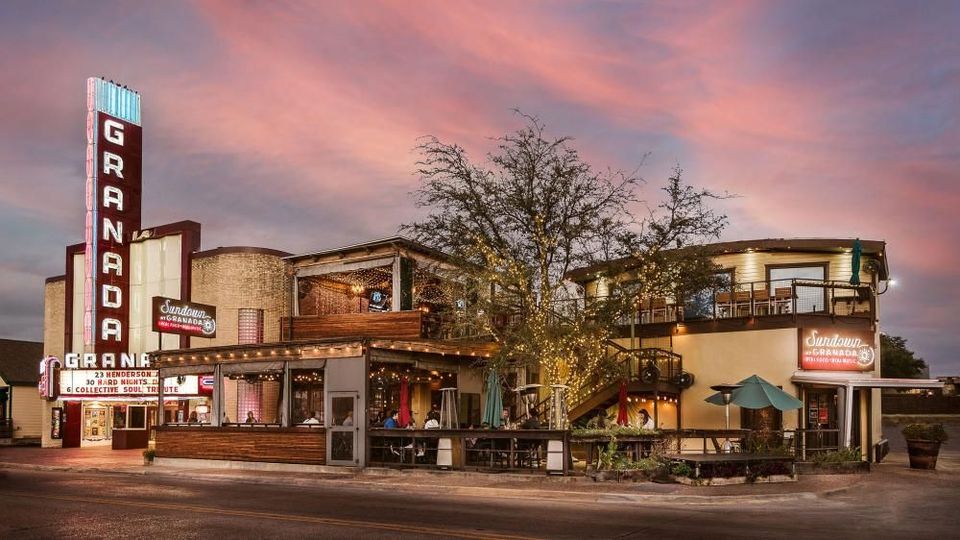
In our minds, the theater had been there forever, or seemed like it anyway, a towering time machine with a shining marquee looking every bit the fashion of the year it first opened: 1946. Save for a brief foray into live concerts in the late 70s, the Granada had always operated as an independent movie theater. By the time my generation could drive, it was showing more than a little wear and tear, but we orbited like little punk satellites nonetheless. First we’d go to Grinders for sweet sorbettos, then Ragwear to pick through bellbottoms and rayon tops, then, if we were lucky, we’d enter the inner sanctum of the Granada for a show come sundown. We’d gawk at the vaulted ceilings and the murals; we’d use the velvet-covered seats as footrests.
During that time, “Heartache” was ubiquitous–remember the constant repetition of radio play in the 90s? Later, “One Headlight” joined the hit list, then “Three Marlenas” and “The Difference.” These hits revealed a voice, both familiar and exciting, that has become inextricably connected with the stolen days on cracked sidewalks under the Granada marquee of my youth.
The voice belonged to Jakob Dylan, and the album was really a collection of poems about love and friendship and life. The songs weren’t written to hurt anyone or reveal any scary secrets; this was new to me. Horse would go on to achieve four-time platinum status, winning two Grammys and selling over four million copies worldwide.
“It could have been me or it could have been someone else. The pieces were just in place,” Dylan told Rolling Stone at the time. Much was being made about how the 27-year-old was following in the footsteps of his father, a man whose name is synonymous with an entire genre of music, but who was largely irrelevant to me and my friends. The term “nepo baby” hadn’t been invented yet, nor run into the ground like a bad knock-knock joke, but it hardly would have applied anyway. This Dylan was unimpressed with himself, or much of anything else. We could all relate.
Meanwhile, back on Lower Greenville, the Granada’s movie house days were numbered. In 2004, it was acquired by Mike Schoder and Julia Garton who transformed the aging theater into a full-time concert venue. The Old 97’s and Edie Brickell & New Bohemians were among the first acts to perform that year, cementing the Granada’s new identity as one of Dallas’s premier music venues. Nowadays, that’s how most people have always known it, and that’s also how its 80-year-old story will end. But I’m getting ahead of myself.
A few months back, my personal past and present converged when the Wallflowers landed here in town during their Bringing Down the Horse 30th anniversary tour. On Friday, May 1, the Granada marked the eleventh stop in the band’s six-month, 83-date U.S. and European schedule. In each city, they played the album in full, from start to finish. Needless to say, only an act of God could have kept me away.
On the big day, my head was on a swivel as the seven o’clock door time approached. I scanned the sold-out crowd of very prompt 40-to-60-something ticketholders stretched down the block, noting more than a few bald spots and pairs of elastic waist trousers. At one point, I tripped over a discarded floss pick, recalling a time when it would have been a Marlboro butt. Cupping my hands on either side of my eyes, though, isolating just one block with the theater at its center, I could easily make myself believe that no time had passed since those school-skipping days with my friends.
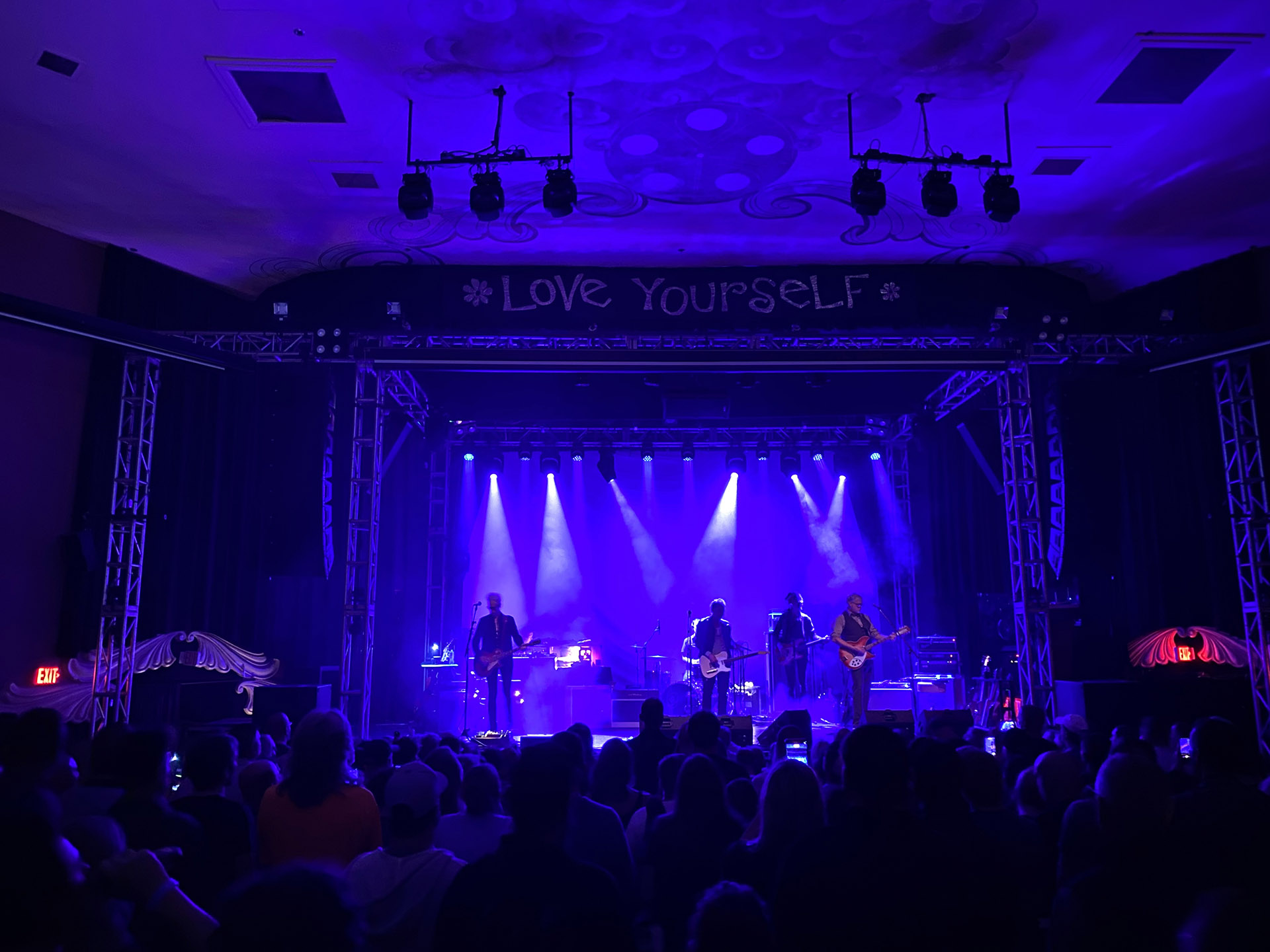
The Wallflowers took the stage a little after nine, and the band’s own tight-knit bond was immediately evident. They walked and talked and nodded and gestured like friends, sharing that psychic thing that grows from a religious rehearsal schedule. As the unmistakable first notes of “One Headlight” began, everyone in the audience leaned into the ride. Each subsequent single was played faithfully and Dylan’s voice was a perfect rasp.
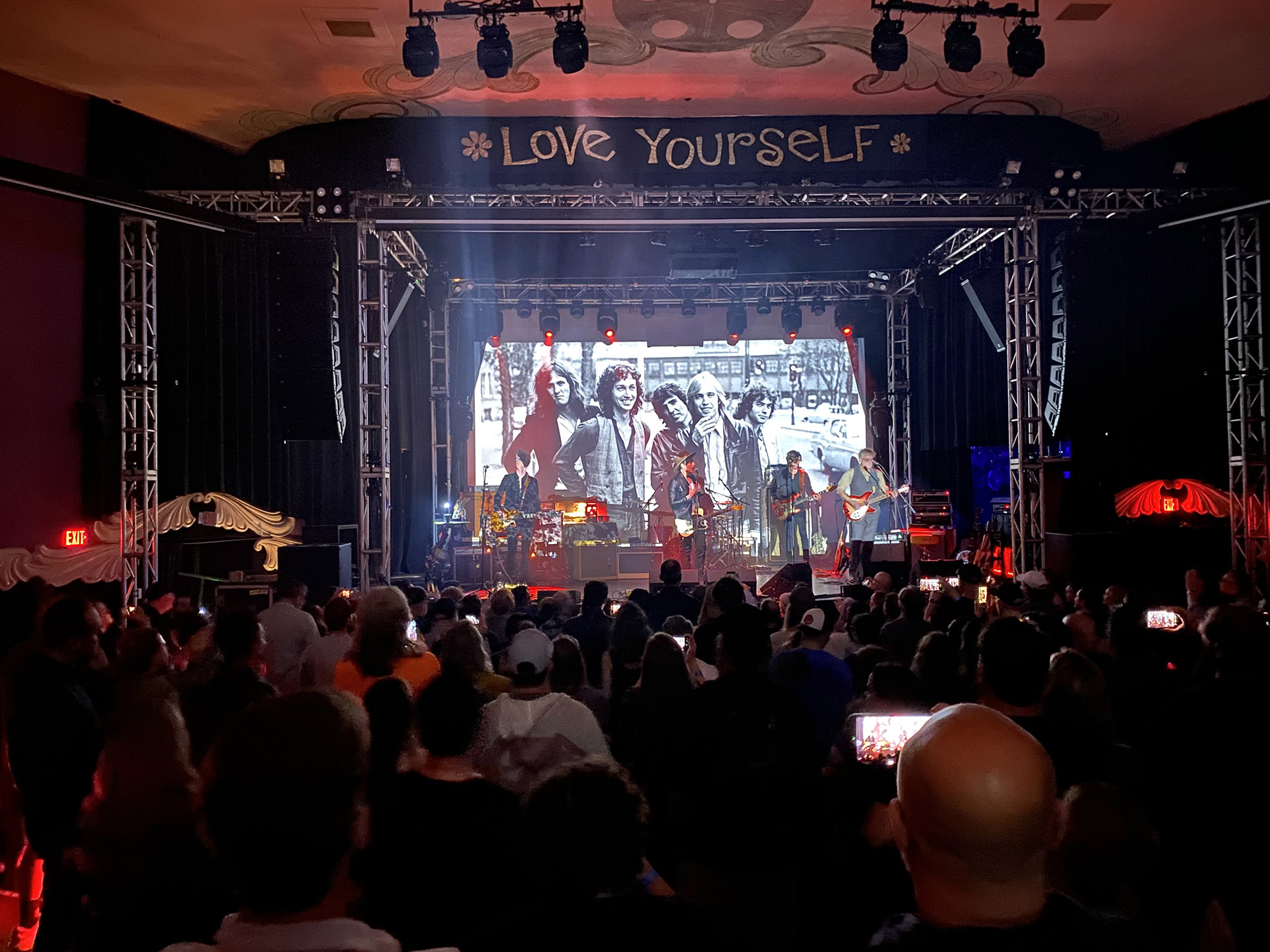
Between songs, the white t-shirt-clad frontman bantered with the crowd. He called the Granda’s stage manager by name. Animated album cover graphics bathed the stage in twinkly, hand-drawn six-point stars; above, the iconic stage bore its permanent motto: Love Yourself.
“That was my favorite album,” Dylan joked after “I Wish I Felt Nothing” came to a close. “Now I’ll play my second favorite album for you.”
A faithful rendering of Tom Petty’s Long After Dark followed, including chart-toppers like “You Got Lucky” and “Straight into Darkness.” The latter, Dylan noted, was the song he named in response to a question Petty himself asked the young musician while the Wallflowers opened for the Heartbreakers on tour in the ‘90s: Can I play anything special for you, kid? As he recounted the story, I wondered, Was Petty’s 1982 album a coming-of-age moment for Jakob Dylan, like Dylan’s album was for me? Maybe so, but we’ll never know.
Last Friday, October 23, news came down that the Granada has been sold to a company that operates trendy spas.
“After 34 years on Greenville Avenue, we have made the decision to close the Granada Theater,” wrote owners Schoder and Garton in a farewell note. “Walking away isn’t easy, but sometimes knowing when to turn the page is as important as knowing when to start the story.”
The pair cite dramatic changes in the music industry, including “rising costs, shifting audiences, and corporate consolidation,” as contributing factors in their decision. Of course, anyone who has purchased a ticket to a show in the last few years is aware, at least in some part, of these sea changes. After such a long time, though, we can fail to see our personal monuments as anything less than permanent.
Granada’s planned calendar will continue through April 2027. Thereafter, its run of almost 3,000 events and concerts, not to mention countless films, will come to an end. The venue will become a Bathhouse–capital “B”–part of a growing chain of slick day spas with locations in New York and Pennsylvania.
The girls on the Bathhouse Instagram grid look to be about the age that I was when I first fell in love with the Granada. They’re shinier, though, and less messy. If I’d known what was coming, if I had known that the once-center of my world would soon shutter, I would have lingered a bit longer after the Wallflowers show. Instead, I went home at a reasonable hour (as you do when you’re grown), and haven’t returned. I guess I just assumed I could always go back.