THE JAMBALOO MUSIC PRIZE IS BACK AND THIS IS WHY IT’S IMPORTANT.
Entries are now open for the 2nd JAMBALOO Music Prize, celebrating the best albums made across Dallas–Fort Worth in 2026. More than a competition, the Prize is a way of making space for the album itself at a time when music is increasingly being broken into smaller and smaller pieces.
– WORDS BY JAMBALOO EDITORIAL TEAM • PHOTOS BY SIERRA POTTS
The JAMBALOO Music Prize is returning for its second year, opening the door once again to the records made across Dallas, Fort Worth, Denton and the cities between them. Artists with eligible albums released between January 1 and December 31, 2026 can now submit their work, beginning a process that will move through judging, public voting and a final, and eventually arrive at one album being named the winner. But before any of that happens, before the lists and arguments and favorites begin to form, there is a more important reason for doing this again.
The album still matters, even as almost everything around music seems designed to make us forget that. Songs now reach us as fragments, recommendations, clips, playlist placements and small interruptions in an endless feed, each one competing for a few seconds of attention before something else arrives behind it. There is nothing wrong with discovering music that way, and there has never been one correct route into a song, but the machinery surrounding artists increasingly rewards speed, frequency and immediacy, asking them to release something, promote it, turn it into content and then start preparing the next thing before anyone has had time to properly live with the last one. The album pushes against that rhythm. It takes longer than the system would like, asks the artist to think beyond a single moment and asks the listener to remain somewhere long enough for a world to reveal itself.
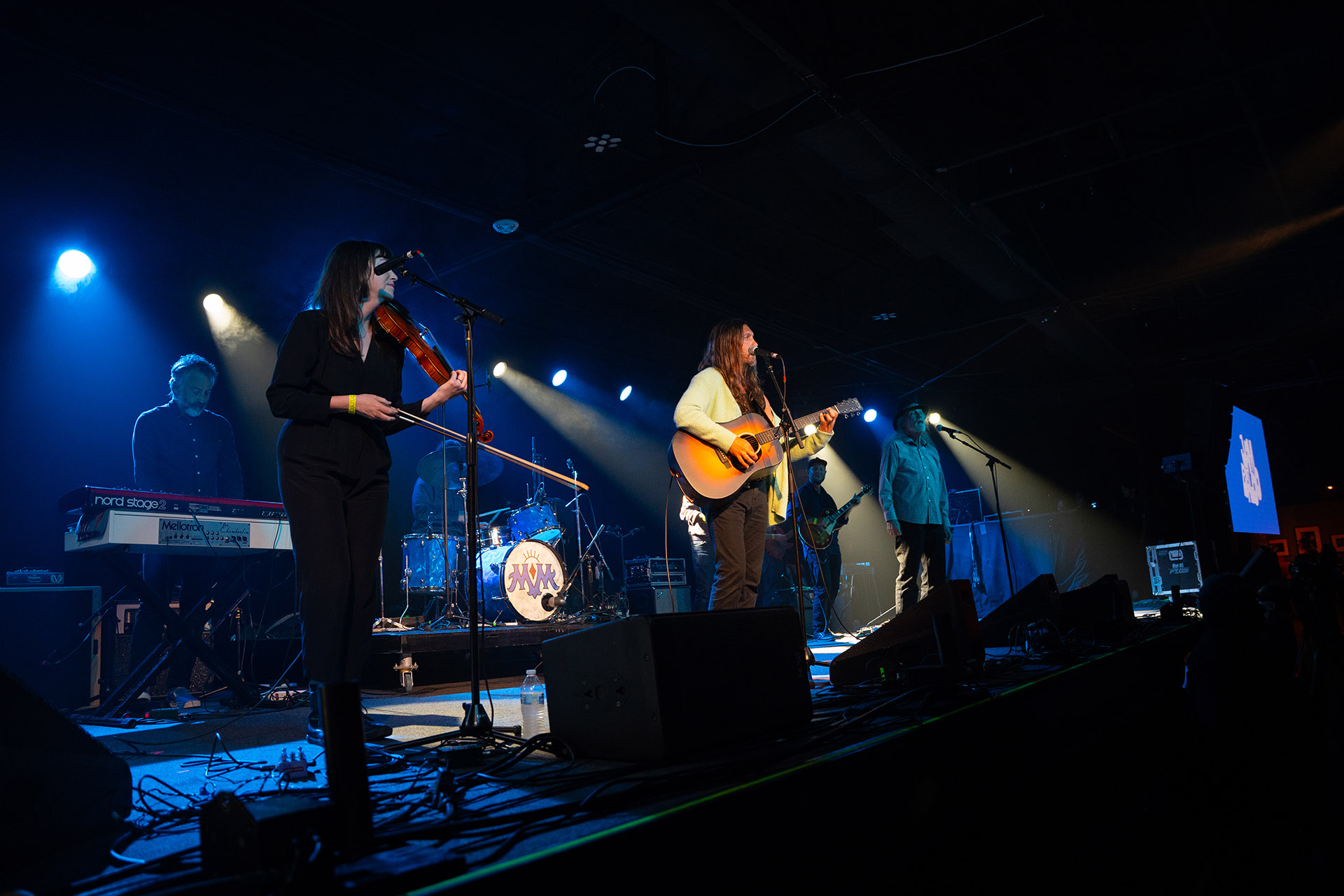
PAUL SCHALDA ON STAGE AT THE JAMBALOO MUSIC PRIZE FINAL AT THE LONGHORN BALLROOM
That is what has always made records different. An album can contradict itself. It can begin with one idea and arrive somewhere else entirely forty minutes later. It can contain the song designed to pull you through the door and the strange one hidden at track eight that becomes more important years after you first heard it. It gives artists room to stretch beyond the most immediately understandable version of themselves, and it gives songs context that disappears when they are separated from one another. The point is not nostalgia for a particular format or some imagined golden age when everybody sat quietly beside a record player and listened correctly. The point is that the album remains one of the few forms in music that asks us to give an artist more than a few seconds before deciding who they are.
That feels especially important for independent musicians, because making an album without any guarantee that a large audience is waiting for it remains an extraordinary act of belief. Records cost money, time, favors, relationships and often more emotional energy than anyone admits while they are in the middle of making one. They are built in bedrooms, rehearsal spaces and professional studios, around work schedules and family obligations, with borrowed equipment and friends playing parts because they understand what the songs are trying to become. Months can disappear into something that may receive a few thousand streams, or a few hundred, or considerably fewer, and yet artists continue to make them because there are ideas that simply need more room than one song can give them.
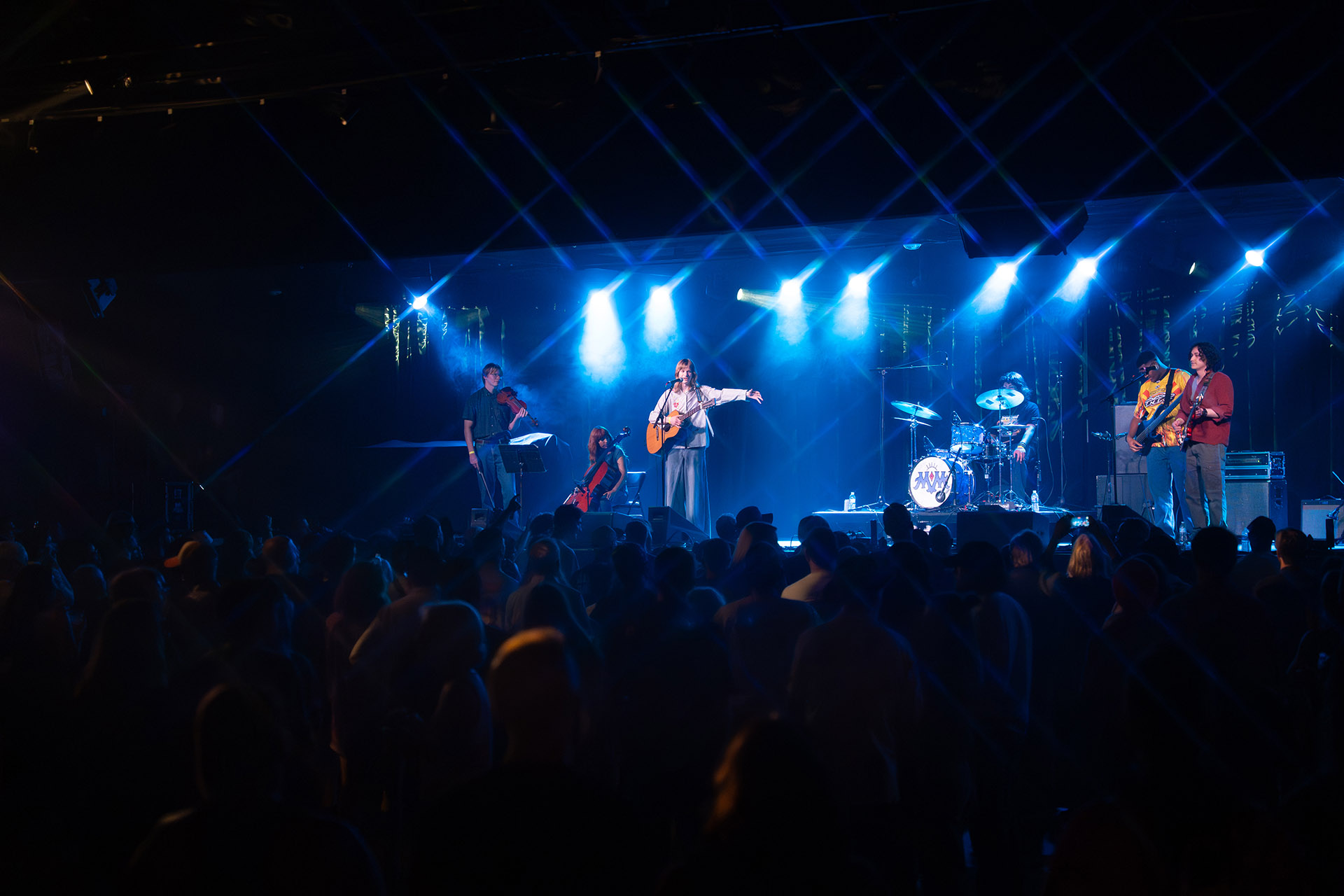
AARON’S BOOK CLUB ON STAGE AT THE JAMBALOO MUSIC PRIZE FINAL AT THE LONGHORN BALLROOM
The JAMBALOO Music Prize was created to take that work seriously. It is not intended to measure which artist arrives with the biggest audience, the strongest campaign or the most visible name attached to them. Those things inevitably exist around music, but they are not the same as the music itself. We have become incredibly efficient at measuring the surrounding data — followers, streams, monthly listeners, views, likes, saves, comments, engagement — and all of those figures can tell us useful things about reach, but none of them can tell us whether somebody has made a great record. They cannot measure risk. They cannot tell us whether track six changes the meaning of track one, whether a lyric sits differently after a second listen or whether an artist has found a version of themselves they could not have reached three years earlier.
A music community needs places where those things are still allowed to matter, and it also needs ways of remembering what was made there. Local scenes are usually reconstructed later through a small group of artists who became successful enough to be remembered outside them, which means the actual texture of a musical year can disappear surprisingly quickly. The strange record somebody made in an apartment, the band that existed for eighteen months, the artist who quietly released the best thing they had ever made without a publicist attached to it, the album everybody in one small room seemed to understand before anybody elsewhere had heard of it, those are part of the history too. The Prize cannot preserve everything, but it can stop long enough to say that these records existed here, in this place, at this moment, and that they deserved to be listened to together.
That is also why the JAMBALOO Music Prize remains centered on the album. For the 2nd JAMBALOO Music Prize, eligible records must have been released during the 2026 calendar year, contain at least seven songs, run for at least 30 minutes and be publicly available through Spotify, Apple Music, TIDAL or Bandcamp. Reissues, remasters, compilations, live albums and soundtracks are excluded because the Prize is specifically looking at newly created full-length bodies of work. The criteria are intentionally uncomplicated because everything that comes afterward should begin with the same question: what happens when we actually listen to the whole thing?
There will inevitably be disagreement. There should be. Any prize built around music that produces total consensus has probably stopped being interesting.
The value is not in pretending that there is a mathematically correct answer to something as subjective as the best record of a year, but in creating the conversation around it, in forcing ourselves to return to albums we might have skimmed past and to listen to records made by artists we did not know before. One of the most important functions of the Prize is discovery, because for every album that already feels central to the DFW conversation there is another being made ten miles away that most of us simply have not found yet.
Those records deserve to enter the same room. That, more than anything, is what the JAMBALOO Music Prize is trying to create: a space where the record matters before the numbers around it do, where an established artist and somebody releasing their first album can be considered according to what they actually made, and where Dallas, Fort Worth and Denton are treated not as separate musical territories but as parts of the same sprawling, complicated ecosystem.
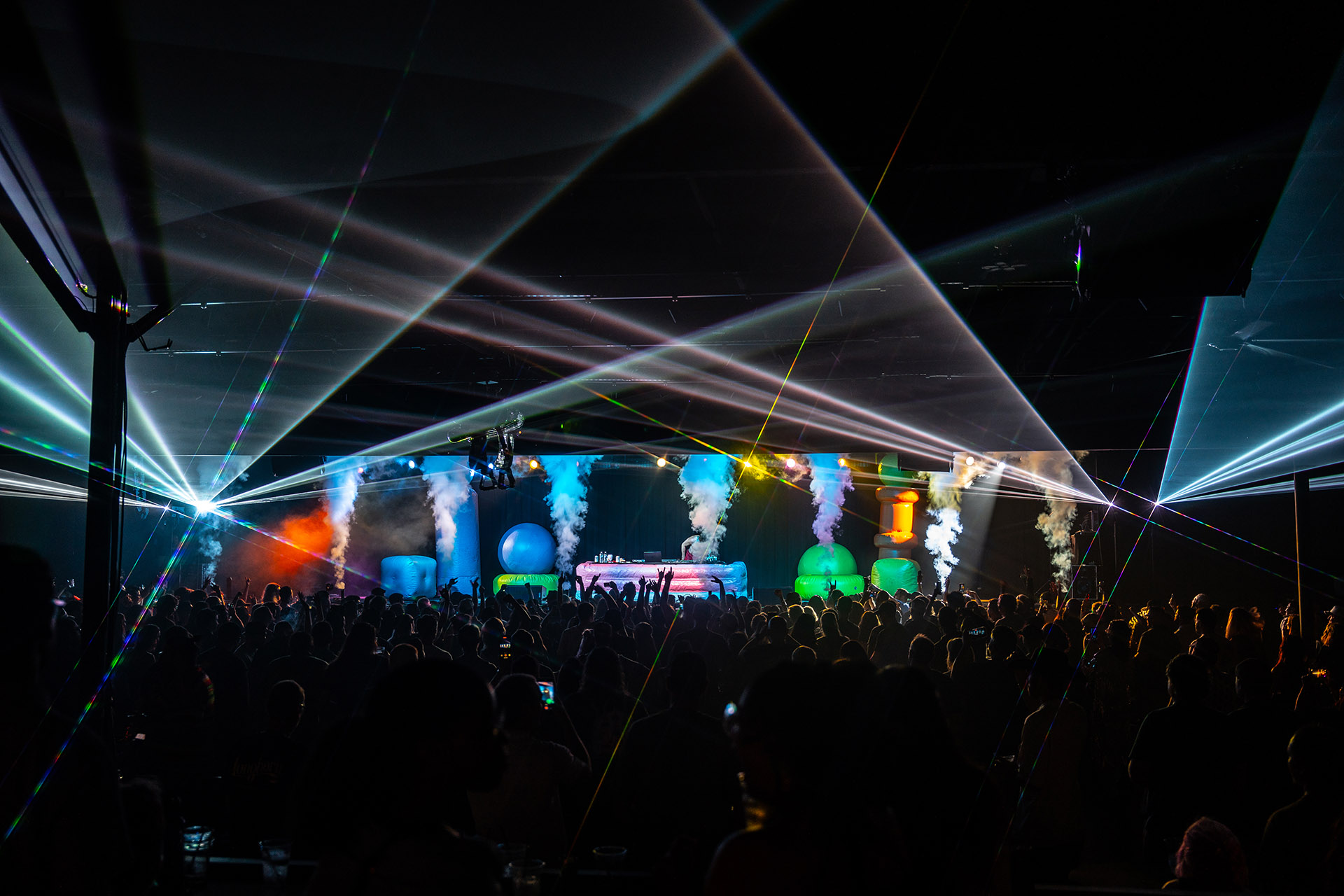
HEADLINER MARC REBILLET AT THE JAMBALOO MUSIC PRIZE FINAL
The Prize is competitive because eventually somebody wins, but the more interesting thing happens before that, when dozens of albums are placed beside one another and allowed to describe what this place sounded like for a year.
That, more than anything, is what the JAMBALOO Music Prize is trying to create: a space where the record matters before the numbers around it do, where an established artist and somebody releasing their first album can be considered according to what they actually made, and where Dallas, Fort Worth and Denton are treated not as separate musical territories but as parts of the same sprawling, complicated ecosystem. The Prize is competitive because eventually somebody wins, but the more interesting thing happens before that, when dozens of albums are placed beside one another and allowed to describe what this place sounded like for a year.
And perhaps the album matters precisely because it demands the same thing from us that making one demands from the artist: attention. It asks us not to rush. It asks us to stay past the single and past the easiest song to understand. It leaves room for mistakes, diversions, difficult tracks, unexpected endings and ideas that need time before they make sense. At a moment when so much of the culture surrounding music is built around making things faster, shorter and easier to consume, the decision to spend months building forty minutes of music still feels quietly radical.
So the 2nd JAMBALOO Music Prize is now open for entries.
If you made an album in DFW this year, we want to hear what you made when you gave yourself enough time to say the whole thing.